

350
A. Stetsko
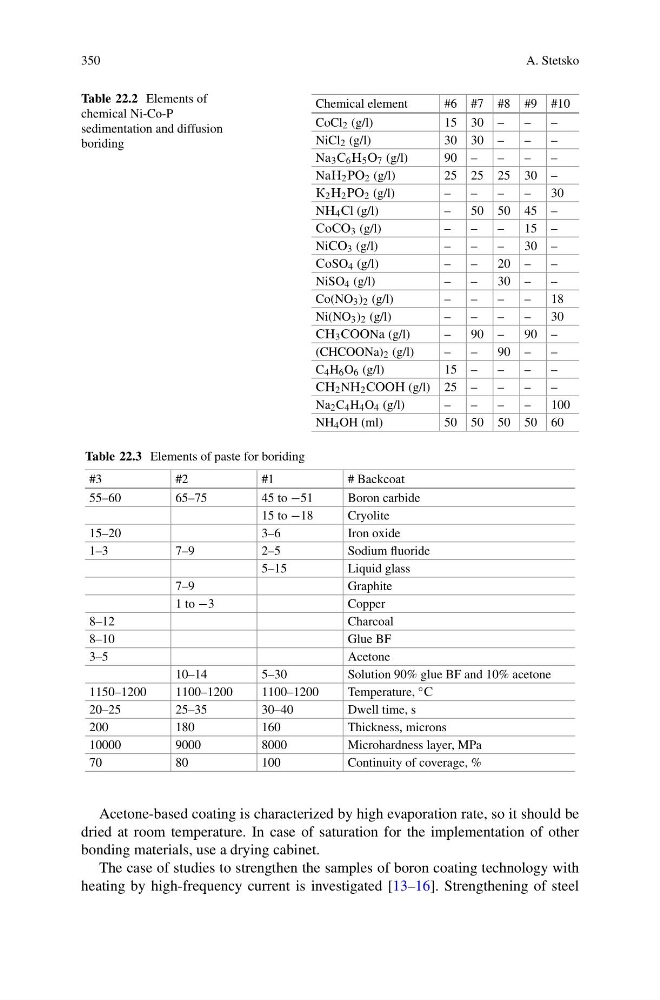
Table 22.2 Elements of
chemical Ni-Co-P
sedimentation and diffusion
boriding
Chemical element
#6 #7 #8 #9 #10
CoCl 2 (g/l)
15 30 –
–
–
NiCl 2 (g/l)
30 30 –
–
–
NÃ 3 ´ 6 ° 5 ± 7 (g/l)
90 –
–
–
–
Nð 2 P± 2 (g/l)
25 25 25 30 –
- 2 ° 2 P± 2 (g/l)
–
–
–
–
30
N° 4 ´l (g/l)
–
50 50 45 –
´Ñ´± 3 (g/l)
–
–
–
15 –
Ni´± 3 (g/l)
–
–
–
30 –
´ÑSO 4 (g/l)
–
–
20 –
–
NiSO 4 (g/l)
–
–
30 –
–
Co(NO 3 ) 2 (g/l)
–
–
–
–
18
Ni(NO 3 ) 2 (g/l)
–
–
–
–
30
´° 3 ´±±NÃ (g/l)
–
90 –
90 –
(CHCOONa) 2 (g/l)
–
–
90 –
–
C 4 H 6 O 6 (g/l)
15 –
–
–
–
´° 2 N° 2 ´±±° (g/l) 25 –
–
–
–
Na 2 C 4 H 4 O 4 (g/l)
–
–
–
–
100
NH 4 OH (ml)
50 50 50 50 60
Table 22.3 Elements of paste for boriding
#3
#2
#1
# Backcoat
55–60
65–75
45 to −51
Boron carbide
15 to −18
Cryolite
15–20
3–6
Iron oxide
1–3
7–9
2–5
Sodium fluoride
5–15
Liquid glass
7–9
Graphite
1 to −3
Copper
8–12
Charcoal
8–10
Glue BF
3–5
Acetone
10–14
5–30
Solution 90% glue BF and 10% acetone
1150–1200
1100–1200
1100–1200
Temperature, ◦ ´
20–25
25–35
30–40
Dwell time, s
200
180
160
Thickness, microns
10000
9000
8000
Microhardness layer, MPa
70
80
100
Continuity of coverage, %
Acetone-based coating is characterized by high evaporation rate, so it should be
dried at room temperature. In case of saturation for the implementation of other
bonding materials, use a drying cabinet.
The case of studies to strengthen the samples of boron coating technology with
heating by high-frequency current is investigated [13–16]. Strengthening of steel
A. Stetsko
Table 22.2 Elements of
chemical Ni-Co-P
sedimentation and diffusion
boriding
Chemical element
#6 #7 #8 #9 #10
CoCl 2 (g/l)
15 30 –
–
–
NiCl 2 (g/l)
30 30 –
–
–
NÃ 3 ´ 6 ° 5 ± 7 (g/l)
90 –
–
–
–
Nð 2 P± 2 (g/l)
25 25 25 30 –
- 2 ° 2 P± 2 (g/l)
–
–
–
–
30
N° 4 ´l (g/l)
–
50 50 45 –
´Ñ´± 3 (g/l)
–
–
–
15 –
Ni´± 3 (g/l)
–
–
–
30 –
´ÑSO 4 (g/l)
–
–
20 –
–
NiSO 4 (g/l)
–
–
30 –
–
Co(NO 3 ) 2 (g/l)
–
–
–
–
18
Ni(NO 3 ) 2 (g/l)
–
–
–
–
30
´° 3 ´±±NÃ (g/l)
–
90 –
90 –
(CHCOONa) 2 (g/l)
–
–
90 –
–
C 4 H 6 O 6 (g/l)
15 –
–
–
–
´° 2 N° 2 ´±±° (g/l) 25 –
–
–
–
Na 2 C 4 H 4 O 4 (g/l)
–
–
–
–
100
NH 4 OH (ml)
50 50 50 50 60
Table 22.3 Elements of paste for boriding
#3
#2
#1
# Backcoat
55–60
65–75
45 to −51
Boron carbide
15 to −18
Cryolite
15–20
3–6
Iron oxide
1–3
7–9
2–5
Sodium fluoride
5–15
Liquid glass
7–9
Graphite
1 to −3
Copper
8–12
Charcoal
8–10
Glue BF
3–5
Acetone
10–14
5–30
Solution 90% glue BF and 10% acetone
1150–1200
1100–1200
1100–1200
Temperature, ◦ ´
20–25
25–35
30–40
Dwell time, s
200
180
160
Thickness, microns
10000
9000
8000
Microhardness layer, MPa
70
80
100
Continuity of coverage, %
Acetone-based coating is characterized by high evaporation rate, so it should be
dried at room temperature. In case of saturation for the implementation of other
bonding materials, use a drying cabinet.
The case of studies to strengthen the samples of boron coating technology with
heating by high-frequency current is investigated [13–16]. Strengthening of steel