

22 The Nanocomposite Diffusion Coating of Details Prepared of Boriding
351
Chemical coating
Cooling and cleaning parts of paste
Heat and endurance prepared according to the details given
saturation modes
Application of coating and drying strengthening
Preparation of the surface reinforcing parts to saturation in
pastes (coating)
Preparation of coating
Fig. 22.2 Operations of boriding
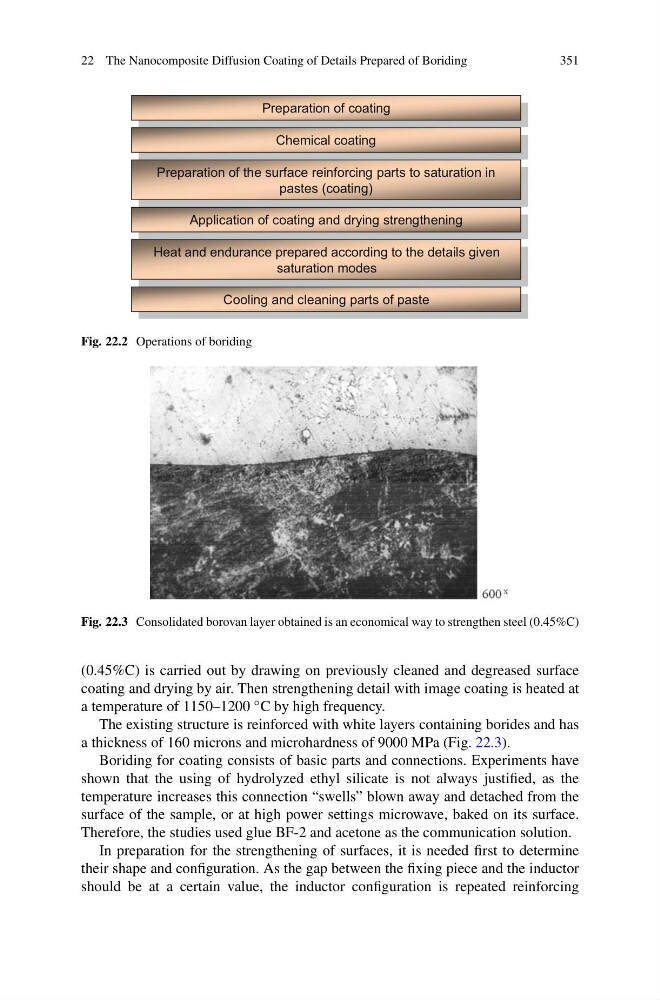
Fig. 22.3 Consolidated borovan layer obtained is an economical way to strengthen steel (0.45%C)
(0.45%C) is carried out by drawing on previously cleaned and degreased surface
coating and drying by air. Then strengthening detail with image coating is heated at
a temperature of 1150–1200 ◦ C by high frequency.
The existing structure is reinforced with white layers containing borides and has
a thickness of 160 microns and microhardness of 9000 MPa (Fig. 22.3).
Boriding for coating consists of basic parts and connections. Experiments have
shown that the using of hydrolyzed ethyl silicate is not always justified, as the
temperature increases this connection “swells” blown away and detached from the
surface of the sample, or at high power settings microwave, baked on its surface.
Therefore, the studies used glue BF-2 and acetone as the communication solution.
In preparation for the strengthening of surfaces, it is needed first to determine
their shape and configuration. As the gap between the fixing piece and the inductor
should be at a certain value, the inductor configuration is repeated reinforcing
351
Chemical coating
Cooling and cleaning parts of paste
Heat and endurance prepared according to the details given
saturation modes
Application of coating and drying strengthening
Preparation of the surface reinforcing parts to saturation in
pastes (coating)
Preparation of coating
Fig. 22.2 Operations of boriding
Fig. 22.3 Consolidated borovan layer obtained is an economical way to strengthen steel (0.45%C)
(0.45%C) is carried out by drawing on previously cleaned and degreased surface
coating and drying by air. Then strengthening detail with image coating is heated at
a temperature of 1150–1200 ◦ C by high frequency.
The existing structure is reinforced with white layers containing borides and has
a thickness of 160 microns and microhardness of 9000 MPa (Fig. 22.3).
Boriding for coating consists of basic parts and connections. Experiments have
shown that the using of hydrolyzed ethyl silicate is not always justified, as the
temperature increases this connection “swells” blown away and detached from the
surface of the sample, or at high power settings microwave, baked on its surface.
Therefore, the studies used glue BF-2 and acetone as the communication solution.
In preparation for the strengthening of surfaces, it is needed first to determine
their shape and configuration. As the gap between the fixing piece and the inductor
should be at a certain value, the inductor configuration is repeated reinforcing