

13 Nanostructural and Nanochemical Processes in Peloid Sediments Aided. . .
219
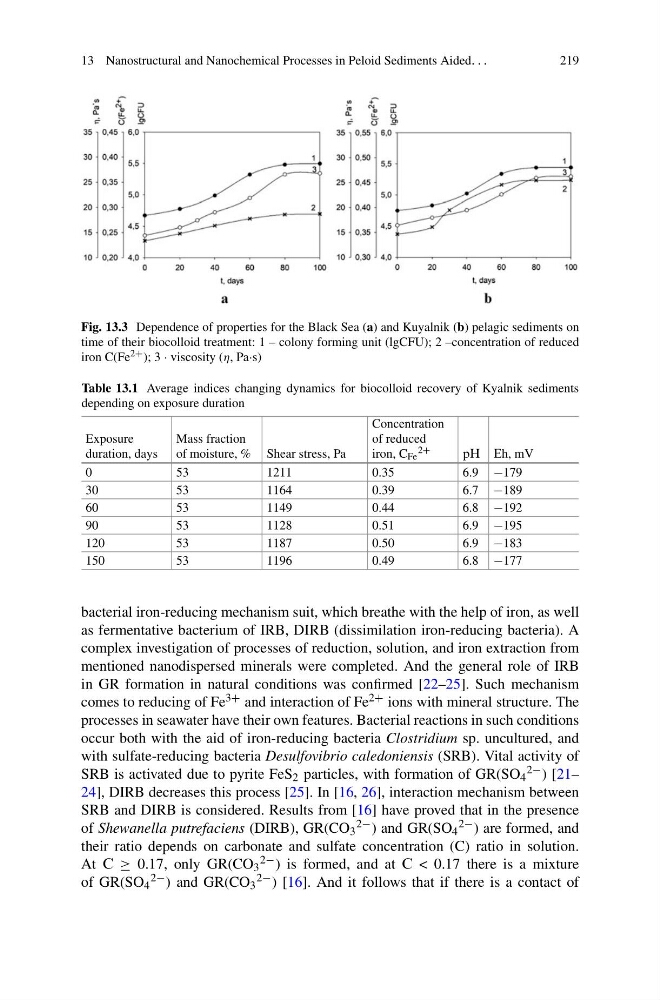
Fig. 13.3 Dependence of properties for the Black Sea (a) and Kuyalnik (b) pelagic sediments on
time of their biocolloid treatment: 1 – colony forming unit (lgCFU); 2 –concentration of reduced
iron C(Fe 2+ ); 3 · viscosity (η, Pa·s)
Table 13.1 Average indices changing dynamics for biocolloid recovery of Kyalnik sediments
depending on exposure duration
Exposure
duration, days
Mass fraction
of moisture, % Shear stress, Pa
Concentration
of reduced
iron, C Fe
2+
Ó° ¨h, mV
0
53
1211
0.35
6.9 −179
30
53
1164
0.39
6.7 −189
60
53
1149
0.44
6.8 −192
90
53
1128
0.51
6.9 −195
120
53
1187
0.50
6.9 −183
150
53
1196
0.49
6.8 −177
bacterial iron-reducing mechanism suit, which breathe with the help of iron, as well
as fermentative bacterium of IRB, DIRB (dissimilation iron-reducing bacteria). A
complex investigation of processes of reduction, solution, and iron extraction from
mentioned nanodispersed minerals were completed. And the general role of IRB
in GR formation in natural conditions was confirmed [22–25]. Such mechanism
comes to reducing of Fe 3+ and interaction of Fe 2+ ions with mineral structure. The
processes in seawater have their own features. Bacterial reactions in such conditions
occur both with the aid of iron-reducing bacteria Clostridium sp. uncultured, and
with sulfate-reducing bacteria Desulfovibrio caledoniensis (SRB). Vital activity of
SRB is activated due to pyrite FeS 2 particles, with formation of GR(SO 4
2− ) [21–
24], DIRB decreases this process [25]. In [16, 26], interaction mechanism between
SRB and DIRB is considered. Results from [16] have proved that in the presence
of Shewanella putrefaciens (DIRB), GR(CO 3
2− ) and GR(SO 4
2− ) are formed, and
their ratio depends on carbonate and sulfate concentration (C) ratio in solution.
At ´ ≥ 0.17, only GR(CO 3
2− ) is formed, and at ´ < 0.17 there is a mixture
of GR(SO 4
2− ) and GR(CO 3
2− ) [16]. And it follows that if there is a contact of
219
Fig. 13.3 Dependence of properties for the Black Sea (a) and Kuyalnik (b) pelagic sediments on
time of their biocolloid treatment: 1 – colony forming unit (lgCFU); 2 –concentration of reduced
iron C(Fe 2+ ); 3 · viscosity (η, Pa·s)
Table 13.1 Average indices changing dynamics for biocolloid recovery of Kyalnik sediments
depending on exposure duration
Exposure
duration, days
Mass fraction
of moisture, % Shear stress, Pa
Concentration
of reduced
iron, C Fe
2+
Ó° ¨h, mV
0
53
1211
0.35
6.9 −179
30
53
1164
0.39
6.7 −189
60
53
1149
0.44
6.8 −192
90
53
1128
0.51
6.9 −195
120
53
1187
0.50
6.9 −183
150
53
1196
0.49
6.8 −177
bacterial iron-reducing mechanism suit, which breathe with the help of iron, as well
as fermentative bacterium of IRB, DIRB (dissimilation iron-reducing bacteria). A
complex investigation of processes of reduction, solution, and iron extraction from
mentioned nanodispersed minerals were completed. And the general role of IRB
in GR formation in natural conditions was confirmed [22–25]. Such mechanism
comes to reducing of Fe 3+ and interaction of Fe 2+ ions with mineral structure. The
processes in seawater have their own features. Bacterial reactions in such conditions
occur both with the aid of iron-reducing bacteria Clostridium sp. uncultured, and
with sulfate-reducing bacteria Desulfovibrio caledoniensis (SRB). Vital activity of
SRB is activated due to pyrite FeS 2 particles, with formation of GR(SO 4
2− ) [21–
24], DIRB decreases this process [25]. In [16, 26], interaction mechanism between
SRB and DIRB is considered. Results from [16] have proved that in the presence
of Shewanella putrefaciens (DIRB), GR(CO 3
2− ) and GR(SO 4
2− ) are formed, and
their ratio depends on carbonate and sulfate concentration (C) ratio in solution.
At ´ ≥ 0.17, only GR(CO 3
2− ) is formed, and at ´ < 0.17 there is a mixture
of GR(SO 4
2− ) and GR(CO 3
2− ) [16]. And it follows that if there is a contact of