

12 Mechanical and Thermal Characteristics of Irradiation Cross-linked Hydrogels
211
Table 12.2 Thermogravimetric parameters of prepared hydrogels
C PVA , ×10 2 g/ml
Stage
(T i − T f ), o C
T, o C
T max , o C
W, %
Residue
4
I
50–204
154
4.31
1.43
II
204–390
186
342
50.25
III
390–466
76
422
30.82
IV
466–552
86
473
17.5
6
I
50–210
160
4
1.4
II
210–388
178
338
51.16
III
388–475
87
422
31.45
IV
475–560
85
488
15.98
8
I
50–207
157
3.3
1.32
II
207–388
181
342
47.87
III
388–475
87
426
33.87
IV
475–561
86
486
16.94
HO HO HO
OH
H
Chain-stripping
Elimination
- n H 2 O
H O
Partial Decomposition Product
HO
- n H 2 O
Chain-scission
RH
CH 3
CH 3
Methyl-terminated
Polyene, cis and trans
Polyene
cross-linked PVA
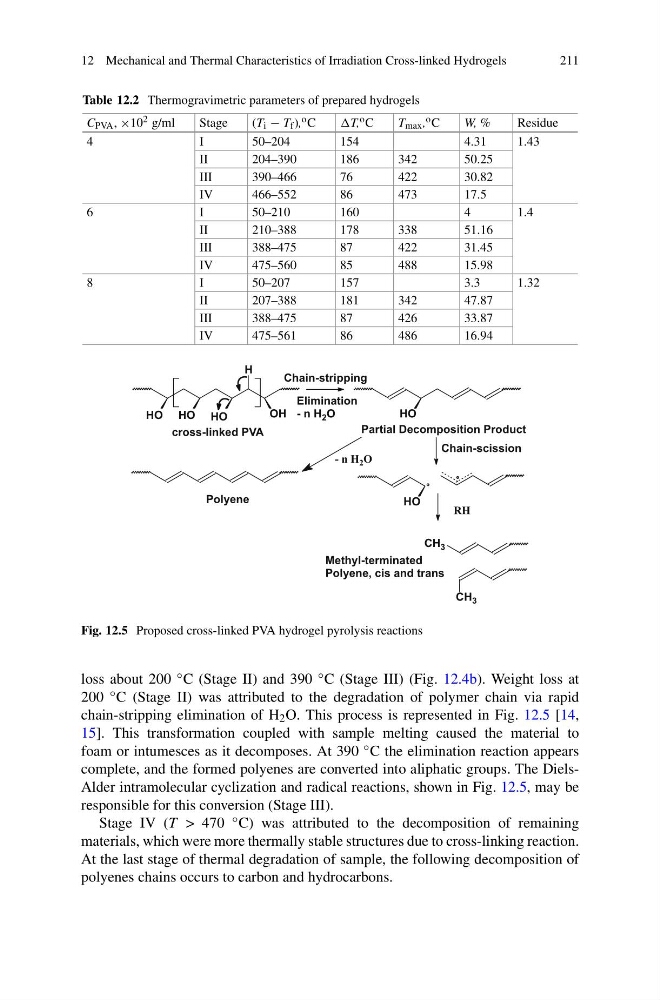
Fig. 12.5 Proposed cross-linked PVA hydrogel pyrolysis reactions
loss about 200 ◦ C (Stage II) and 390 ◦ C (Stage III) (Fig. 12.4b). Weight loss at
200 ◦ C (Stage II) was attributed to the degradation of polymer chain via rapid
chain-stripping elimination of H 2 O. This process is represented in Fig. 12.5 [14,
15]. This transformation coupled with sample melting caused the material to
foam or intumesces as it decomposes. At 390 ◦ C the elimination reaction appears
complete, and the formed polyenes are converted into aliphatic groups. The DielsAlder intramolecular cyclization and radical reactions, shown in Fig. 12.5, may be
responsible for this conversion (Stage III).
Stage IV (T > 470 ◦ C) was attributed to the decomposition of remaining
materials, which were more thermally stable structures due to cross-linking reaction.
At the last stage of thermal degradation of sample, the following decomposition of
polyenes chains occurs to carbon and hydrocarbons.
211
Table 12.2 Thermogravimetric parameters of prepared hydrogels
C PVA , ×10 2 g/ml
Stage
(T i − T f ), o C
T, o C
T max , o C
W, %
Residue
4
I
50–204
154
4.31
1.43
II
204–390
186
342
50.25
III
390–466
76
422
30.82
IV
466–552
86
473
17.5
6
I
50–210
160
4
1.4
II
210–388
178
338
51.16
III
388–475
87
422
31.45
IV
475–560
85
488
15.98
8
I
50–207
157
3.3
1.32
II
207–388
181
342
47.87
III
388–475
87
426
33.87
IV
475–561
86
486
16.94
HO HO HO
OH
H
Chain-stripping
Elimination
- n H 2 O
H O
Partial Decomposition Product
HO
- n H 2 O
Chain-scission
RH
CH 3
CH 3
Methyl-terminated
Polyene, cis and trans
Polyene
cross-linked PVA
Fig. 12.5 Proposed cross-linked PVA hydrogel pyrolysis reactions
loss about 200 ◦ C (Stage II) and 390 ◦ C (Stage III) (Fig. 12.4b). Weight loss at
200 ◦ C (Stage II) was attributed to the degradation of polymer chain via rapid
chain-stripping elimination of H 2 O. This process is represented in Fig. 12.5 [14,
15]. This transformation coupled with sample melting caused the material to
foam or intumesces as it decomposes. At 390 ◦ C the elimination reaction appears
complete, and the formed polyenes are converted into aliphatic groups. The DielsAlder intramolecular cyclization and radical reactions, shown in Fig. 12.5, may be
responsible for this conversion (Stage III).
Stage IV (T > 470 ◦ C) was attributed to the decomposition of remaining
materials, which were more thermally stable structures due to cross-linking reaction.
At the last stage of thermal degradation of sample, the following decomposition of
polyenes chains occurs to carbon and hydrocarbons.