

288
(a)-1
(b)-1
(a)-2
(b)-2
Biologically Inspired Robotics
15.4 Working of the Hand Rehabilitation Machine
The attachment of the hand rehabilitation machine to a hand is shown in
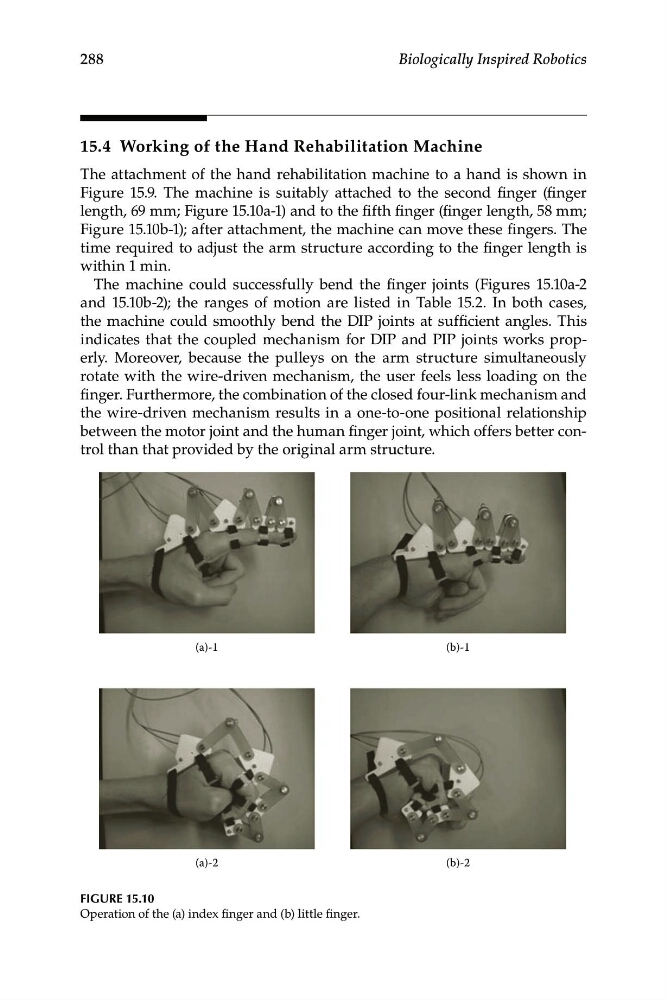
Figure 15.9. The machine is suitably attached to the second finger (finger
length, 69 mm; Figure 15.10a-1) and to the fifth finger (finger length, 58 mm;
Figure 15.10b-1); after attachment, the machine can move these fingers. The
time required to adjust the arm structure according to the finger length is
within 1 min.
The machine could successfully bend the finger joints (Figures 15.10a-2
and 15.10b-2); the ranges of motion are listed in Table 15.2. In both cases,
the machine could smoothly bend the DIP joints at sufficient angles. This
indicates that the coupled mechanism for DIP and PIP joints works properly. Moreover, because the pulleys on the arm structure simultaneously
rotate with the wire-driven mechanism, the user feels less loading on the
finger. Furthermore, the combination of the closed four-link mechanism and
the wire-driven mechanism results in a one-to-one positional relationship
between the motor joint and the human finger joint, which offers better control than that provided by the original arm structure.
FIGURE 15.10
Operation of the (a) index finger and (b) little finger.