

16
2 Surface Reactions and Fabrication of Bioreactive Platforms …
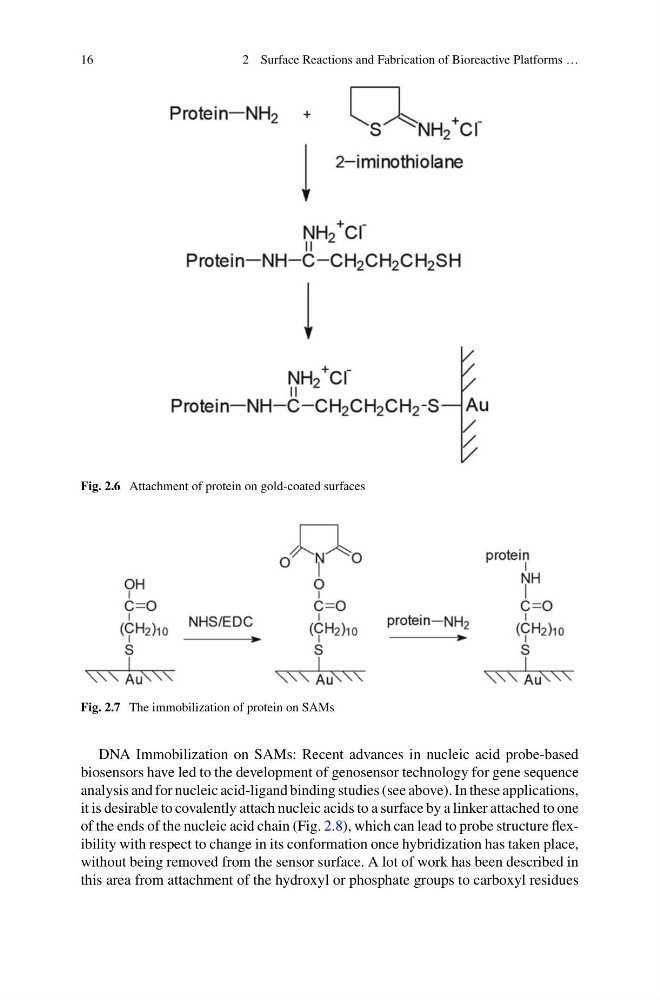
Fig. 2.6 Attachment of protein on gold-coated surfaces
Fig. 2.7 The immobilization of protein on SAMs
DNA Immobilization on SAMs: Recent advances in nucleic acid probe-based
biosensors have led to the development of genosensor technology for gene sequence
analysis and for nucleic acid-ligand binding studies (see above). In these applications,
it is desirable to covalently attach nucleic acids to a surface by a linker attached to one
of the ends of the nucleic acid chain (Fig. 2.8), which can lead to probe structure flexibility with respect to change in its conformation once hybridization has taken place,
without being removed from the sensor surface. A lot of work has been described in
this area from attachment of the hydroxyl or phosphate groups to carboxyl residues
2 Surface Reactions and Fabrication of Bioreactive Platforms …
Fig. 2.6 Attachment of protein on gold-coated surfaces
Fig. 2.7 The immobilization of protein on SAMs
DNA Immobilization on SAMs: Recent advances in nucleic acid probe-based
biosensors have led to the development of genosensor technology for gene sequence
analysis and for nucleic acid-ligand binding studies (see above). In these applications,
it is desirable to covalently attach nucleic acids to a surface by a linker attached to one
of the ends of the nucleic acid chain (Fig. 2.8), which can lead to probe structure flexibility with respect to change in its conformation once hybridization has taken place,
without being removed from the sensor surface. A lot of work has been described in
this area from attachment of the hydroxyl or phosphate groups to carboxyl residues