

2.2 Surface Reactions of Organic and Polymeric Films
15
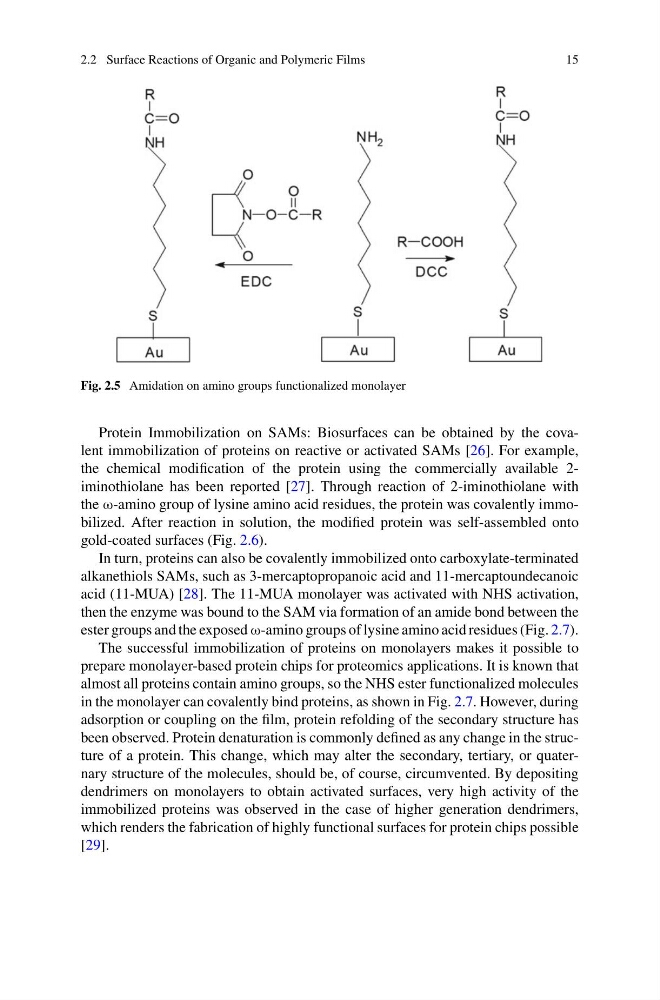
Fig. 2.5 Amidation on amino groups functionalized monolayer
Protein Immobilization on SAMs: Biosurfaces can be obtained by the covalent immobilization of proteins on reactive or activated SAMs [26]. For example,
the chemical modification of the protein using the commercially available 2iminothiolane has been reported [27]. Through reaction of 2-iminothiolane with
the ω-amino group of lysine amino acid residues, the protein was covalently immobilized. After reaction in solution, the modified protein was self-assembled onto
gold-coated surfaces (Fig. 2.6).
In turn, proteins can also be covalently immobilized onto carboxylate-terminated
alkanethiols SAMs, such as 3-mercaptopropanoic acid and 11-mercaptoundecanoic
acid (11-MUA) [28]. The 11-MUA monolayer was activated with NHS activation,
then the enzyme was bound to the SAM via formation of an amide bond between the
ester groups and the exposed ω-amino groups of lysine amino acid residues (Fig. 2.7).
The successful immobilization of proteins on monolayers makes it possible to
prepare monolayer-based protein chips for proteomics applications. It is known that
almost all proteins contain amino groups, so the NHS ester functionalized molecules
in the monolayer can covalently bind proteins, as shown in Fig. 2.7. However, during
adsorption or coupling on the film, protein refolding of the secondary structure has
been observed. Protein denaturation is commonly defined as any change in the structure of a protein. This change, which may alter the secondary, tertiary, or quaternary structure of the molecules, should be, of course, circumvented. By depositing
dendrimers on monolayers to obtain activated surfaces, very high activity of the
immobilized proteins was observed in the case of higher generation dendrimers,
which renders the fabrication of highly functional surfaces for protein chips possible
[29].
15
Fig. 2.5 Amidation on amino groups functionalized monolayer
Protein Immobilization on SAMs: Biosurfaces can be obtained by the covalent immobilization of proteins on reactive or activated SAMs [26]. For example,
the chemical modification of the protein using the commercially available 2iminothiolane has been reported [27]. Through reaction of 2-iminothiolane with
the ω-amino group of lysine amino acid residues, the protein was covalently immobilized. After reaction in solution, the modified protein was self-assembled onto
gold-coated surfaces (Fig. 2.6).
In turn, proteins can also be covalently immobilized onto carboxylate-terminated
alkanethiols SAMs, such as 3-mercaptopropanoic acid and 11-mercaptoundecanoic
acid (11-MUA) [28]. The 11-MUA monolayer was activated with NHS activation,
then the enzyme was bound to the SAM via formation of an amide bond between the
ester groups and the exposed ω-amino groups of lysine amino acid residues (Fig. 2.7).
The successful immobilization of proteins on monolayers makes it possible to
prepare monolayer-based protein chips for proteomics applications. It is known that
almost all proteins contain amino groups, so the NHS ester functionalized molecules
in the monolayer can covalently bind proteins, as shown in Fig. 2.7. However, during
adsorption or coupling on the film, protein refolding of the secondary structure has
been observed. Protein denaturation is commonly defined as any change in the structure of a protein. This change, which may alter the secondary, tertiary, or quaternary structure of the molecules, should be, of course, circumvented. By depositing
dendrimers on monolayers to obtain activated surfaces, very high activity of the
immobilized proteins was observed in the case of higher generation dendrimers,
which renders the fabrication of highly functional surfaces for protein chips possible
[29].