

174
9 Bioinspired Hierarchically Structured Polymer Interfaces …
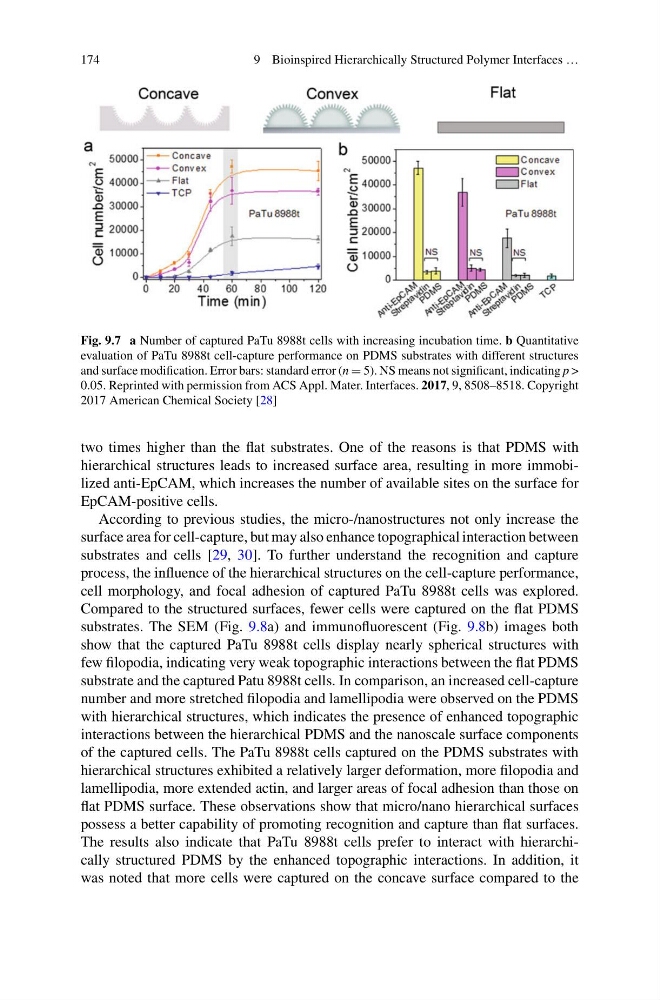
Fig. 9.7 a Number of captured PaTu 8988t cells with increasing incubation time. b Quantitative
evaluation of PaTu 8988t cell-capture performance on PDMS substrates with different structures
and surface modification. Error bars: standard error (n = 5). NS means not significant, indicating p >
0.05. Reprinted with permission from ACS Appl. Mater. Interfaces. 2017, 9, 8508–8518. Copyright
2017 American Chemical Society [28]
two times higher than the flat substrates. One of the reasons is that PDMS with
hierarchical structures leads to increased surface area, resulting in more immobilized anti-EpCAM, which increases the number of available sites on the surface for
EpCAM-positive cells.
According to previous studies, the micro-/nanostructures not only increase the
surface area for cell-capture, but may also enhance topographical interaction between
substrates and cells [29, 30]. To further understand the recognition and capture
process, the influence of the hierarchical structures on the cell-capture performance,
cell morphology, and focal adhesion of captured PaTu 8988t cells was explored.
Compared to the structured surfaces, fewer cells were captured on the flat PDMS
substrates. The SEM (Fig. 9.8a) and immunofluorescent (Fig. 9.8b) images both
show that the captured PaTu 8988t cells display nearly spherical structures with
few filopodia, indicating very weak topographic interactions between the flat PDMS
substrate and the captured Patu 8988t cells. In comparison, an increased cell-capture
number and more stretched filopodia and lamellipodia were observed on the PDMS
with hierarchical structures, which indicates the presence of enhanced topographic
interactions between the hierarchical PDMS and the nanoscale surface components
of the captured cells. The PaTu 8988t cells captured on the PDMS substrates with
hierarchical structures exhibited a relatively larger deformation, more filopodia and
lamellipodia, more extended actin, and larger areas of focal adhesion than those on
flat PDMS surface. These observations show that micro/nano hierarchical surfaces
possess a better capability of promoting recognition and capture than flat surfaces.
The results also indicate that PaTu 8988t cells prefer to interact with hierarchically structured PDMS by the enhanced topographic interactions. In addition, it
was noted that more cells were captured on the concave surface compared to the
9 Bioinspired Hierarchically Structured Polymer Interfaces …
Fig. 9.7 a Number of captured PaTu 8988t cells with increasing incubation time. b Quantitative
evaluation of PaTu 8988t cell-capture performance on PDMS substrates with different structures
and surface modification. Error bars: standard error (n = 5). NS means not significant, indicating p >
0.05. Reprinted with permission from ACS Appl. Mater. Interfaces. 2017, 9, 8508–8518. Copyright
2017 American Chemical Society [28]
two times higher than the flat substrates. One of the reasons is that PDMS with
hierarchical structures leads to increased surface area, resulting in more immobilized anti-EpCAM, which increases the number of available sites on the surface for
EpCAM-positive cells.
According to previous studies, the micro-/nanostructures not only increase the
surface area for cell-capture, but may also enhance topographical interaction between
substrates and cells [29, 30]. To further understand the recognition and capture
process, the influence of the hierarchical structures on the cell-capture performance,
cell morphology, and focal adhesion of captured PaTu 8988t cells was explored.
Compared to the structured surfaces, fewer cells were captured on the flat PDMS
substrates. The SEM (Fig. 9.8a) and immunofluorescent (Fig. 9.8b) images both
show that the captured PaTu 8988t cells display nearly spherical structures with
few filopodia, indicating very weak topographic interactions between the flat PDMS
substrate and the captured Patu 8988t cells. In comparison, an increased cell-capture
number and more stretched filopodia and lamellipodia were observed on the PDMS
with hierarchical structures, which indicates the presence of enhanced topographic
interactions between the hierarchical PDMS and the nanoscale surface components
of the captured cells. The PaTu 8988t cells captured on the PDMS substrates with
hierarchical structures exhibited a relatively larger deformation, more filopodia and
lamellipodia, more extended actin, and larger areas of focal adhesion than those on
flat PDMS surface. These observations show that micro/nano hierarchical surfaces
possess a better capability of promoting recognition and capture than flat surfaces.
The results also indicate that PaTu 8988t cells prefer to interact with hierarchically structured PDMS by the enhanced topographic interactions. In addition, it
was noted that more cells were captured on the concave surface compared to the