

675
nontoxic and environment-friendly in nature. To increase the solvating power, CO 2
is used with other polar solvents to increase the polarity [38].
A variety of chemicals like glycolipids, phospholipids, triglycerols, phenalenone, sterols and phenolic compounds such as flavonoids and quinones have been
identified in the extract of different parts of water hyacinth. These compounds have
shown antimicrobial action, antiproliferative activity against malignant cells, cure
against inflammation and antioxidant activity [39]. Table 1 provides details about
various phytochemicals extracted from different parts of water hyacinth.
The extraction of lipophilic and polar components from roots, stem, leaves and
flowers has been carried out [42] along with antioxidant activity. After Soxhlet
extraction using dichloromethane, the extract was analysed for lipophilic components. Solid-liquid extraction followed by Soxhlet extraction for 1:100 g/mL of biomass sample was performed with the solvent mixture of methanol/water/acetic acid
having 47.5:47.5:5.0 (v:v:v) proportion for 24 h to identify the polar components. A
total of 29 components were analysed in the lipophilic extract of water hyacinth.
The total mass of extract obtained was in the range of 22.42–39.17% (wt); amongst
them glycerol, hexadecanoic acid, linoleic acid, linolenic acid, cholesterol, methyl
cholesterol, stigmasterol and β-sitosterol were found in significant amount. These
lipophilic compounds are classified into four groups of families as sterols (ST), fatty
acids (FA), long-chain aliphatic alcohols (LCAA) and aromatic compounds, and the
concentration of these compounds was in the range of 9.80–22.55% (wt),
7.42–13.13% (wt), 0.17–1.26% (wt) and 0.15–0.40% (wt), respectively. The most
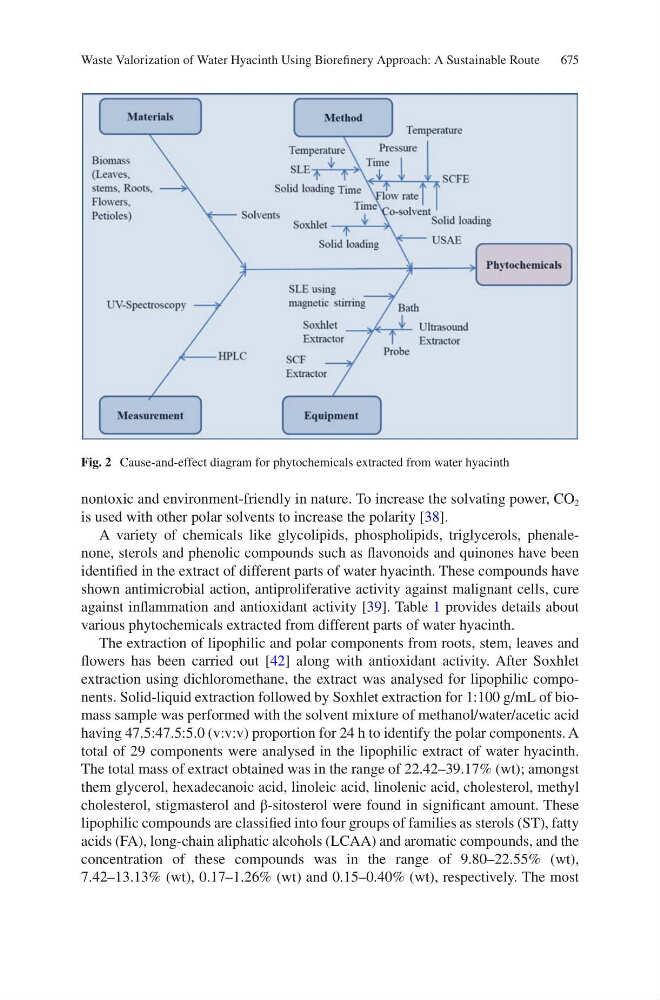
Fig. 2 Cause-and-effect diagram for phytochemicals extracted from water hyacinth
Waste Valorization of Water Hyacinth Using Biorefinery Approach: A Sustainable Route