

674
hyacinth have exhibited antioxidant, antibacterial, antifungal and anticancer activities. All these extractives have potential applications in food, pharmaceutical and
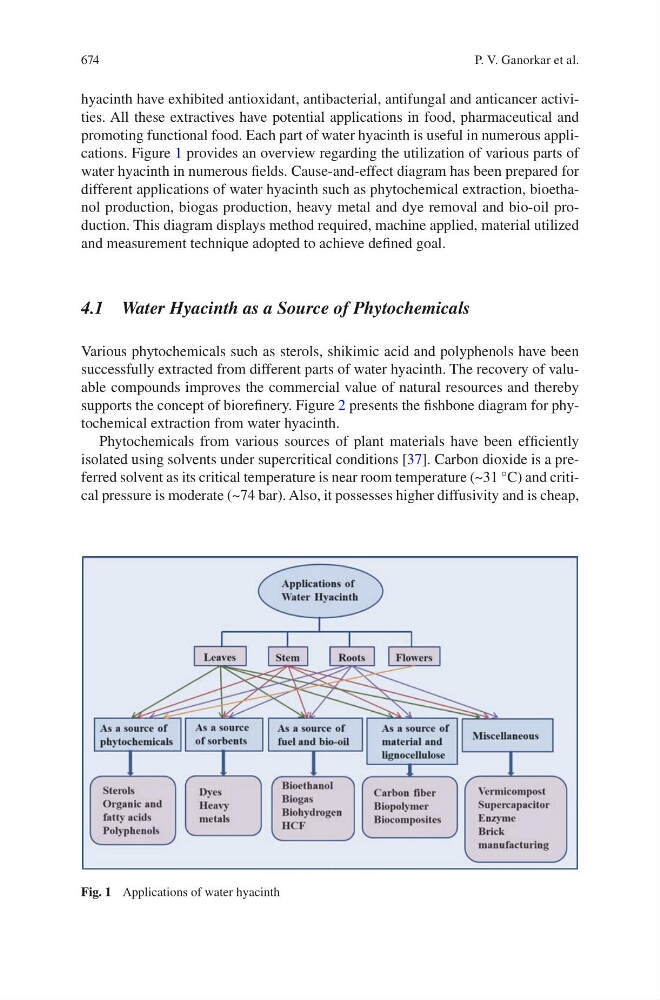
promoting functional food. Each part of water hyacinth is useful in numerous applications. Figure 1 provides an overview regarding the utilization of various parts of
water hyacinth in numerous fields. Cause-and-effect diagram has been prepared for
different applications of water hyacinth such as phytochemical extraction, bioethanol production, biogas production, heavy metal and dye removal and bio-oil production. This diagram displays method required, machine applied, material utilized
and measurement technique adopted to achieve defined goal.
4.1 Water Hyacinth as a Source of Phytochemicals
Various phytochemicals such as sterols, shikimic acid and polyphenols have been
successfully extracted from different parts of water hyacinth. The recovery of valuable compounds improves the commercial value of natural resources and thereby
supports the concept of biorefinery. Figure 2 presents the fishbone diagram for phytochemical extraction from water hyacinth.
Phytochemicals from various sources of plant materials have been efficiently
isolated using solvents under supercritical conditions [37]. Carbon dioxide is a preferred solvent as its critical temperature is near room temperature (~31 °C) and critical pressure is moderate (~74 bar). Also, it possesses higher diffusivity and is cheap,
Fig. 1 Applications of water hyacinth
P. V. Ganorkar et al.