

522
lead to the commercialization of the process and the intricacies in the synthesis of
SAPO-34 with appropriate structure and topology have been published. MTO process has several advantages in comparison with gas/naphtha steam cracking like:
– Lower reaction temperature.
– Easier separation and purification of products.
– Relatively less capital investment.
– Feedstock flexibility.
Raw material (syngas) for methanol could be obtained from different resources:
biomass or coal, waste gases, etc. Since methanol could be obtained from syngas
derived from coal gasification, the process is named as CTO (coal to olefins), and a
commercial plant based on this technology with 0.6 MMTA capacity for ethylene/
propylene has been set up by China Shenhua Energy, China [148].
Another process for the conversion of methanol into building block chemicals is
the methanol to propylene (MTP) process technology developed by Lurgi AG [153].
In the late 1990s, availability of natural gas in plenty led to setting up
MegaMethanol plants (5000 MT/day) by Lurgi [154]. With the knowledge base
available at that point of time on MTO process using ZSM-5 catalyst [149, 152],
Lurgi developed MTP processes to selectively produce propylene, by using suitably
modified ZSM-5 catalyst. The process [153, 155] uses a series of adiabatic fixed bed
reactors (Fig. 14), wherein methanol is converted to dimethyl ether (DME) at near
thermodynamic equilibrium in the pre-reactor. Feed consisting of methanol, DME
and water pass through five to six reactors loaded with highly selective and stable
ZSM-5 catalyst at 1.3–1.6 bar pressure and 400–450 °C temperature along with
recycle olefin stream and steam, to ensure stability of the catalyst. >99% conversion
of methanol and DME is achieved with carbon-based propylene selectivity of >70%
along with some quantity of gasoline as by-product. After 500–600 h of operation,
the catalyst needs regeneration in situ, by controlled coke burning. According to the
established material balance, with 1.67 MTA of methanol as feed, 474,000 MT of
propylene and 185,000 MT of gasoline could be produced. The first commercial
plant using MTP process technology was established in 2011 in China followed by
two more plants, and now it is considered as proven technology for on-purpose
propylene production [156]. A techno-economic evaluation [157] of MTO vs. MTP
has shown that both processes are equally viable, subject to variations in natural
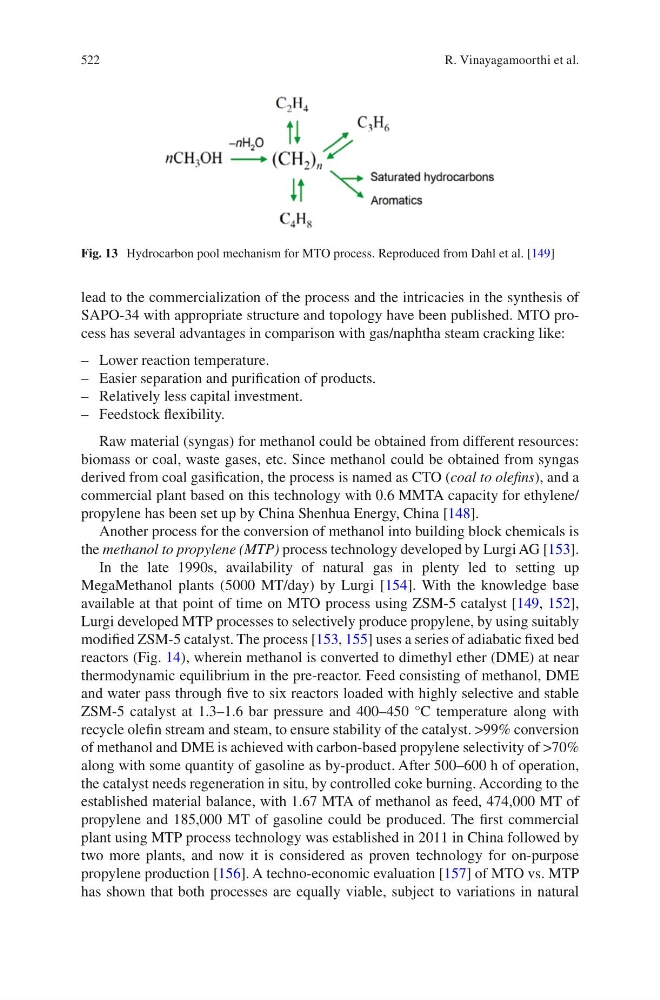
Fig. 13 Hydrocarbon pool mechanism for MTO process. Reproduced from Dahl et al. [149]
R. Vinayagamoorthi et al.