

523
gas/methanol and products’ prices, and MTP has slight advantage in terms of lower
CO 2 emission (MT/MT of propylene). Though CTO process may have some advantage due to low-cost coal as raw material, high emission of chemical as well as
energy-related CO 2 renders the process environmentally unfriendly [158].
4.2 Conversion of Ethanol to Ethylene
MTO, MTP and CTO processes utilize methanol produced from non-renewable
resources. Availability of large quantities of bioethanol at low cost has resulted in
the development of catalytic processes for the production of C 2 –C 4 olefins from
bioethanol. Production of ethylene by catalytic dehydration of ethanol/bioethanol
was established long ago [159, 160], but biomass-derived ethylene as feedstock for
petrochemicals was not cost-effective vis-à-vis ethylene from steam cracking [161].
Abundance of bioethanol from different biomass resources (corn, sugar cane and
cellulosic biomass) revived the interest in bioethanol conversion to ethylene.
Ethanol dehydration being endothermic in nature (45.7 kJ/mole) requires reaction temperatures in the range 300–500 °C. While acetaldehyde is formed by dehydrogenation at higher temperatures, diethyl ether is formed at temperatures below
the optimum. Besides, the product water also influences the reaction. Hence, controlling reaction temperature and maintaining optimum contact time are needed to
minimize side reactions.
In practice, isothermal and adiabatic fixed bed and fluidized bed reactors have
been considered [163, 164]. Different types of catalysts, like modified alumina,
modified HZSM-5, SAPO-34, MCM-41 and modified heteropoly acid catalysts,
have been explored, mainly to minimize by-products’ formation and improve the
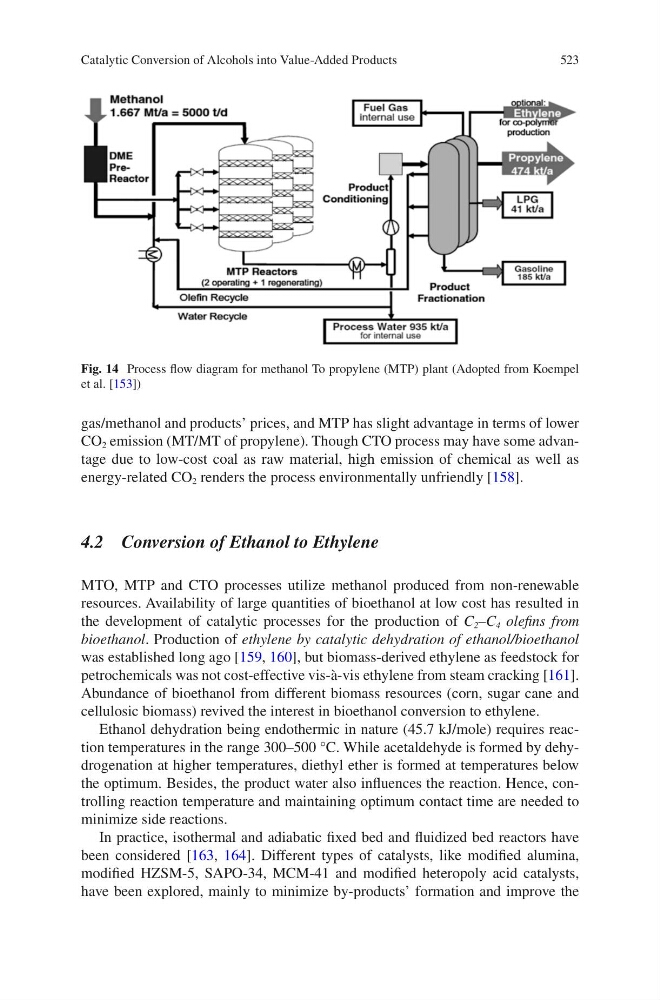
Fig. 14 Process flow diagram for methanol To propylene (MTP) plant (Adopted from Koempel
et al. [153])
Catalytic Conversion of Alcohols into Value-Added Products