

521
Reactor Section
Product Recovery Section
Ethylene
Caustic
Product
Flute
Gas
Ethane
Water
D
R
Rx
Air
Rx = Reactor
R = Regenerator
S = Separator
CS = Caustic Srubber
D = Dryer
C 3 = C 3 Splitter
DP = Depropanizer
DM = Demethanizer
DE = Deethanizer
C 2 = C 2 Splitter
MeOH
Fluid-Bed
Reactor
S
Propylene
Propane
D
P
D
E
D
M
C
S
C 3
C 2
C 4 +
CO 2
CH 4
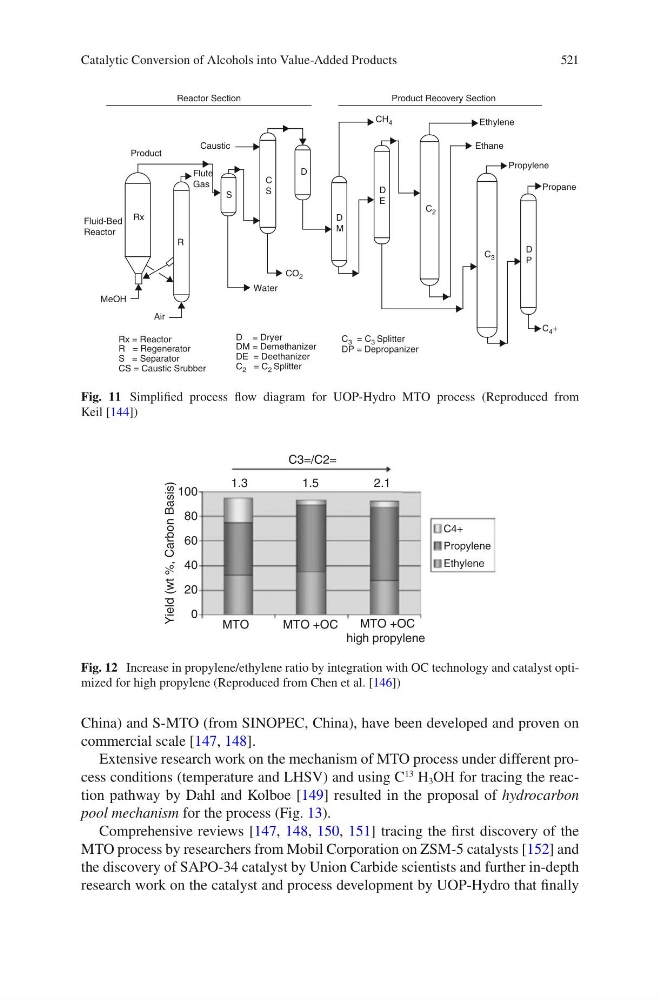
Fig. 11 Simplified process flow diagram for UOP-Hydro MTO process (Reproduced from
Keil [144])
100
1.3
1.5
C3=/C2=
2.1
C4+
Propylene
Ethylene
80
60
40
Yield (wt %, Carbon Basis)
20
0
MTO
MTO +OC
MTO +OC
high propylene
Fig. 12 Increase in propylene/ethylene ratio by integration with OC technology and catalyst optimized for high propylene (Reproduced from Chen et al. [146])
China) and S-MTO (from SINOPEC, China), have been developed and proven on
commercial scale [147, 148].
Extensive research work on the mechanism of MTO process under different process conditions (temperature and LHSV) and using C
13
H 3 OH for tracing the reaction pathway by Dahl and Kolboe [149] resulted in the proposal of hydrocarbon
pool mechanism for the process (Fig. 13).
Comprehensive reviews [147, 148, 150, 151] tracing the first discovery of the
MTO process by researchers from Mobil Corporation on ZSM-5 catalysts [152] and
the discovery of SAPO-34 catalyst by Union Carbide scientists and further in-depth
research work on the catalyst and process development by UOP-Hydro that finally
Catalytic Conversion of Alcohols into Value-Added Products