

509
and moving towards developing sustainable, low-carbon processes, using renewable biomass resources. The basic attributes of green/renewable methanol are (1)
use of renewable carbon source/waste product, (2) the hydrogen used is not produced from fossil fuel sources and (3) the energy used is generated from renewable
sources [32–34]. Table 1 gives a list of such efforts for developing processes that
utilize syngas derived from renewable biomass resources, utilize carbon oxides
from industrial waste gases and municipal solid wastes and use renewable hydrogen
by electrolysis [35]. The first three processes are in the advanced stage of development. Compared to fossil-based, renewable methanol production results in 65–90%
reduction in CO 2 emission, depending on the feedstock and process.
Synthesis of methanol via enzymatic routes, by oxidation of methane by methylotrophs (Methylosinus trichosporium) and ammonia-oxidizing bacteria
(Nitrosomonas spp.), both using the enzyme methane monooxygenase, has been
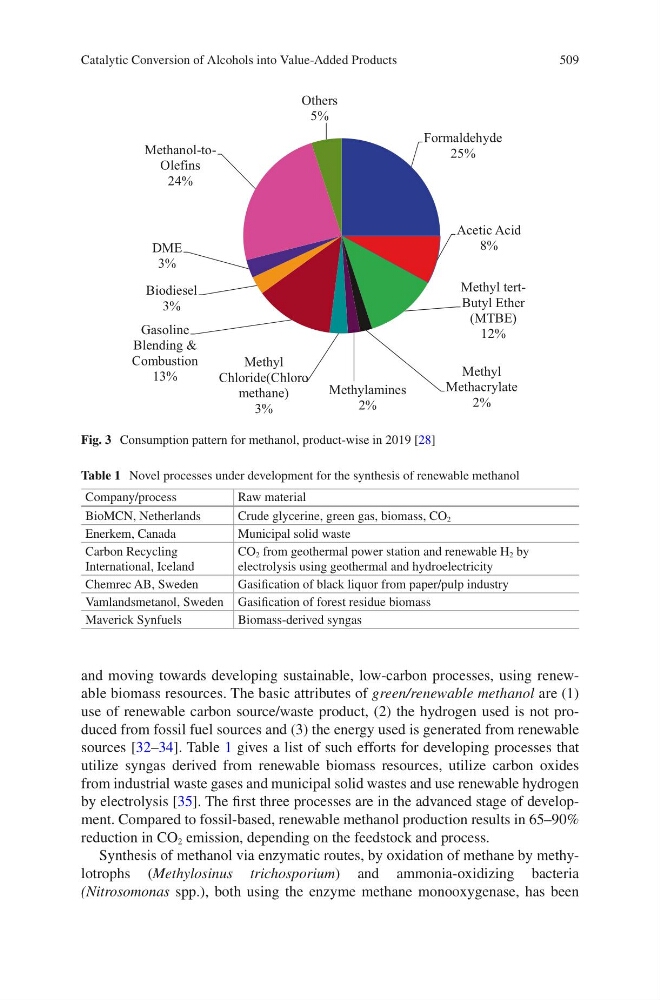
Formaldehyde
25%
Acetic Acid
8%
Methyl tertButyl Ether
(MTBE)
12%
Methyl
Methacrylate
2%
Methylamines
2%
Methyl
Chloride(Chloro
methane)
3%
Gasoline
Blending &
Combustion
13%
Biodiesel
3%
DME
3%
Methanol-toOlefins
24%
Others
5%
Fig. 3 Consumption pattern for methanol, product-wise in 2019 [28]
Table 1 Novel processes under development for the synthesis of renewable methanol
Company/process
Raw material
BioMCN, Netherlands
Crude glycerine, green gas, biomass, CO 2
Enerkem, Canada
Municipal solid waste
Carbon Recycling
International, Iceland
CO 2 from geothermal power station and renewable H 2 by
electrolysis using geothermal and hydroelectricity
Chemrec AB, Sweden
Gasification of black liquor from paper/pulp industry
Vamlandsmetanol, Sweden Gasification of forest residue biomass
Maverick Synfuels
Biomass-derived syngas
Catalytic Conversion of Alcohols into Value-Added Products