

488
performance towards glycerol acetalization reaction [178]. More better performances are obtained towards glycerol acetalization reaction when hierarchical
structure is created inside the zeolite framework [179]. As a result, faster diffusion
of the reactants to active sites took place. The selectivity of the product can be controlled by the organic acid treatment of zeolite beta catalyst. Basically, acidity of the
zeolite is associated with the aluminium content; the higher is the content of aluminium, the higher is the Bronstead as well as Lewis acidity. When zeolite beta is
treated with different organic acids such as phenoldisulfonic acid, methanesulfonic
acid and paratoluenesulfonic acid, aluminium gets removed from the edge as well
as framework of the zeolites [180], which causes reduction of acidity but increase in
surface area and pore volume, but it depends on how much amount of aluminium
gets out from zeolite beta. Each organic acid shows different ability towards dealumination process and follows the order of phenoldisulfonic acid → methanesulfonic
acid → paratoluenesulfonic acid. So, it is obvious that the paratoluenesulfonic acidtreated sample exhibits highest amount of acid sites and lowest surface area.
Interestingly, there is not any change in structure upon acid treatment. Among acidtreated zeolite beta, phenoldisulfonic acid showed 100% selectivity towards fivemembered ketal (solketal) because it has the highest surface area and pore volume
due to which six-membered rings can be easily converted to five-membered rings
through rearrangement. Even concentration of phenoldisulfonic acid has significant
effect on solketal selectivity. During acid treatment, decreasing the concentration of
phenoldisulfonic acid reduces pore volume and surface area but increases acid
amount to a greater extent. On the contrary, decrease in acid concentration decreases
the volume space acidity factor (VSA) which restricts rearrangement of sixmembered to five-membered ring (solketal) and eventually lowers the selectivity of
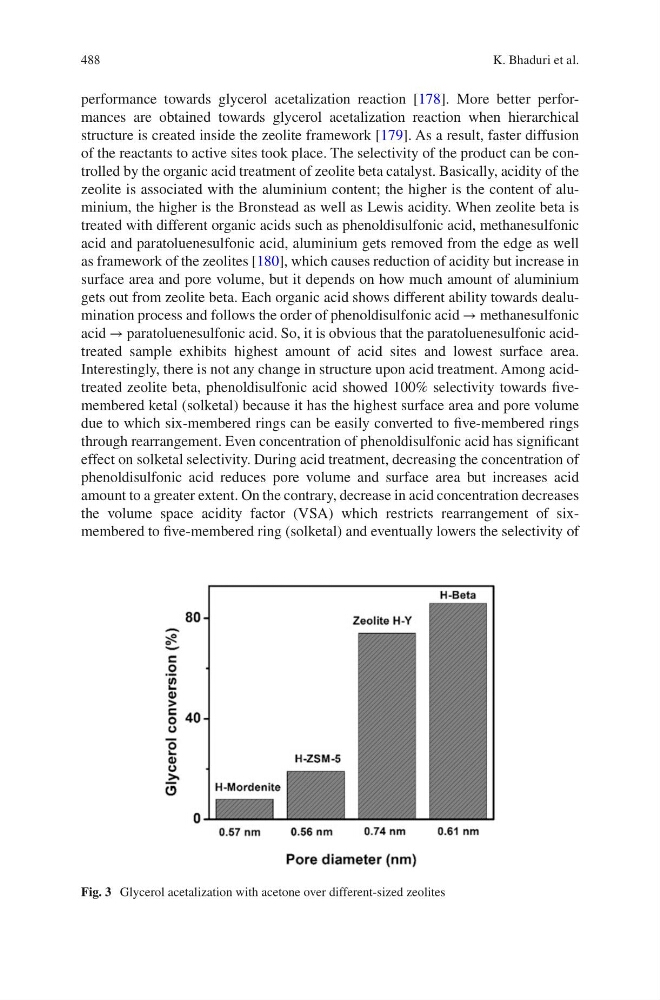
Fig. 3 Glycerol acetalization with acetone over different-sized zeolites
K. Bhaduri et al.
performance towards glycerol acetalization reaction [178]. More better performances are obtained towards glycerol acetalization reaction when hierarchical
structure is created inside the zeolite framework [179]. As a result, faster diffusion
of the reactants to active sites took place. The selectivity of the product can be controlled by the organic acid treatment of zeolite beta catalyst. Basically, acidity of the
zeolite is associated with the aluminium content; the higher is the content of aluminium, the higher is the Bronstead as well as Lewis acidity. When zeolite beta is
treated with different organic acids such as phenoldisulfonic acid, methanesulfonic
acid and paratoluenesulfonic acid, aluminium gets removed from the edge as well
as framework of the zeolites [180], which causes reduction of acidity but increase in
surface area and pore volume, but it depends on how much amount of aluminium
gets out from zeolite beta. Each organic acid shows different ability towards dealumination process and follows the order of phenoldisulfonic acid → methanesulfonic
acid → paratoluenesulfonic acid. So, it is obvious that the paratoluenesulfonic acidtreated sample exhibits highest amount of acid sites and lowest surface area.
Interestingly, there is not any change in structure upon acid treatment. Among acidtreated zeolite beta, phenoldisulfonic acid showed 100% selectivity towards fivemembered ketal (solketal) because it has the highest surface area and pore volume
due to which six-membered rings can be easily converted to five-membered rings
through rearrangement. Even concentration of phenoldisulfonic acid has significant
effect on solketal selectivity. During acid treatment, decreasing the concentration of
phenoldisulfonic acid reduces pore volume and surface area but increases acid
amount to a greater extent. On the contrary, decrease in acid concentration decreases
the volume space acidity factor (VSA) which restricts rearrangement of sixmembered to five-membered ring (solketal) and eventually lowers the selectivity of
Fig. 3 Glycerol acetalization with acetone over different-sized zeolites
K. Bhaduri et al.