

487
crystal [176]. Recently, hierarchical architecture porosity has been introduced to
improve transport problem either through adaptation of hard template route or
through dealumination process. The term ‘hierarchical’ signifies that the mesopores
are linked to the micropores and to the external surface. This type of system easily
transports the reactant to the active sites through the mesopores and maintains the
shape selectivity through small pores [173, 175–177].
The glycerol acetalization over zeolite catalyst mainly depends on its pore size
and concentration of acid sites. The glycerol acetalization is lower over medium
pore zeolite (H-ZSM-5) and dual pore zeolite (H mordenite) due to the diffusion
limitation, but moderate conversion of zeolite H-Y is mainly due to the combination
of acidity and three-dimensional large pore structure [178]. However, zeolite beta
came with better activity than other zeolites because of its shorter path length and
smaller crystallite size (Fig. 3). The smaller crystallite size favours the diffusion
process. For this reason, larger zeolite beta crystal does not show better
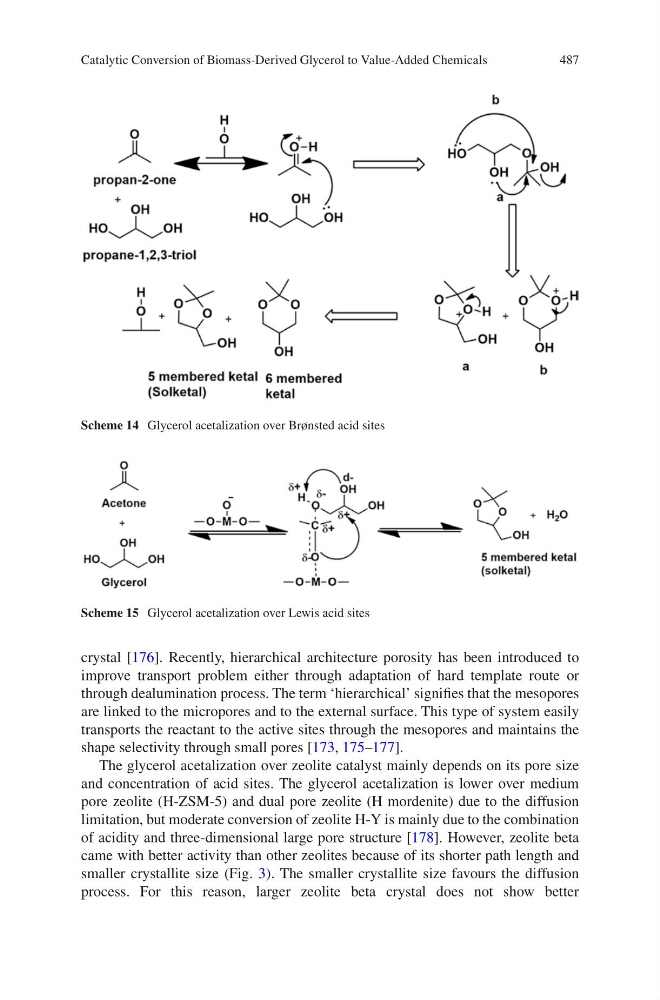
Scheme 14 Glycerol acetalization over Brønsted acid sites
Scheme 15 Glycerol acetalization over Lewis acid sites
Catalytic Conversion of Biomass-Derived Glycerol to Value-Added Chemicals
crystal [176]. Recently, hierarchical architecture porosity has been introduced to
improve transport problem either through adaptation of hard template route or
through dealumination process. The term ‘hierarchical’ signifies that the mesopores
are linked to the micropores and to the external surface. This type of system easily
transports the reactant to the active sites through the mesopores and maintains the
shape selectivity through small pores [173, 175–177].
The glycerol acetalization over zeolite catalyst mainly depends on its pore size
and concentration of acid sites. The glycerol acetalization is lower over medium
pore zeolite (H-ZSM-5) and dual pore zeolite (H mordenite) due to the diffusion
limitation, but moderate conversion of zeolite H-Y is mainly due to the combination
of acidity and three-dimensional large pore structure [178]. However, zeolite beta
came with better activity than other zeolites because of its shorter path length and
smaller crystallite size (Fig. 3). The smaller crystallite size favours the diffusion
process. For this reason, larger zeolite beta crystal does not show better
Scheme 14 Glycerol acetalization over Brønsted acid sites
Scheme 15 Glycerol acetalization over Lewis acid sites
Catalytic Conversion of Biomass-Derived Glycerol to Value-Added Chemicals