

486
(a) Ketal mechanism: selective solketal formation takes place via carbenium intermediate initiated by Brønsted acid sites (Scheme 14) [168].
(b) Meerwein-Ponndorf-Verley reduction/Oppenauer oxidation (MPVO reaction):
dihydroxyacetone and 2-propanol may have been formed along with formation
of solketal over Lewis acid sites (Scheme 15) [174].
Here a comprehensive literature survey is summarized on zeolite, metal oxide
and carbon-based catalyst for glycerol acetalization reaction. Besides that, we have
discussed several factors that are responsible for altering glycerol conversion and
selectivity.
Zeolite catalyst: Zeolites are the crystalline aluminium silicate with well-defined
frameworks and pores in the molecular dimension of 0.3–1.5 nm [175]. They are
unique class of materials, found very active towards various chemical reactions
especially catalytic fuel upgradation in oil refinery and several chemical transformations in petrochemical industry as they have tunable porosity and acidity and
high thermal stability [173, 175, 176]. The nanocrystalline zeolite beta and Y are the
most active than the other forms of zeolites as they possess high surface area, lower
diffusion path length and exposed sites [177]. Despite achieving a lot of success
using zeolites, the major problem lies in catalytic application which is the molecular
transport to and from active sites situated within the micropores which slows down
the reaction rate and forces the catalyst deactivation. However controlled reduction
of zeolite crystal can minimize the diffusion problem, but filtration of those small
crystals during preparation is very difficult due to the colloidal nature of the zeolite
Catalyst
0.01 %
Others
7.96 %
Plant overhead
19.48 %
Operating labor
16.19 %
General expense
15.49 %
Acetone
9.93 %
Maintenance
13.86 %
Utilities
2.65 %
Charges
6.93 %
Glycerol
7.50 %
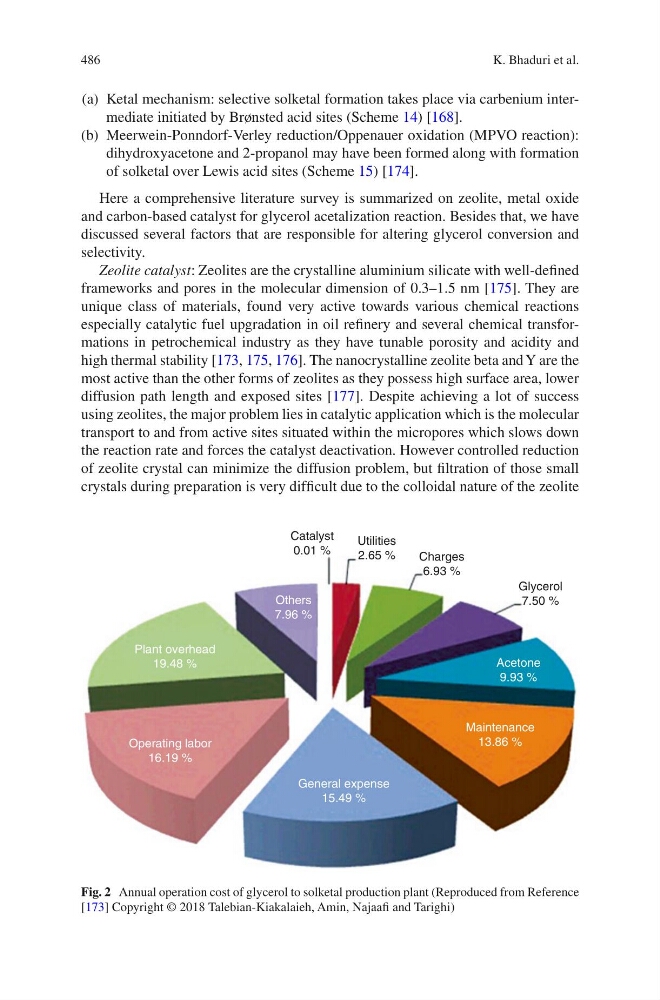
Fig. 2 Annual operation cost of glycerol to solketal production plant (Reproduced from Reference
[173] Copyright © 2018 Talebian-Kiakalaieh, Amin, Najaafi and Tarighi)
K. Bhaduri et al.
(a) Ketal mechanism: selective solketal formation takes place via carbenium intermediate initiated by Brønsted acid sites (Scheme 14) [168].
(b) Meerwein-Ponndorf-Verley reduction/Oppenauer oxidation (MPVO reaction):
dihydroxyacetone and 2-propanol may have been formed along with formation
of solketal over Lewis acid sites (Scheme 15) [174].
Here a comprehensive literature survey is summarized on zeolite, metal oxide
and carbon-based catalyst for glycerol acetalization reaction. Besides that, we have
discussed several factors that are responsible for altering glycerol conversion and
selectivity.
Zeolite catalyst: Zeolites are the crystalline aluminium silicate with well-defined
frameworks and pores in the molecular dimension of 0.3–1.5 nm [175]. They are
unique class of materials, found very active towards various chemical reactions
especially catalytic fuel upgradation in oil refinery and several chemical transformations in petrochemical industry as they have tunable porosity and acidity and
high thermal stability [173, 175, 176]. The nanocrystalline zeolite beta and Y are the
most active than the other forms of zeolites as they possess high surface area, lower
diffusion path length and exposed sites [177]. Despite achieving a lot of success
using zeolites, the major problem lies in catalytic application which is the molecular
transport to and from active sites situated within the micropores which slows down
the reaction rate and forces the catalyst deactivation. However controlled reduction
of zeolite crystal can minimize the diffusion problem, but filtration of those small
crystals during preparation is very difficult due to the colloidal nature of the zeolite
Catalyst
0.01 %
Others
7.96 %
Plant overhead
19.48 %
Operating labor
16.19 %
General expense
15.49 %
Acetone
9.93 %
Maintenance
13.86 %
Utilities
2.65 %
Charges
6.93 %
Glycerol
7.50 %
Fig. 2 Annual operation cost of glycerol to solketal production plant (Reproduced from Reference
[173] Copyright © 2018 Talebian-Kiakalaieh, Amin, Najaafi and Tarighi)
K. Bhaduri et al.