

449
agents for food materials and as fragrance agents in the manufacture of candles,
cosmetics and soaps [82]. Alkyl levulinates are also used as plasticizers, coalescent
solvents and latex coatings [83].
Three different routes are possible for the preparation of AL from carbohydrates
as displayed in Fig. 15. The route one is the levulinic acid esterification with alcohol
using acid catalysts. Secondly, alcoholysis of furfuryl alcohol to AL. In addition to
these, the third route is directly from carbohydrates. Preparation of AL from furfuryl alcohol is more favourable among these three routes because of easy availability
and high reactivity of alcoholysis reaction compared to other routes.
8.1 Conversion of Carbohydrates and Their Derived Chemicals
to Alkyl Levulinates over Modified Heteropoly
Acid Catalysts
Solid acid catalysts are desirable candidates for the conversion of FAL into AL. The
first solid acid-catalysed conversion was reported by Lange et al. They studied the
conversion of FAL into alkyl levulinates over various acidic catalysts such as H 2 SO 4 ,
zeolites and acidic ion exchange resins. They found that resins with accessibility for
both the alcohol and FAL catalysed the reaction with higher yields of AL [84].
Hengne et al. examined various ionic liquids functionalized with acidic anions for
the synthesis of alkyl levulinates. The MIm acidic anion increased the Bronsted
acidity of [BMIm-SH][HSO 4 ] catalyst and thereby yield of the alkyl levulinate [85].
Wang et al. disclosed the synthesis of AL by using ionic liquids functionalized with
double SO 3 H group as catalyst and found that the acidity and the molecular structure influence strongly the activity of ionic liquids [86].
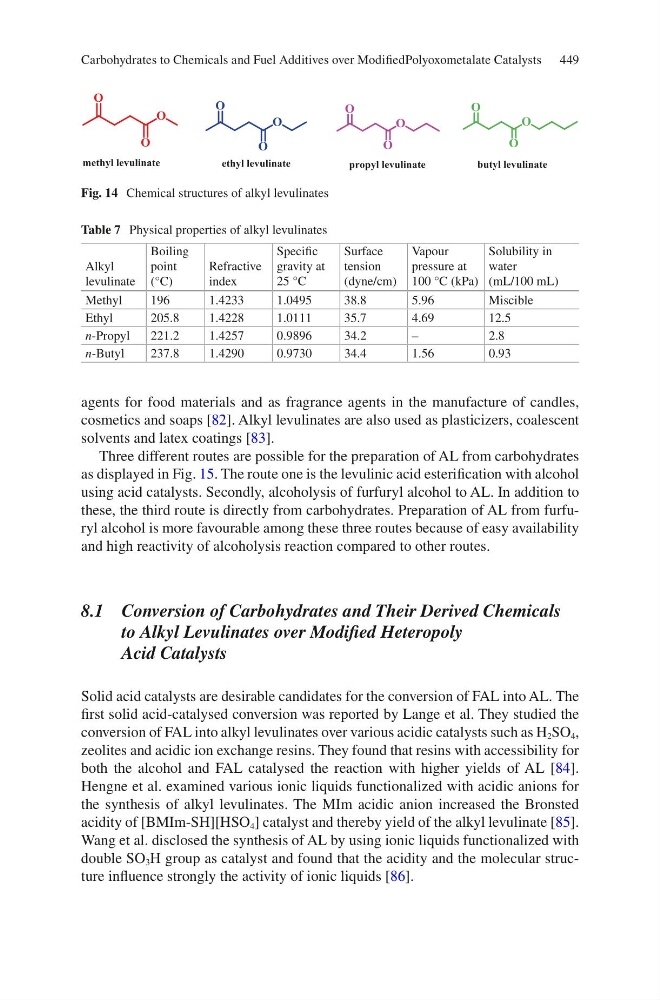
Fig. 14 Chemical structures of alkyl levulinates
Table 7 Physical properties of alkyl levulinates
Alkyl
levulinate
Boiling
point
(°C)
Refractive
index
Specific
gravity at
25 °C
Surface
tension
(dyne/cm)
Vapour
pressure at
100 °C (kPa)
Solubility in
water
(mL/100 mL)
Methyl
196
1.4233
1.0495
38.8
5.96
Miscible
Ethyl
205.8
1.4228
1.0111
35.7
4.69
12.5
n-Propyl
221.2
1.4257
0.9896
34.2
–
2.8
n-Butyl
237.8
1.4290
0.9730
34.4
1.56
0.93
Carbohydrates to Chemicals and Fuel Additives over ModifiedPolyoxometalate Catalysts
agents for food materials and as fragrance agents in the manufacture of candles,
cosmetics and soaps [82]. Alkyl levulinates are also used as plasticizers, coalescent
solvents and latex coatings [83].
Three different routes are possible for the preparation of AL from carbohydrates
as displayed in Fig. 15. The route one is the levulinic acid esterification with alcohol
using acid catalysts. Secondly, alcoholysis of furfuryl alcohol to AL. In addition to
these, the third route is directly from carbohydrates. Preparation of AL from furfuryl alcohol is more favourable among these three routes because of easy availability
and high reactivity of alcoholysis reaction compared to other routes.
8.1 Conversion of Carbohydrates and Their Derived Chemicals
to Alkyl Levulinates over Modified Heteropoly
Acid Catalysts
Solid acid catalysts are desirable candidates for the conversion of FAL into AL. The
first solid acid-catalysed conversion was reported by Lange et al. They studied the
conversion of FAL into alkyl levulinates over various acidic catalysts such as H 2 SO 4 ,
zeolites and acidic ion exchange resins. They found that resins with accessibility for
both the alcohol and FAL catalysed the reaction with higher yields of AL [84].
Hengne et al. examined various ionic liquids functionalized with acidic anions for
the synthesis of alkyl levulinates. The MIm acidic anion increased the Bronsted
acidity of [BMIm-SH][HSO 4 ] catalyst and thereby yield of the alkyl levulinate [85].
Wang et al. disclosed the synthesis of AL by using ionic liquids functionalized with
double SO 3 H group as catalyst and found that the acidity and the molecular structure influence strongly the activity of ionic liquids [86].
Fig. 14 Chemical structures of alkyl levulinates
Table 7 Physical properties of alkyl levulinates
Alkyl
levulinate
Boiling
point
(°C)
Refractive
index
Specific
gravity at
25 °C
Surface
tension
(dyne/cm)
Vapour
pressure at
100 °C (kPa)
Solubility in
water
(mL/100 mL)
Methyl
196
1.4233
1.0495
38.8
5.96
Miscible
Ethyl
205.8
1.4228
1.0111
35.7
4.69
12.5
n-Propyl
221.2
1.4257
0.9896
34.2
–
2.8
n-Butyl
237.8
1.4290
0.9730
34.4
1.56
0.93
Carbohydrates to Chemicals and Fuel Additives over ModifiedPolyoxometalate Catalysts