

448
8 Conversion of Carbohydrates to Alkyl Levulinates
Alkyl levulinates (AL) are the biomass-derived chemicals with two functional
groups keto and ester. Different types of AL are shown in Fig. 14. The importance
of these functional groups made these AL as versatile chemicals in the synthetic
organic chemistry. Besides the functional groups, their physical properties (Table 7)
are also helpful to gain much interest as solvents and fragrance and flavouring agents.
The lower esters (methyl, ethyl and propyl) contain pleasing melon-like
odours and butyl and amyl esters have only pale, but still have pleasant odours. The
taste of esters is strongly burning and bitter [80]. AL are green solvents which help
to minimize the adverse effects of conventional solvents according to the green
chemistry principles. The solvents are characterized by their physical properties like
density, thermal conductivity, refractive index, viscosity, surface tension, dipole
moment, vapour pressure, hydrogen bond donor and hydrogen bond acceptor capability [81]. Alkyl levulinates possess most of these properties, and more research is
still needed to explore the other properties of the alkyl levulinates at different conditions. The internal hydrogen bonding between the molecules of alkyl levulinates
imparts compressibility to them resulting in lower vapour pressure which is a characteristic feature of the industrial solvents. Alkyl levulinates are used as flavouring
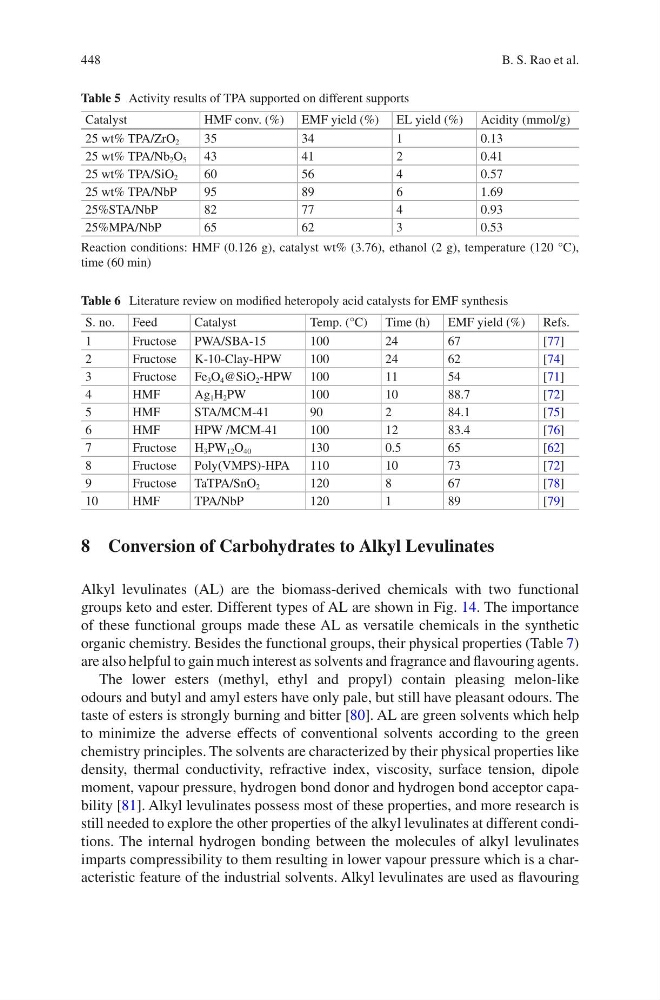
Table 5 Activity results of TPA supported on different supports
Catalyst
HMF conv. (%) EMF yield (%) EL yield (%) Acidity (mmol/g)
25 wt% TPA/ZrO 2
35
34
1
0.13
25 wt% TPA/Nb 2 O 5 43
41
2
0.41
25 wt% TPA/SiO 2
60
56
4
0.57
25 wt% TPA/NbP
95
89
6
1.69
25%STA/NbP
82
77
4
0.93
25%MPA/NbP
65
62
3
0.53
Reaction conditions: HMF (0.126 g), catalyst wt% (3.76), ethanol (2 g), temperature (120 °C),
time (60 min)
Table 6 Literature review on modified heteropoly acid catalysts for EMF synthesis
S. no. Feed
Catalyst
Temp. (°C) Time (h) EMF yield (%) Refs.
1
Fructose PWA/SBA-15
100
24
67
[77]
2
Fructose K-10-Clay-HPW
100
24
62
[74]
3
Fructose Fe 3 O 4 @SiO 2 -HPW 100
11
54
[71]
4
HMF
Ag 1 H 2 PW
100
10
88.7
[72]
5
HMF
STA/MCM-41
90
2
84.1
[75]
6
HMF
HPW /MCM-41
100
12
83.4
[76]
7
Fructose H 3 PW 12 O 40
130
0.5
65
[62]
8
Fructose Poly(VMPS)-HPA
110
10
73
[72]
9
Fructose TaTPA/SnO 2
120
8
67
[78]
10
HMF
TPA/NbP
120
1
89
[79]
B. S. Rao et al.
8 Conversion of Carbohydrates to Alkyl Levulinates
Alkyl levulinates (AL) are the biomass-derived chemicals with two functional
groups keto and ester. Different types of AL are shown in Fig. 14. The importance
of these functional groups made these AL as versatile chemicals in the synthetic
organic chemistry. Besides the functional groups, their physical properties (Table 7)
are also helpful to gain much interest as solvents and fragrance and flavouring agents.
The lower esters (methyl, ethyl and propyl) contain pleasing melon-like
odours and butyl and amyl esters have only pale, but still have pleasant odours. The
taste of esters is strongly burning and bitter [80]. AL are green solvents which help
to minimize the adverse effects of conventional solvents according to the green
chemistry principles. The solvents are characterized by their physical properties like
density, thermal conductivity, refractive index, viscosity, surface tension, dipole
moment, vapour pressure, hydrogen bond donor and hydrogen bond acceptor capability [81]. Alkyl levulinates possess most of these properties, and more research is
still needed to explore the other properties of the alkyl levulinates at different conditions. The internal hydrogen bonding between the molecules of alkyl levulinates
imparts compressibility to them resulting in lower vapour pressure which is a characteristic feature of the industrial solvents. Alkyl levulinates are used as flavouring
Table 5 Activity results of TPA supported on different supports
Catalyst
HMF conv. (%) EMF yield (%) EL yield (%) Acidity (mmol/g)
25 wt% TPA/ZrO 2
35
34
1
0.13
25 wt% TPA/Nb 2 O 5 43
41
2
0.41
25 wt% TPA/SiO 2
60
56
4
0.57
25 wt% TPA/NbP
95
89
6
1.69
25%STA/NbP
82
77
4
0.93
25%MPA/NbP
65
62
3
0.53
Reaction conditions: HMF (0.126 g), catalyst wt% (3.76), ethanol (2 g), temperature (120 °C),
time (60 min)
Table 6 Literature review on modified heteropoly acid catalysts for EMF synthesis
S. no. Feed
Catalyst
Temp. (°C) Time (h) EMF yield (%) Refs.
1
Fructose PWA/SBA-15
100
24
67
[77]
2
Fructose K-10-Clay-HPW
100
24
62
[74]
3
Fructose Fe 3 O 4 @SiO 2 -HPW 100
11
54
[71]
4
HMF
Ag 1 H 2 PW
100
10
88.7
[72]
5
HMF
STA/MCM-41
90
2
84.1
[75]
6
HMF
HPW /MCM-41
100
12
83.4
[76]
7
Fructose H 3 PW 12 O 40
130
0.5
65
[62]
8
Fructose Poly(VMPS)-HPA
110
10
73
[72]
9
Fructose TaTPA/SnO 2
120
8
67
[78]
10
HMF
TPA/NbP
120
1
89
[79]
B. S. Rao et al.