

447
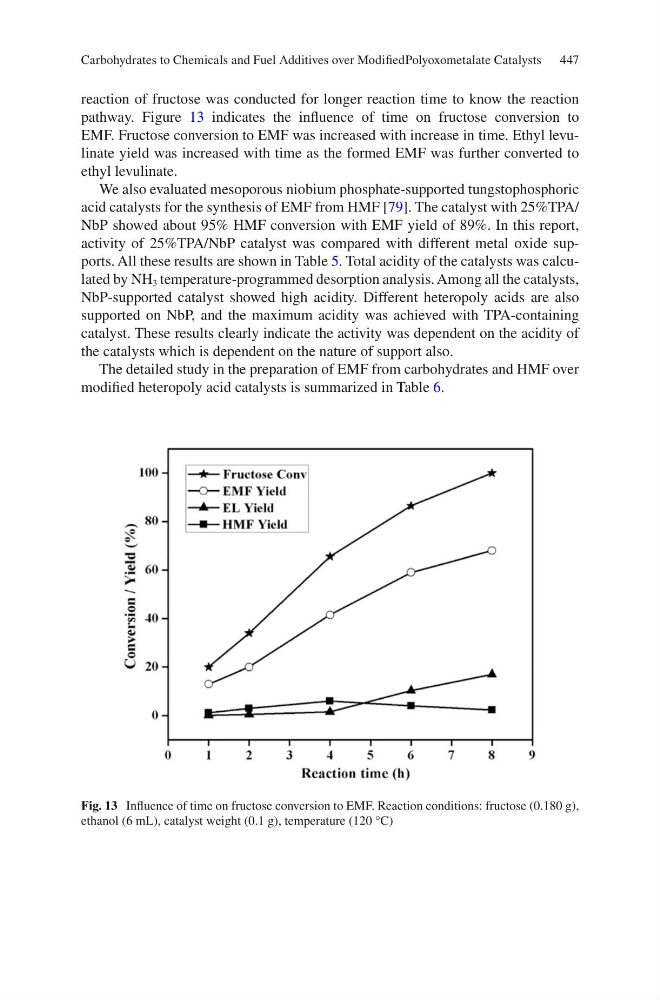
reaction of fructose was conducted for longer reaction time to know the reaction
pathway. Figure 13 indicates the influence of time on fructose conversion to
EMF. Fructose conversion to EMF was increased with increase in time. Ethyl levulinate yield was increased with time as the formed EMF was further converted to
ethyl levulinate.
We also evaluated mesoporous niobium phosphate-supported tungstophosphoric
acid catalysts for the synthesis of EMF from HMF [79]. The catalyst with 25%TPA/
NbP showed about 95% HMF conversion with EMF yield of 89%. In this report,
activity of 25%TPA/NbP catalyst was compared with different metal oxide supports. All these results are shown in Table 5. Total acidity of the catalysts was calculated by NH 3 temperature-programmed desorption analysis. Among all the catalysts,
NbP-supported catalyst showed high acidity. Different heteropoly acids are also
supported on NbP, and the maximum acidity was achieved with TPA-containing
catalyst. These results clearly indicate the activity was dependent on the acidity of
the catalysts which is dependent on the nature of support also.
The detailed study in the preparation of EMF from carbohydrates and HMF over
modified heteropoly acid catalysts is summarized in Table 6.
Fig. 13 Influence of time on fructose conversion to EMF. Reaction conditions: fructose (0.180 g),
ethanol (6 mL), catalyst weight (0.1 g), temperature (120 °C)
Carbohydrates to Chemicals and Fuel Additives over ModifiedPolyoxometalate Catalysts
reaction of fructose was conducted for longer reaction time to know the reaction
pathway. Figure 13 indicates the influence of time on fructose conversion to
EMF. Fructose conversion to EMF was increased with increase in time. Ethyl levulinate yield was increased with time as the formed EMF was further converted to
ethyl levulinate.
We also evaluated mesoporous niobium phosphate-supported tungstophosphoric
acid catalysts for the synthesis of EMF from HMF [79]. The catalyst with 25%TPA/
NbP showed about 95% HMF conversion with EMF yield of 89%. In this report,
activity of 25%TPA/NbP catalyst was compared with different metal oxide supports. All these results are shown in Table 5. Total acidity of the catalysts was calculated by NH 3 temperature-programmed desorption analysis. Among all the catalysts,
NbP-supported catalyst showed high acidity. Different heteropoly acids are also
supported on NbP, and the maximum acidity was achieved with TPA-containing
catalyst. These results clearly indicate the activity was dependent on the acidity of
the catalysts which is dependent on the nature of support also.
The detailed study in the preparation of EMF from carbohydrates and HMF over
modified heteropoly acid catalysts is summarized in Table 6.
Fig. 13 Influence of time on fructose conversion to EMF. Reaction conditions: fructose (0.180 g),
ethanol (6 mL), catalyst weight (0.1 g), temperature (120 °C)
Carbohydrates to Chemicals and Fuel Additives over ModifiedPolyoxometalate Catalysts