

450
Bokade et al. reported the acid-treated K-10-supported tungstophosphoric acid
for the levulinic acid conversion to butyl levulinate. This catalyst showed 97% of
levulinic acid conversion with almost 100% selectivity [87]. Zhang et al. synthesized an ionic liquid and heteropoly acid-containing ([MIMBS] 3 PW 12 O 40 ) catalyst
and demonstrated its activity towards the synthesis of butyl levulinate [88].
Mesoporous ZrO 2 -supported heteropoly acid catalysts were prepared, and their
activity for levulinic acid esterification with methanol was tested [89]. Mesoporous
STA/SiO 2 catalyst was used for the synthesis of different AL from levulinic acid.
20%STA/SiO 2 catalyst exhibited better activity with 73 and 67% yields of methyl
and ethyl levulinates, respectively [90]. Tungstophosphoric acid dispersed on desilicated HZSM-5 catalyst was reported for esterification of levulinic acid with ethanol
[91]. 15%TPA/D-HZSM-5 catalyst showed 94% levulinic acid conversion with
100% of ethyl levulinate selectivity. Different metal-modified heteropoly acid catalysts were used for direct synthesis of ethyl levulinate from carbohydrates by
Shiqiang Zhao et al. Different carbohydrates such as cellulose, glucose, fructose,
inulin and sucrose were used as feeds for preparation of alkyl levulinates. Among
them high ethyl levulinate yield of 64% was observed with fructose over
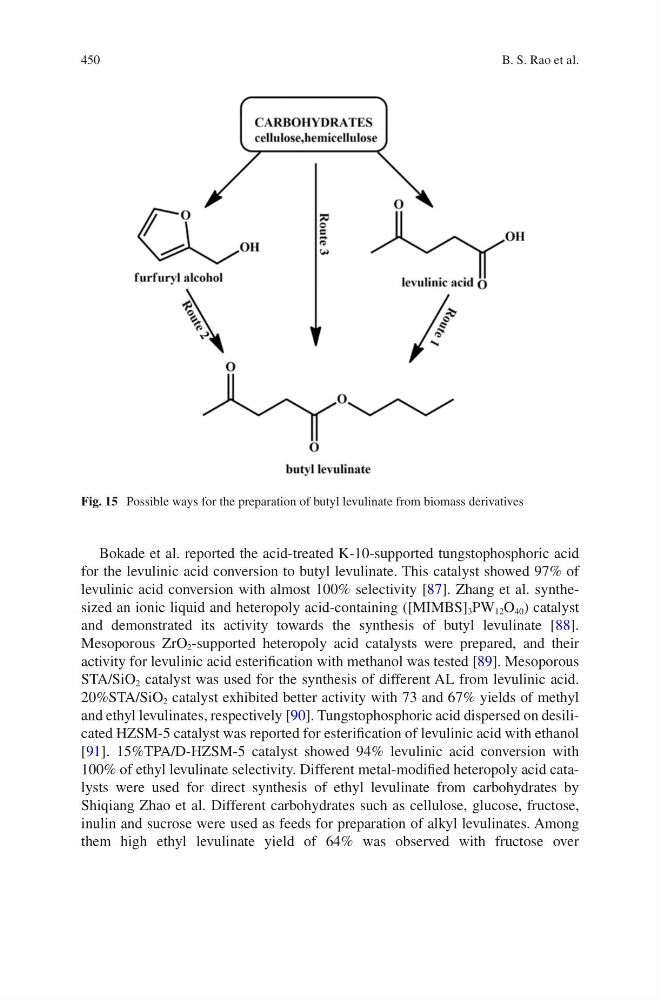
Fig. 15 Possible ways for the preparation of butyl levulinate from biomass derivatives
B. S. Rao et al.
Bokade et al. reported the acid-treated K-10-supported tungstophosphoric acid
for the levulinic acid conversion to butyl levulinate. This catalyst showed 97% of
levulinic acid conversion with almost 100% selectivity [87]. Zhang et al. synthesized an ionic liquid and heteropoly acid-containing ([MIMBS] 3 PW 12 O 40 ) catalyst
and demonstrated its activity towards the synthesis of butyl levulinate [88].
Mesoporous ZrO 2 -supported heteropoly acid catalysts were prepared, and their
activity for levulinic acid esterification with methanol was tested [89]. Mesoporous
STA/SiO 2 catalyst was used for the synthesis of different AL from levulinic acid.
20%STA/SiO 2 catalyst exhibited better activity with 73 and 67% yields of methyl
and ethyl levulinates, respectively [90]. Tungstophosphoric acid dispersed on desilicated HZSM-5 catalyst was reported for esterification of levulinic acid with ethanol
[91]. 15%TPA/D-HZSM-5 catalyst showed 94% levulinic acid conversion with
100% of ethyl levulinate selectivity. Different metal-modified heteropoly acid catalysts were used for direct synthesis of ethyl levulinate from carbohydrates by
Shiqiang Zhao et al. Different carbohydrates such as cellulose, glucose, fructose,
inulin and sucrose were used as feeds for preparation of alkyl levulinates. Among
them high ethyl levulinate yield of 64% was observed with fructose over
Fig. 15 Possible ways for the preparation of butyl levulinate from biomass derivatives
B. S. Rao et al.