

436
4 Catalysts for the Conversion of Biomass to Chemicals
A number of techniques have been developed for the transformation of biomass to
value-added chemicals. Earlier researchers utilized corrosive and strong homogeneous acids such as HCl and H 2 SO 4 as active catalysts for converting biomass to
sugars and its commodity chemicals [18]. Recently, sulfonic acid-functionalized
carbon, mesoporous silica materials [14, 15], zeolites [13], porous alumino-silicates
[19], aryl sulfonic acid-containing hollow mesoporous carbon spheres [20] and
ionic liquids with sulfonic acid functionalization [21, 22] have been explored for the
making of 5-ethoxymethyl furfural and alkyl levulinates from carbohydrates.
However, many of these catalysts have concerns such as separation, reusability and
environmental compatibility. In order to overthrow these disputes, the use of environmentally benevolent heterogeneous catalyst is a perfect approach. Among the
different heterogeneous catalysts, heteropoly acids are widely used as oxidation and
acid catalysts. There are promising catalytic systems to be used in biomass
valorization.
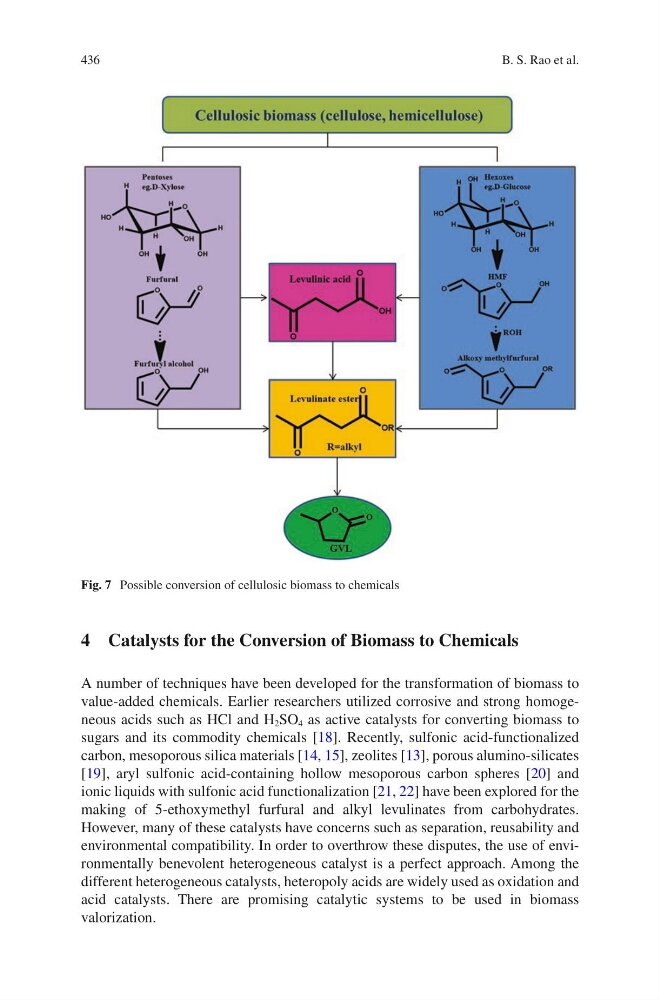
Fig. 7 Possible conversion of cellulosic biomass to chemicals
B. S. Rao et al.
4 Catalysts for the Conversion of Biomass to Chemicals
A number of techniques have been developed for the transformation of biomass to
value-added chemicals. Earlier researchers utilized corrosive and strong homogeneous acids such as HCl and H 2 SO 4 as active catalysts for converting biomass to
sugars and its commodity chemicals [18]. Recently, sulfonic acid-functionalized
carbon, mesoporous silica materials [14, 15], zeolites [13], porous alumino-silicates
[19], aryl sulfonic acid-containing hollow mesoporous carbon spheres [20] and
ionic liquids with sulfonic acid functionalization [21, 22] have been explored for the
making of 5-ethoxymethyl furfural and alkyl levulinates from carbohydrates.
However, many of these catalysts have concerns such as separation, reusability and
environmental compatibility. In order to overthrow these disputes, the use of environmentally benevolent heterogeneous catalyst is a perfect approach. Among the
different heterogeneous catalysts, heteropoly acids are widely used as oxidation and
acid catalysts. There are promising catalytic systems to be used in biomass
valorization.
Fig. 7 Possible conversion of cellulosic biomass to chemicals
B. S. Rao et al.