

433
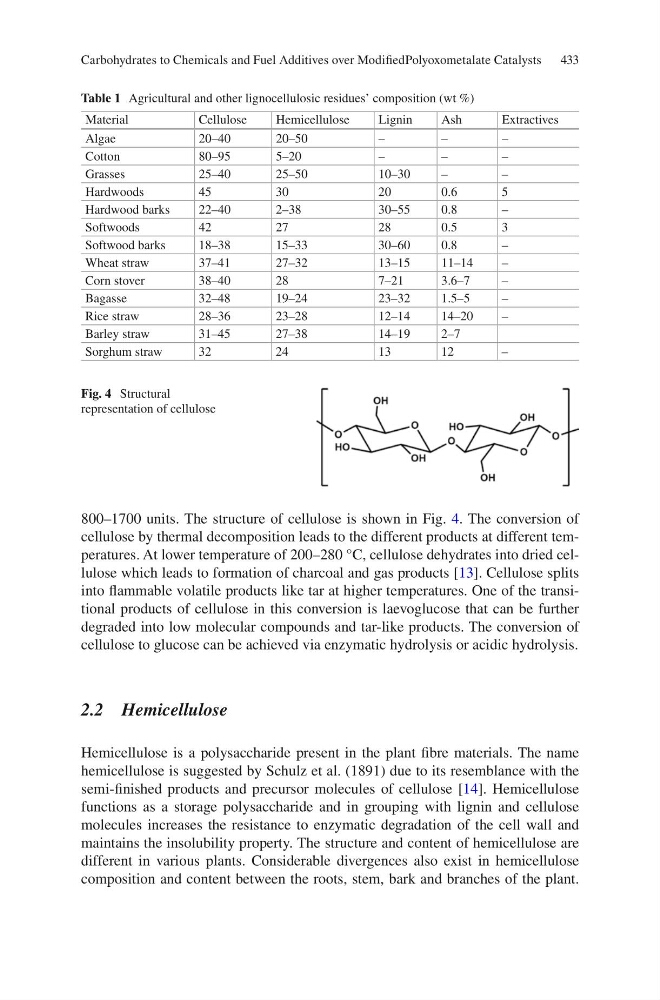
800–1700 units. The structure of cellulose is shown in Fig. 4. The conversion of
cellulose by thermal decomposition leads to the different products at different temperatures. At lower temperature of 200–280 °C, cellulose dehydrates into dried cellulose which leads to formation of charcoal and gas products [13]. Cellulose splits
into flammable volatile products like tar at higher temperatures. One of the transitional products of cellulose in this conversion is laevoglucose that can be further
degraded into low molecular compounds and tar-like products. The conversion of
cellulose to glucose can be achieved via enzymatic hydrolysis or acidic hydrolysis.
2.2 Hemicellulose
Hemicellulose is a polysaccharide present in the plant fibre materials. The name
hemicellulose is suggested by Schulz et al. (1891) due to its resemblance with the
semi-finished products and precursor molecules of cellulose [14]. Hemicellulose
functions as a storage polysaccharide and in grouping with lignin and cellulose
molecules increases the resistance to enzymatic degradation of the cell wall and
maintains the insolubility property. The structure and content of hemicellulose are
different in various plants. Considerable divergences also exist in hemicellulose
composition and content between the roots, stem, bark and branches of the plant.
Table 1 Agricultural and other lignocellulosic residues’ composition (wt %)
Material
Cellulose
Hemicellulose
Lignin
Ash
Extractives
Algae
20–40
20–50
–
–
–
Cotton
80–95
5–20
–
–
–
Grasses
25–40
25–50
10–30
–
–
Hardwoods
45
30
20
0.6
5
Hardwood barks
22–40
2–38
30–55
0.8
–
Softwoods
42
27
28
0.5
3
Softwood barks
18–38
15–33
30–60
0.8
–
Wheat straw
37–41
27–32
13–15
11–14
–
Corn stover
38–40
28
7–21
3.6–7
–
Bagasse
32–48
19–24
23–32
1.5–5
–
Rice straw
28–36
23–28
12–14
14–20
–
Barley straw
31–45
27–38
14–19
2–7
Sorghum straw
32
24
13
12
–
Fig. 4 Structural
representation of cellulose
Carbohydrates to Chemicals and Fuel Additives over ModifiedPolyoxometalate Catalysts
800–1700 units. The structure of cellulose is shown in Fig. 4. The conversion of
cellulose by thermal decomposition leads to the different products at different temperatures. At lower temperature of 200–280 °C, cellulose dehydrates into dried cellulose which leads to formation of charcoal and gas products [13]. Cellulose splits
into flammable volatile products like tar at higher temperatures. One of the transitional products of cellulose in this conversion is laevoglucose that can be further
degraded into low molecular compounds and tar-like products. The conversion of
cellulose to glucose can be achieved via enzymatic hydrolysis or acidic hydrolysis.
2.2 Hemicellulose
Hemicellulose is a polysaccharide present in the plant fibre materials. The name
hemicellulose is suggested by Schulz et al. (1891) due to its resemblance with the
semi-finished products and precursor molecules of cellulose [14]. Hemicellulose
functions as a storage polysaccharide and in grouping with lignin and cellulose
molecules increases the resistance to enzymatic degradation of the cell wall and
maintains the insolubility property. The structure and content of hemicellulose are
different in various plants. Considerable divergences also exist in hemicellulose
composition and content between the roots, stem, bark and branches of the plant.
Table 1 Agricultural and other lignocellulosic residues’ composition (wt %)
Material
Cellulose
Hemicellulose
Lignin
Ash
Extractives
Algae
20–40
20–50
–
–
–
Cotton
80–95
5–20
–
–
–
Grasses
25–40
25–50
10–30
–
–
Hardwoods
45
30
20
0.6
5
Hardwood barks
22–40
2–38
30–55
0.8
–
Softwoods
42
27
28
0.5
3
Softwood barks
18–38
15–33
30–60
0.8
–
Wheat straw
37–41
27–32
13–15
11–14
–
Corn stover
38–40
28
7–21
3.6–7
–
Bagasse
32–48
19–24
23–32
1.5–5
–
Rice straw
28–36
23–28
12–14
14–20
–
Barley straw
31–45
27–38
14–19
2–7
Sorghum straw
32
24
13
12
–
Fig. 4 Structural
representation of cellulose
Carbohydrates to Chemicals and Fuel Additives over ModifiedPolyoxometalate Catalysts