

432
It works as an amorphous matrix material to hold the firm cellulose fibrils in place.
Lignin caters structural reinforcement, waterproofing and resilience to biological and
physical attack compared to the all-carbohydrate cell walls of immature plant tissues [10].
The average contribution of these fractions towards the lignocellulosic biomass
is cellulose (35–50%), hemicellulose (20–25%) and lignin (15–25%). However, the
compositions of these fractions may vary due to the difference in the plant material
and construction of the cell wall [11]. The detailed information about the composition of the LB is shown in Table 1. The differences in these compositions influence
the biomass destruction process. For example, the composition differences of lignin
result in difficulty in delignification of softwood compared to the hardwood and
grasses [12].
2.1 Cellulose
Cellulose was first isolated from timber that was consecutively treated with HNO 3
and NaOH solutions by Anselme Payen in the year 1839. Cellulose has a distinct,
rigid structure that assists essential function in plants. Its molecules are combined
by hydrogen bonds and are arrayed parallel to one another, leading to the formation
of lengthy cable-like structure that unites with other cellulose moieties. This built
the strong support structure that leads plants to stand upright. It is a crystalline linear
homopolymer of d-glucopyranose units. The only monomer in cellulose is the glucose molecule which is connected through β-1, 4-glycosidic bonds composed of
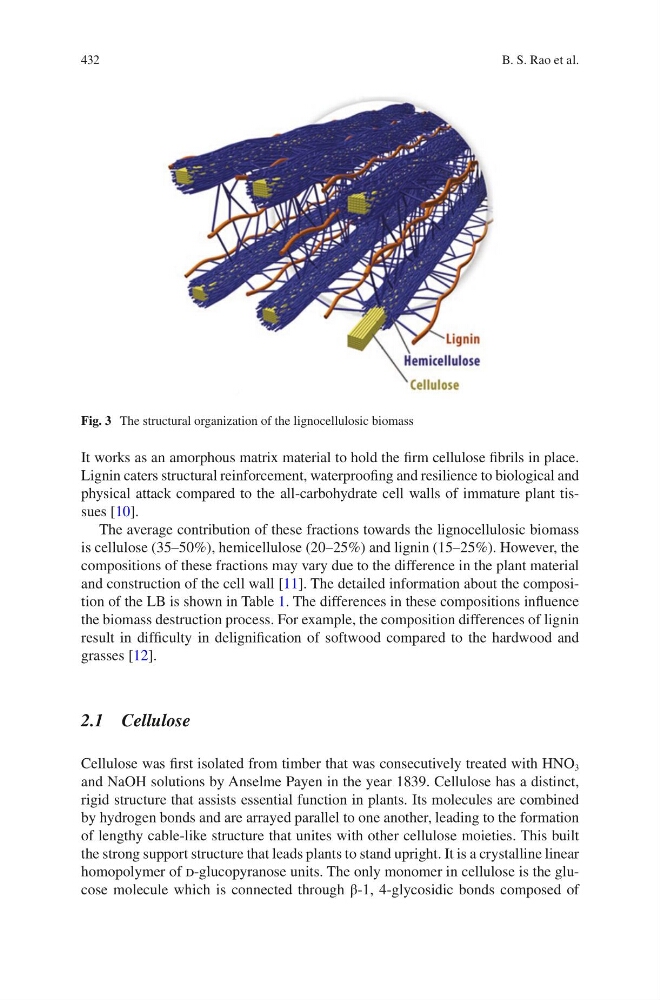
Fig. 3 The structural organization of the lignocellulosic biomass
B. S. Rao et al.
It works as an amorphous matrix material to hold the firm cellulose fibrils in place.
Lignin caters structural reinforcement, waterproofing and resilience to biological and
physical attack compared to the all-carbohydrate cell walls of immature plant tissues [10].
The average contribution of these fractions towards the lignocellulosic biomass
is cellulose (35–50%), hemicellulose (20–25%) and lignin (15–25%). However, the
compositions of these fractions may vary due to the difference in the plant material
and construction of the cell wall [11]. The detailed information about the composition of the LB is shown in Table 1. The differences in these compositions influence
the biomass destruction process. For example, the composition differences of lignin
result in difficulty in delignification of softwood compared to the hardwood and
grasses [12].
2.1 Cellulose
Cellulose was first isolated from timber that was consecutively treated with HNO 3
and NaOH solutions by Anselme Payen in the year 1839. Cellulose has a distinct,
rigid structure that assists essential function in plants. Its molecules are combined
by hydrogen bonds and are arrayed parallel to one another, leading to the formation
of lengthy cable-like structure that unites with other cellulose moieties. This built
the strong support structure that leads plants to stand upright. It is a crystalline linear
homopolymer of d-glucopyranose units. The only monomer in cellulose is the glucose molecule which is connected through β-1, 4-glycosidic bonds composed of
Fig. 3 The structural organization of the lignocellulosic biomass
B. S. Rao et al.