

409
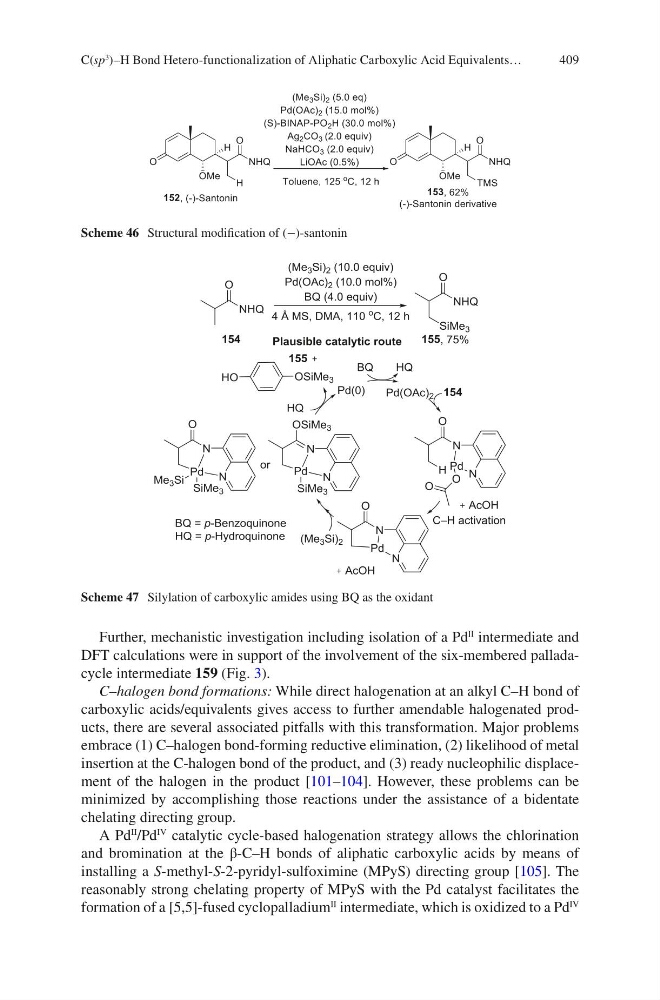
Scheme 46 Structural modification of (−)-santonin
Scheme 47 Silylation of carboxylic amides using BQ as the oxidant
Further, mechanistic investigation including isolation of a Pd
II
intermediate and
DFT calculations were in support of the involvement of the six-membered palladacycle intermediate 159 (Fig. 3).
C–halogen bond formations: While direct halogenation at an alkyl C–H bond of
carboxylic acids/equivalents gives access to further amendable halogenated products, there are several associated pitfalls with this transformation. Major problems
embrace (1) C–halogen bond-forming reductive elimination, (2) likelihood of metal
insertion at the C-halogen bond of the product, and (3) ready nucleophilic displacement of the halogen in the product [101–104]. However, these problems can be
minimized by accomplishing those reactions under the assistance of a bidentate
chelating directing group.
A Pd
II
/Pd
IV
catalytic cycle-based halogenation strategy allows the chlorination
and bromination at the β-C–H bonds of aliphatic carboxylic acids by means of
installing a S-methyl-S-2-pyridyl-sulfoximine (MPyS) directing group [105]. The
reasonably strong chelating property of MPyS with the Pd catalyst facilitates the
formation of a [5,5]-fused cyclopalladium
II
intermediate, which is oxidized to a Pd
IV
C(sp
3
)–H Bond Hetero-functionalization of Aliphatic Carboxylic Acid Equivalents…
Scheme 46 Structural modification of (−)-santonin
Scheme 47 Silylation of carboxylic amides using BQ as the oxidant
Further, mechanistic investigation including isolation of a Pd
II
intermediate and
DFT calculations were in support of the involvement of the six-membered palladacycle intermediate 159 (Fig. 3).
C–halogen bond formations: While direct halogenation at an alkyl C–H bond of
carboxylic acids/equivalents gives access to further amendable halogenated products, there are several associated pitfalls with this transformation. Major problems
embrace (1) C–halogen bond-forming reductive elimination, (2) likelihood of metal
insertion at the C-halogen bond of the product, and (3) ready nucleophilic displacement of the halogen in the product [101–104]. However, these problems can be
minimized by accomplishing those reactions under the assistance of a bidentate
chelating directing group.
A Pd
II
/Pd
IV
catalytic cycle-based halogenation strategy allows the chlorination
and bromination at the β-C–H bonds of aliphatic carboxylic acids by means of
installing a S-methyl-S-2-pyridyl-sulfoximine (MPyS) directing group [105]. The
reasonably strong chelating property of MPyS with the Pd catalyst facilitates the
formation of a [5,5]-fused cyclopalladium
II
intermediate, which is oxidized to a Pd
IV
C(sp
3
)–H Bond Hetero-functionalization of Aliphatic Carboxylic Acid Equivalents…