

410
species by N-halophthalimide. Finally, the desired halo-compound is produced
within an acetate-driven reductive elimination step. Thus, further metal insertion at
the C-halogen bond of the product is prevented (Scheme 49).
The classical and versatile 8-aminoquinoline group was also utilized as the
directing auxiliary to functionalize β-C–H group of aliphatic acids with halogen
partners. However, quinoline ring chlorinated products were often formed due to the
background electrophilic aromatic substitution reaction. To prevent the latter,
5-chloro-8-aminoquinoline can be used as the directing group to give the desired
β-halogenated product at the alkyl side chain (Scheme 50) [106]. In addition, the
post-functionalization of various drug molecules leading to further manipulable
bioactive substrates was also achieved by using 5-chloro-8-aminoquinoline as the
directing group.
However, under acidic condition simple 8-aminoquinoline can also be used as
the directing group for the β-C(sp
3
)–H mono- and dichlorination of α,α-dialkylsubstituted propanamides under palladium catalysis [107]. Fine-tuning of the Pd
source is required to the selective formation of mono- or bis-chlorinated aliphatic
carboxylic acid derivative (Scheme 51).
8-Aminoquinoline is also known to efficaciously direct the β-fluorination of carboxylic acids to furnish fluorinated building blocks of high medicinal significance.
In general, electrophilic fluorinating agents, such as N-fluorobenzenesulfonimide
(NFSI), Selectfluor, N-fluoropyridinium salts, etc., are used to transfer “F
+
ion” to
the palladium catalyst, and the N–F bond is then constructed from a Pd
IV
−F intermediate complex via reductive elimination, in which the latter is believed as a key
step in all directed fluorination reactions. Hence, the unactivated β-C(sp
3
)–H bonds
of carboxylic amides were fluorinated using Pd(OAc) 2 /Ag 2 O/pivalic acid catalyst
system in the presence of NFSI as the fluorinating agent (Scheme 52) [108]. In this
reaction, pivalic acid (PivOH) facilitates the reductive elimination of C–F bond by
precluding the competitive C–N bond formation from the active FPd
IV
N(SO 2 Ph) 2
species 173.
In a comparative study, quinoxaline among various N-chelating functional
groups, including pyrimidine, pyrazine, quinoline, quinazoline, and
8- aminoquinoline, showed better performance for the β-fluorination of carboxylic
acids. It was also observed that the reactivity of 8-aminoquinoline-derived amides
can be improved by using quinoxaline as a stoichiometric ligand. Mechanistic
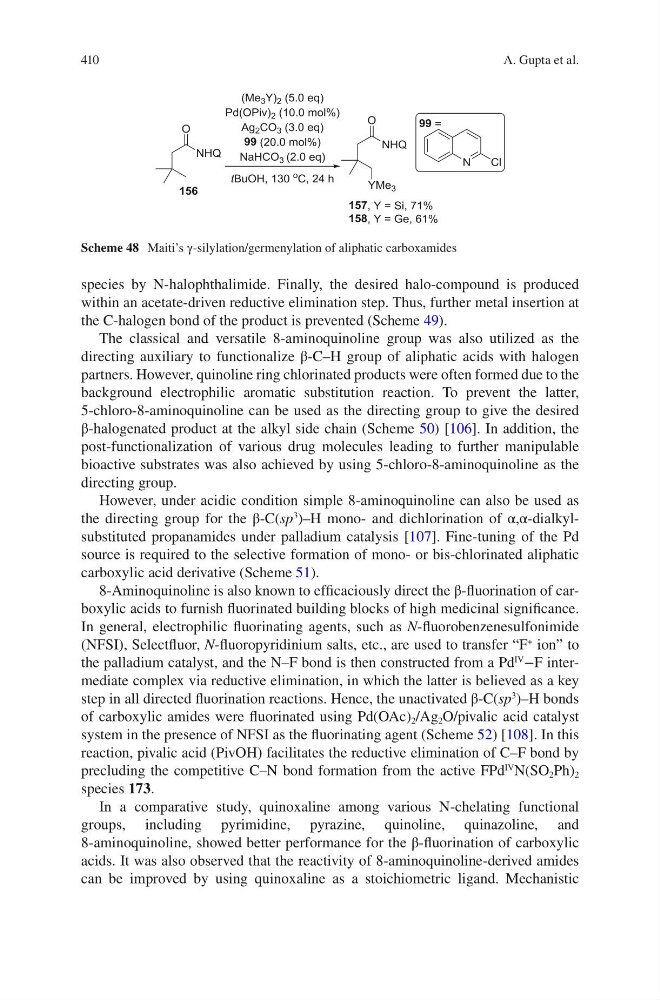
Scheme 48 Maiti’s γ-silylation/germenylation of aliphatic carboxamides
A. Gupta et al.
species by N-halophthalimide. Finally, the desired halo-compound is produced
within an acetate-driven reductive elimination step. Thus, further metal insertion at
the C-halogen bond of the product is prevented (Scheme 49).
The classical and versatile 8-aminoquinoline group was also utilized as the
directing auxiliary to functionalize β-C–H group of aliphatic acids with halogen
partners. However, quinoline ring chlorinated products were often formed due to the
background electrophilic aromatic substitution reaction. To prevent the latter,
5-chloro-8-aminoquinoline can be used as the directing group to give the desired
β-halogenated product at the alkyl side chain (Scheme 50) [106]. In addition, the
post-functionalization of various drug molecules leading to further manipulable
bioactive substrates was also achieved by using 5-chloro-8-aminoquinoline as the
directing group.
However, under acidic condition simple 8-aminoquinoline can also be used as
the directing group for the β-C(sp
3
)–H mono- and dichlorination of α,α-dialkylsubstituted propanamides under palladium catalysis [107]. Fine-tuning of the Pd
source is required to the selective formation of mono- or bis-chlorinated aliphatic
carboxylic acid derivative (Scheme 51).
8-Aminoquinoline is also known to efficaciously direct the β-fluorination of carboxylic acids to furnish fluorinated building blocks of high medicinal significance.
In general, electrophilic fluorinating agents, such as N-fluorobenzenesulfonimide
(NFSI), Selectfluor, N-fluoropyridinium salts, etc., are used to transfer “F
+
ion” to
the palladium catalyst, and the N–F bond is then constructed from a Pd
IV
−F intermediate complex via reductive elimination, in which the latter is believed as a key
step in all directed fluorination reactions. Hence, the unactivated β-C(sp
3
)–H bonds
of carboxylic amides were fluorinated using Pd(OAc) 2 /Ag 2 O/pivalic acid catalyst
system in the presence of NFSI as the fluorinating agent (Scheme 52) [108]. In this
reaction, pivalic acid (PivOH) facilitates the reductive elimination of C–F bond by
precluding the competitive C–N bond formation from the active FPd
IV
N(SO 2 Ph) 2
species 173.
In a comparative study, quinoxaline among various N-chelating functional
groups, including pyrimidine, pyrazine, quinoline, quinazoline, and
8- aminoquinoline, showed better performance for the β-fluorination of carboxylic
acids. It was also observed that the reactivity of 8-aminoquinoline-derived amides
can be improved by using quinoxaline as a stoichiometric ligand. Mechanistic
Scheme 48 Maiti’s γ-silylation/germenylation of aliphatic carboxamides
A. Gupta et al.