

395
By utilizing this approach, both symmetrical and unsymmetrical acetals were
accessed via geminal double alkoxylation at the β-carbon center [65]. The installation of the second alkoxy group, however, was found tricky and required Ag 2 CO 3 as
the crucial additive to promote the desired twofold alkoxylation giving a series of
symmetrical acetals by using an alcohol as the solvent. This protocol constitutes a
complementary route to acetals without making use of aldehyde substrates.
However, the optimized reaction condition for symmetrical acetals could not be
applied for accessing unsymmetrical acetals as premixing of two dissimilar alcohols
always led to the symmetrical acetal from the relatively active alcohol. Instead, the
second alcohol had to be employed into the reaction vessel after completion of the
first alkoxylation step. Thus in a sequence, after realizing the first monoalkoxylation
with R
1
OH, the alcohol solvent was removed and the second alcohol R
2
OH along
with the oxidant was introduced in the same reaction vessel to conduct the second
alkoxylation to furnish unsymmetrical acetal products (Scheme 21).
The directed approach for the alkoxylation of C(sp
3
)–H bonds was also expanded
to other bidentate directing groups. A pyridine-based auxiliary among various
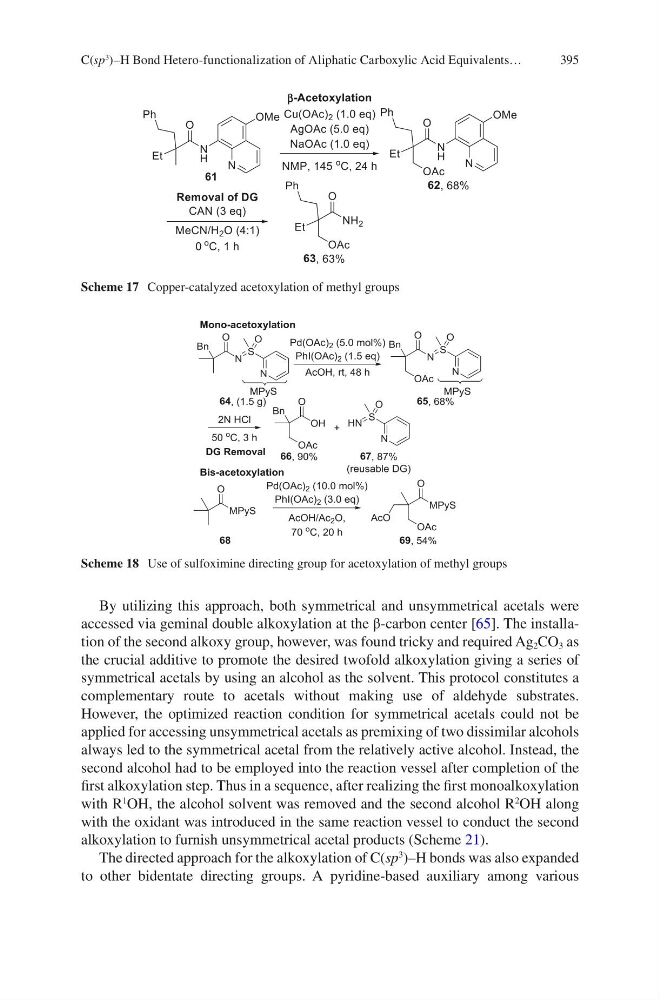
Scheme 17 Copper-catalyzed acetoxylation of methyl groups
Scheme 18 Use of sulfoximine directing group for acetoxylation of methyl groups
C(sp
3
)–H Bond Hetero-functionalization of Aliphatic Carboxylic Acid Equivalents…
By utilizing this approach, both symmetrical and unsymmetrical acetals were
accessed via geminal double alkoxylation at the β-carbon center [65]. The installation of the second alkoxy group, however, was found tricky and required Ag 2 CO 3 as
the crucial additive to promote the desired twofold alkoxylation giving a series of
symmetrical acetals by using an alcohol as the solvent. This protocol constitutes a
complementary route to acetals without making use of aldehyde substrates.
However, the optimized reaction condition for symmetrical acetals could not be
applied for accessing unsymmetrical acetals as premixing of two dissimilar alcohols
always led to the symmetrical acetal from the relatively active alcohol. Instead, the
second alcohol had to be employed into the reaction vessel after completion of the
first alkoxylation step. Thus in a sequence, after realizing the first monoalkoxylation
with R
1
OH, the alcohol solvent was removed and the second alcohol R
2
OH along
with the oxidant was introduced in the same reaction vessel to conduct the second
alkoxylation to furnish unsymmetrical acetal products (Scheme 21).
The directed approach for the alkoxylation of C(sp
3
)–H bonds was also expanded
to other bidentate directing groups. A pyridine-based auxiliary among various
Scheme 17 Copper-catalyzed acetoxylation of methyl groups
Scheme 18 Use of sulfoximine directing group for acetoxylation of methyl groups
C(sp
3
)–H Bond Hetero-functionalization of Aliphatic Carboxylic Acid Equivalents…