

394
While the scope of direct acetoxylation methods consists of ample examples in
terms of both acid substrates and chelating directing groups, that of C(sp
3
)–H alkoxylations is rather sporadic. The first alkoxylation of inactivated methylene C–H
bonds with alcohols was accomplished by using a Pd-based catalyst system incorporating hypervalent iodine (I
3+
) reagents as the oxidant [64]. Of note, the catalytic
activation of a methylene C–H bond is a difficult task owing to more steric demand
and a more facile β-hydride elimination in comparison to methyl groups. For the
targeted alkoxylation, the active alkoxylating I
3+
agent 70 was generated by mixing
MeOH with Dess–Martin periodinane (DMP) (I
5+
). The use of an alcohol as the
solvent, in the presence of 70, allows for attaching the corresponding alkoxy group
at the β-position of 8-aminoquinoline-derived aliphatic carboxamides (Scheme 19).
The late-stage derivatization of few anti-inflammatory drugs, e.g., ibuprofen,
naproxen, flurbiprofen, ketoprofen, etc., was realized by using the alkoxylation
technique (Scheme 20).
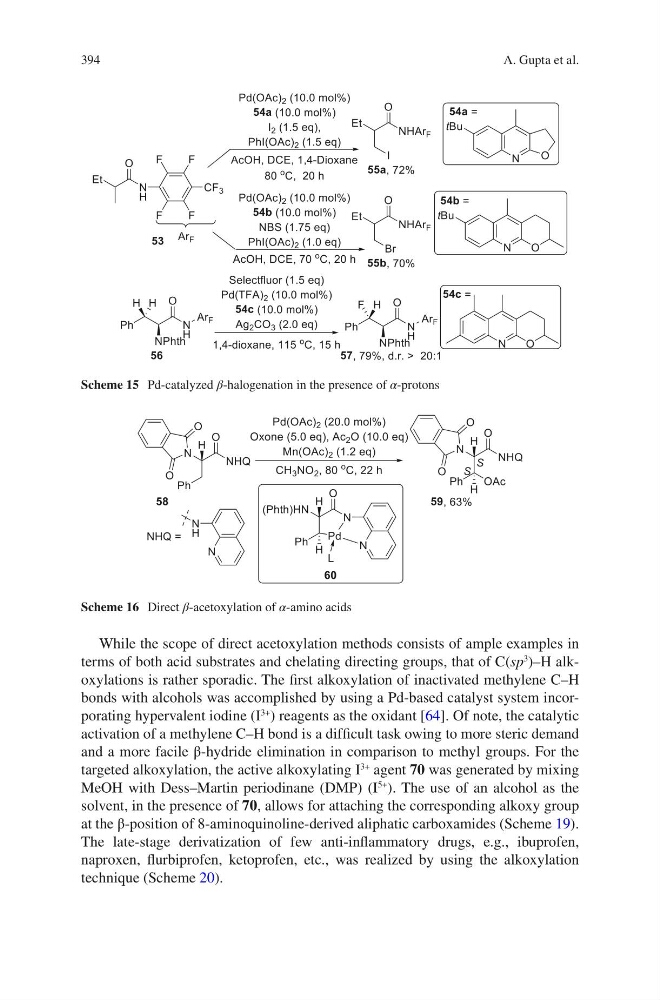
Scheme 15 Pd-catalyzed β-halogenation in the presence of α-protons
Scheme 16 Direct β-acetoxylation of α-amino acids
A. Gupta et al.
While the scope of direct acetoxylation methods consists of ample examples in
terms of both acid substrates and chelating directing groups, that of C(sp
3
)–H alkoxylations is rather sporadic. The first alkoxylation of inactivated methylene C–H
bonds with alcohols was accomplished by using a Pd-based catalyst system incorporating hypervalent iodine (I
3+
) reagents as the oxidant [64]. Of note, the catalytic
activation of a methylene C–H bond is a difficult task owing to more steric demand
and a more facile β-hydride elimination in comparison to methyl groups. For the
targeted alkoxylation, the active alkoxylating I
3+
agent 70 was generated by mixing
MeOH with Dess–Martin periodinane (DMP) (I
5+
). The use of an alcohol as the
solvent, in the presence of 70, allows for attaching the corresponding alkoxy group
at the β-position of 8-aminoquinoline-derived aliphatic carboxamides (Scheme 19).
The late-stage derivatization of few anti-inflammatory drugs, e.g., ibuprofen,
naproxen, flurbiprofen, ketoprofen, etc., was realized by using the alkoxylation
technique (Scheme 20).
Scheme 15 Pd-catalyzed β-halogenation in the presence of α-protons
Scheme 16 Direct β-acetoxylation of α-amino acids
A. Gupta et al.