

387
C–O bond formation: In 2005, Yu et al. developed a C(sp
3
)–H acetoxylation of
methyl groups of aliphatic carboxylic acids via transforming them into strongly
chelating 2-substituted 4,4-dimethyloxazolines [34]. The acetoxylation took place
swiftly with Ac 2 O, at the β-position with respect to the oxazoline ring using
MeCOOOtBu as an inexpensive oxidant through a trinuclear Pd intermediate containing five-membered palladacycles (Scheme 6). When chiral oxazoline was used
as the directing auxiliary, the β-acetoxylation proceeded in diastereoselective fashion. Notably in the latter case, lauroyl or benzoyl peroxide was employed in place
of MeCOOOtBu as the oxidant.
C–N bond formation: The strongly electron-withdrawing monodentated
N-arylamide directing group enables the intermolecular β-C-H amination of carboxylic acids in the presence of Pd(allyl)Cl 2 and electron-deficient P[3,5(CF 3 ) 2 C 6 H 3 ] 3 ligand system [35]. The amination technique was applied for the
structural modification of a drug molecule gemfibrozil 24 (Scheme 7). In this reaction, the oxidative addition of the O-benzoyl hydroxylamine to Pd
0
triggers the catalytic cycle that affords the C-N coupled product at the reductive elimination step
without using further external oxidant (Scheme 8) [36, 37]. The reaction was highly
monoselective in terms of amines, as the newly assembled amino substituent inhibits the palladium catalyst from activating the second methyl group due to bidentate
chelation. The N-arylamide auxiliary can be cleaved to achieve the corresponding
β-amino acid.
C–B bond formations: Diversely substituted borylated carboxylic acids/equivalents function as fundamentally important synthetic intermediate for preparing drug
scaffolds. Direct borylation of aliphatic carboxylic acid amides by activating a
C(sp
3
)-H bond can be attained using palladium catalysts; however, it possessed significant challenges due to the following reasons: (1) reductive elimination of a C–B
bond from the borylated palladium complex demands strategic ligand design
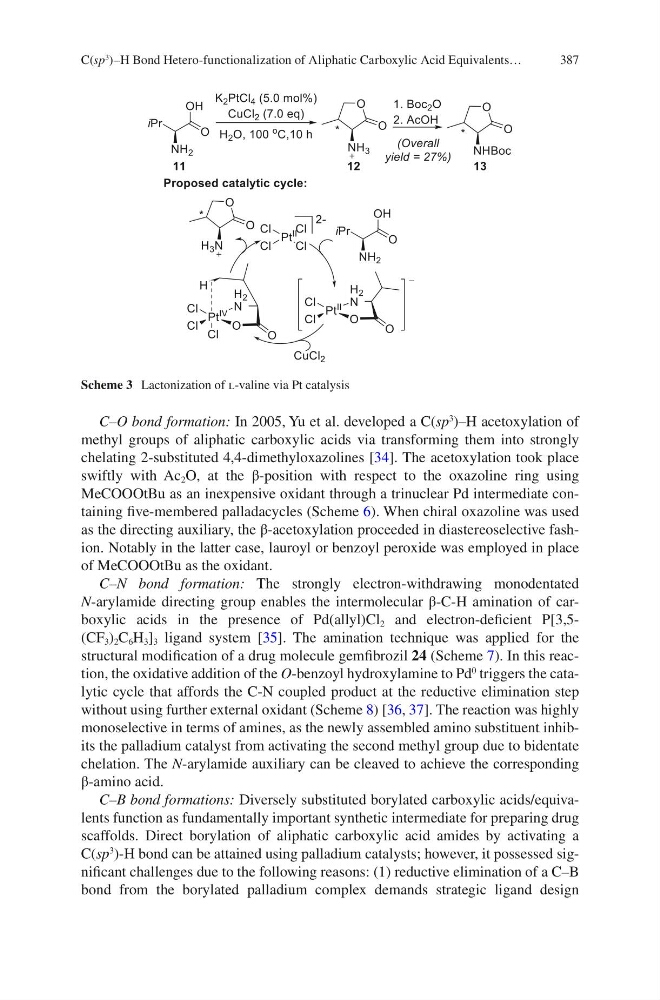
Scheme 3 Lactonization of l-valine via Pt catalysis
C(sp
3
)–H Bond Hetero-functionalization of Aliphatic Carboxylic Acid Equivalents…
C–O bond formation: In 2005, Yu et al. developed a C(sp
3
)–H acetoxylation of
methyl groups of aliphatic carboxylic acids via transforming them into strongly
chelating 2-substituted 4,4-dimethyloxazolines [34]. The acetoxylation took place
swiftly with Ac 2 O, at the β-position with respect to the oxazoline ring using
MeCOOOtBu as an inexpensive oxidant through a trinuclear Pd intermediate containing five-membered palladacycles (Scheme 6). When chiral oxazoline was used
as the directing auxiliary, the β-acetoxylation proceeded in diastereoselective fashion. Notably in the latter case, lauroyl or benzoyl peroxide was employed in place
of MeCOOOtBu as the oxidant.
C–N bond formation: The strongly electron-withdrawing monodentated
N-arylamide directing group enables the intermolecular β-C-H amination of carboxylic acids in the presence of Pd(allyl)Cl 2 and electron-deficient P[3,5(CF 3 ) 2 C 6 H 3 ] 3 ligand system [35]. The amination technique was applied for the
structural modification of a drug molecule gemfibrozil 24 (Scheme 7). In this reaction, the oxidative addition of the O-benzoyl hydroxylamine to Pd
0
triggers the catalytic cycle that affords the C-N coupled product at the reductive elimination step
without using further external oxidant (Scheme 8) [36, 37]. The reaction was highly
monoselective in terms of amines, as the newly assembled amino substituent inhibits the palladium catalyst from activating the second methyl group due to bidentate
chelation. The N-arylamide auxiliary can be cleaved to achieve the corresponding
β-amino acid.
C–B bond formations: Diversely substituted borylated carboxylic acids/equivalents function as fundamentally important synthetic intermediate for preparing drug
scaffolds. Direct borylation of aliphatic carboxylic acid amides by activating a
C(sp
3
)-H bond can be attained using palladium catalysts; however, it possessed significant challenges due to the following reasons: (1) reductive elimination of a C–B
bond from the borylated palladium complex demands strategic ligand design
Scheme 3 Lactonization of l-valine via Pt catalysis
C(sp
3
)–H Bond Hetero-functionalization of Aliphatic Carboxylic Acid Equivalents…