

326
80 vol%) binary solvent system yielded 90% HMF (Table 8, entry 5). The authors
revealed that a small number of sulfonic groups and abundance of oxygen- containing
groups (alcohols, epoxides, carboxylates) play a synergic role in maintaining the
high performance of graphene oxide [138].
Clay and Zeolitic Materials
Zeolites are microporous aluminosilicates widely used as commercial adsorbents,
more particularly in gas adsorption and bearing worldwide application as industrial
catalysts. Zeolites have large open cage-like structure that form channels, having
large pore size and high surface area which greatly allow the reactants into the zeolite framework and result in good catalytic activity. This property of zeolites culminated in their classification under the materials known as “molecular sieves”.
Zeolites are more advantageous over other solid acid catalysts, having advantages
like easy separation compared to homogenous catalysts, catalyst regeneration upon
high temperature treatment and stable at high temperature in aqueous condition
compared to ion-exchange resin catalysts. Some highlighted results of fructose
dehydration investigated using zeolite catalysts and listed in Table 9.
Moreau et al. performed dehydration of fructose into 5-hydroxymethylfurfural
in a batch mode in the presence of H-form of zeolites as catalysts at 165 °C and in
a binary solvent mixture consisting of water and methylisobutylketone (1:5 by volume). The catalytic activity observed depended on both the acidic sites and structural properties of the catalyst used. Good selectivity towards HMF was achieved
using mordenite-zeolite catalyst with the Si/Al ratio—11 (Table 9, entries 1 and 2).
The high selectivity obtained was correlated by shape-selective properties of catalyst which can be reused for several runs after thermal treatment without considerable loss in activity [139, 140].
Zhang group discussed the preparation of novel zeolite microspheres for the
dehydration of fructose to HMF. They adopted a simple synthetic procedure named
polymerization-induced colloid aggregation (im-PICA) for the preparation of zeolite microspheres (ZMSs) with a hierarchical porous structure and uniform particle
size. As expected, these zeolite microspheres afforded good yield of HMF (77%)
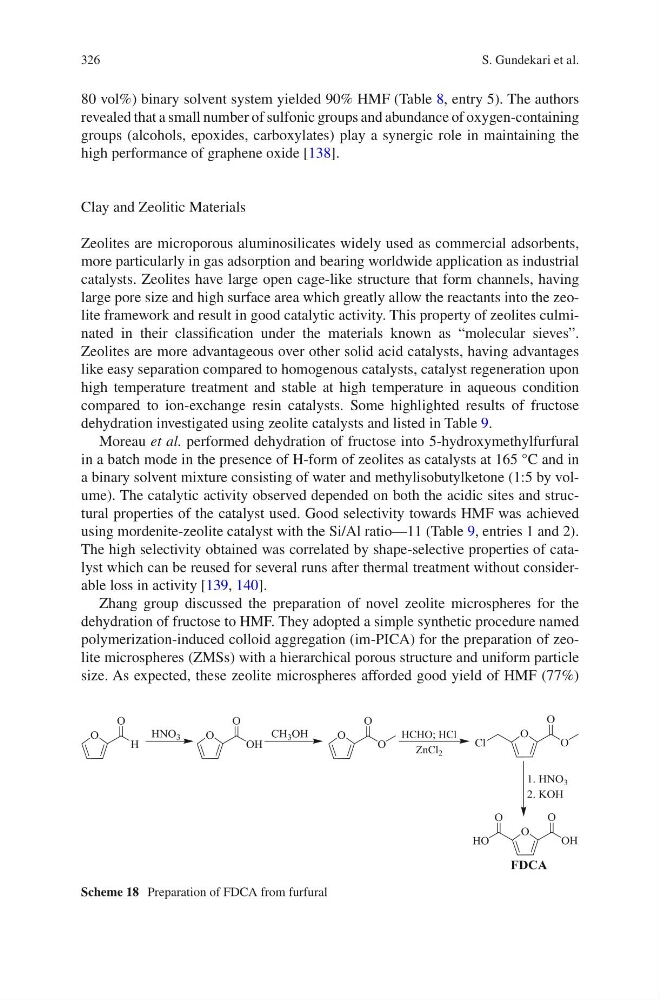
Scheme 18 Preparation of FDCA from furfural
S. Gundekari et al.
80 vol%) binary solvent system yielded 90% HMF (Table 8, entry 5). The authors
revealed that a small number of sulfonic groups and abundance of oxygen- containing
groups (alcohols, epoxides, carboxylates) play a synergic role in maintaining the
high performance of graphene oxide [138].
Clay and Zeolitic Materials
Zeolites are microporous aluminosilicates widely used as commercial adsorbents,
more particularly in gas adsorption and bearing worldwide application as industrial
catalysts. Zeolites have large open cage-like structure that form channels, having
large pore size and high surface area which greatly allow the reactants into the zeolite framework and result in good catalytic activity. This property of zeolites culminated in their classification under the materials known as “molecular sieves”.
Zeolites are more advantageous over other solid acid catalysts, having advantages
like easy separation compared to homogenous catalysts, catalyst regeneration upon
high temperature treatment and stable at high temperature in aqueous condition
compared to ion-exchange resin catalysts. Some highlighted results of fructose
dehydration investigated using zeolite catalysts and listed in Table 9.
Moreau et al. performed dehydration of fructose into 5-hydroxymethylfurfural
in a batch mode in the presence of H-form of zeolites as catalysts at 165 °C and in
a binary solvent mixture consisting of water and methylisobutylketone (1:5 by volume). The catalytic activity observed depended on both the acidic sites and structural properties of the catalyst used. Good selectivity towards HMF was achieved
using mordenite-zeolite catalyst with the Si/Al ratio—11 (Table 9, entries 1 and 2).
The high selectivity obtained was correlated by shape-selective properties of catalyst which can be reused for several runs after thermal treatment without considerable loss in activity [139, 140].
Zhang group discussed the preparation of novel zeolite microspheres for the
dehydration of fructose to HMF. They adopted a simple synthetic procedure named
polymerization-induced colloid aggregation (im-PICA) for the preparation of zeolite microspheres (ZMSs) with a hierarchical porous structure and uniform particle
size. As expected, these zeolite microspheres afforded good yield of HMF (77%)
Scheme 18 Preparation of FDCA from furfural
S. Gundekari et al.