

325
concentration. The reaction carried out in the binary solvent mixture (ethanol-water)
at 170 °C for 1 h resulted in fructose conversion up to 78% with 43% yield of HMF
(Table 8, entry 4) [137]. The authors claimed that increase in the ratio of surface
activating agent and mass of carbon precursor eventually increases the acid strength
of the catalyst, and this is also accompanied by the creation of mesoporosity which
increases the accessibility of the reactants towards the active sites. Zhu research
group reported graphene oxide as a catalyst for this conversion. In this work, a
series of co-solvents were employed with DMSO. 20 vol% 2-proponal (with DMSO
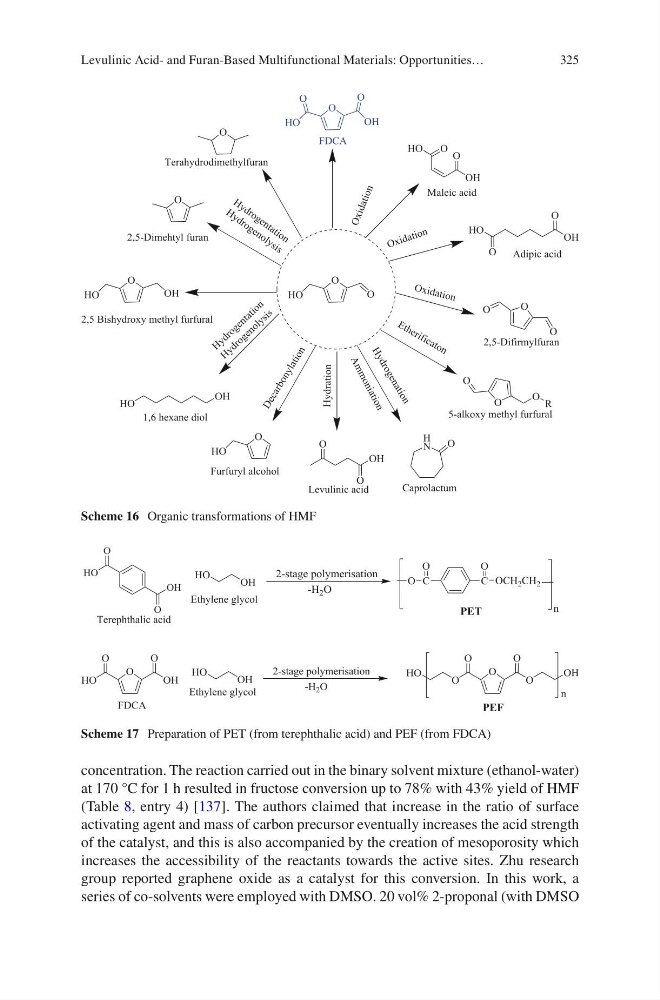
Scheme 16 Organic transformations of HMF
Scheme 17 Preparation of PET (from terephthalic acid) and PEF (from FDCA)
Levulinic Acid- and Furan-Based Multifunctional Materials: Opportunities…
concentration. The reaction carried out in the binary solvent mixture (ethanol-water)
at 170 °C for 1 h resulted in fructose conversion up to 78% with 43% yield of HMF
(Table 8, entry 4) [137]. The authors claimed that increase in the ratio of surface
activating agent and mass of carbon precursor eventually increases the acid strength
of the catalyst, and this is also accompanied by the creation of mesoporosity which
increases the accessibility of the reactants towards the active sites. Zhu research
group reported graphene oxide as a catalyst for this conversion. In this work, a
series of co-solvents were employed with DMSO. 20 vol% 2-proponal (with DMSO
Scheme 16 Organic transformations of HMF
Scheme 17 Preparation of PET (from terephthalic acid) and PEF (from FDCA)
Levulinic Acid- and Furan-Based Multifunctional Materials: Opportunities…