

316
Metal Oxides
Inexpensive metal oxides were extensively studied for fructose dehydration in different solvent systems (Table 5). Armaroli et al. reported niobium phosphate as heterogeneous catalyst for this dehydration reaction in water as solvent medium.
Although the conversion level is low, selectivity (100%) towards HMF was excellent, and the catalyst was reusable for four cycles (Table 5, entry 1) [111]. Carniti
group demonstrated fructose to HMF dehydration reaction in a continuous flow
reactor system using silica-niobia mixed metal oxide catalyst (Table 5, entry 2) [112,
113]. The mentioned fixed-bed reactor system was operational up to several hundred
hours, but the selectivity and yields were very low. At high temperature (175 °C),
silicoaluminophosphate catalyst yielded 80% HMF at 1 h and was reusable up to
five cycles (Table 5, entry 3) [114]. Binary mixtures of solvents (water +2-butanol)
was reported using tantalum hydroxide (treated with 1 M phosphoric acid) as a catalyst at 160 °C and afforded 90% yield of HMF (Table 5, entry 4). Catalyst recyclability experiments were done by washing the used catalyst several times with
water followed by oven drying overnight and used for further reaction cycles [115].
Saha research group discussed self-assembled mesoporous titania microspheres for
this dehydration reaction in binary solvent system, i.e. dimethylacetamide and 10%
lithium chloride with 74.2% yield of HMF (Table 5, entry 5). Lewis acidic TiO 2 is
responsible for the glucose to fructose conversion, and lithium chloride was responsible for fructose dehydration [116]. Sulphated zirconia (prepared by impregnation
with H 2 SO 4 ) reported moderate HMF yield (72.8%) from fructose in acetone-DMSO
medium under microwave irradiation (Table 5, entry 6) [117].
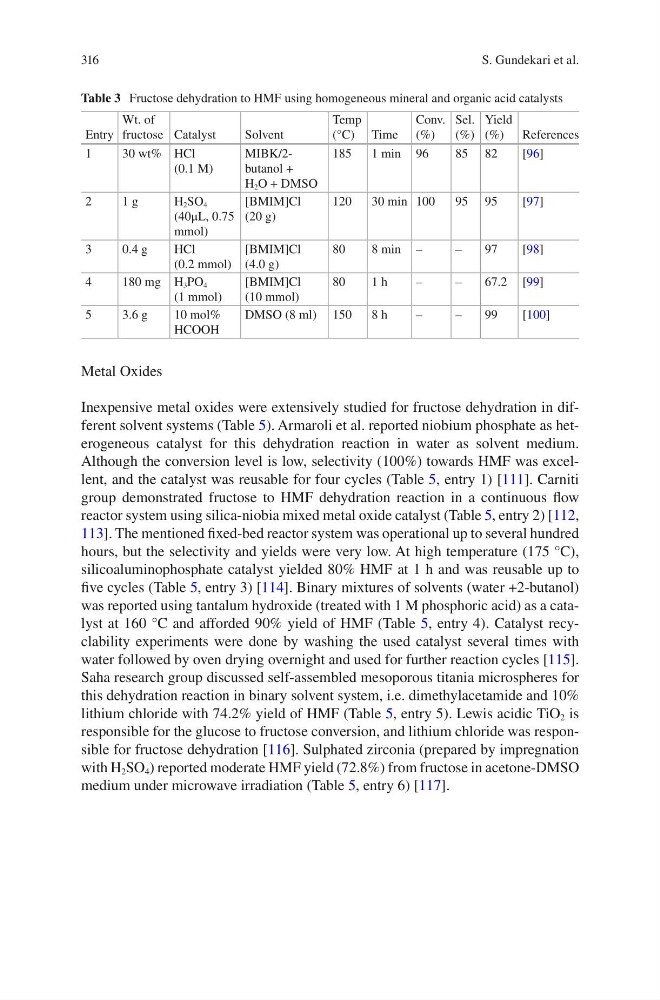
Table 3 Fructose dehydration to HMF using homogeneous mineral and organic acid catalysts
Entry
Wt. of
fructose Catalyst
Solvent
Temp
(°C) Time
Conv.
(%)
Sel.
(%)
Yield
(%) References
1
30 wt% HCl
(0.1 M)
MIBK/2butanol +
H 2 O + DMSO
185
1 min 96
85 82
[96]
2
1 g
H 2 SO 4
(40μL, 0.75
mmol)
[BMIM]Cl
(20 g)
120
30 min 100
95 95
[97]
3
0.4 g
HCl
(0.2 mmol)
[BMIM]Cl
(4.0 g)
80
8 min –
–
97
[98]
4
180 mg H 3 PO 4
(1 mmol)
[BMIM]Cl
(10 mmol)
80
1 h
–
–
67.2 [99]
5
3.6 g
10 mol%
HCOOH
DMSO (8 ml) 150
8 h
–
–
99
[100]
S. Gundekari et al.
Metal Oxides
Inexpensive metal oxides were extensively studied for fructose dehydration in different solvent systems (Table 5). Armaroli et al. reported niobium phosphate as heterogeneous catalyst for this dehydration reaction in water as solvent medium.
Although the conversion level is low, selectivity (100%) towards HMF was excellent, and the catalyst was reusable for four cycles (Table 5, entry 1) [111]. Carniti
group demonstrated fructose to HMF dehydration reaction in a continuous flow
reactor system using silica-niobia mixed metal oxide catalyst (Table 5, entry 2) [112,
113]. The mentioned fixed-bed reactor system was operational up to several hundred
hours, but the selectivity and yields were very low. At high temperature (175 °C),
silicoaluminophosphate catalyst yielded 80% HMF at 1 h and was reusable up to
five cycles (Table 5, entry 3) [114]. Binary mixtures of solvents (water +2-butanol)
was reported using tantalum hydroxide (treated with 1 M phosphoric acid) as a catalyst at 160 °C and afforded 90% yield of HMF (Table 5, entry 4). Catalyst recyclability experiments were done by washing the used catalyst several times with
water followed by oven drying overnight and used for further reaction cycles [115].
Saha research group discussed self-assembled mesoporous titania microspheres for
this dehydration reaction in binary solvent system, i.e. dimethylacetamide and 10%
lithium chloride with 74.2% yield of HMF (Table 5, entry 5). Lewis acidic TiO 2 is
responsible for the glucose to fructose conversion, and lithium chloride was responsible for fructose dehydration [116]. Sulphated zirconia (prepared by impregnation
with H 2 SO 4 ) reported moderate HMF yield (72.8%) from fructose in acetone-DMSO
medium under microwave irradiation (Table 5, entry 6) [117].
Table 3 Fructose dehydration to HMF using homogeneous mineral and organic acid catalysts
Entry
Wt. of
fructose Catalyst
Solvent
Temp
(°C) Time
Conv.
(%)
Sel.
(%)
Yield
(%) References
1
30 wt% HCl
(0.1 M)
MIBK/2butanol +
H 2 O + DMSO
185
1 min 96
85 82
[96]
2
1 g
H 2 SO 4
(40μL, 0.75
mmol)
[BMIM]Cl
(20 g)
120
30 min 100
95 95
[97]
3
0.4 g
HCl
(0.2 mmol)
[BMIM]Cl
(4.0 g)
80
8 min –
–
97
[98]
4
180 mg H 3 PO 4
(1 mmol)
[BMIM]Cl
(10 mmol)
80
1 h
–
–
67.2 [99]
5
3.6 g
10 mol%
HCOOH
DMSO (8 ml) 150
8 h
–
–
99
[100]
S. Gundekari et al.