

315
1–9) [101–109]. The highest yield of HMF was observed with LaCl 3 and CrCl 3
(92.6 and 96%). Other metal salts afforded good to moderate yield of HMF and
some of them were recyclable, e.g. AlCl 3 and InCl 3 .
In a noticeable study, our group reported that the synergism among alumina,
metal salt and solvent played an important role in the direct conversion of glucose
to HMF. Alumina helped in the isomerization of glucose to fructose, while copper
chloride and solvent promoted fructose dehydration to HMF (Scheme 15). Using
this catalytic system, several carbohydrates were chosen for the preparation of HMF
such as glucose, fructose, galactose, cellobiose, sucrose and starch (Table 4, entries
10 and 11) [110]. Reaction at higher glucose concentration (50 wt% w.r.t to DMSO)
was carried out at 140 °C. The HMF yield was 52% with the retention of efficiency
even at high substrate concentration.
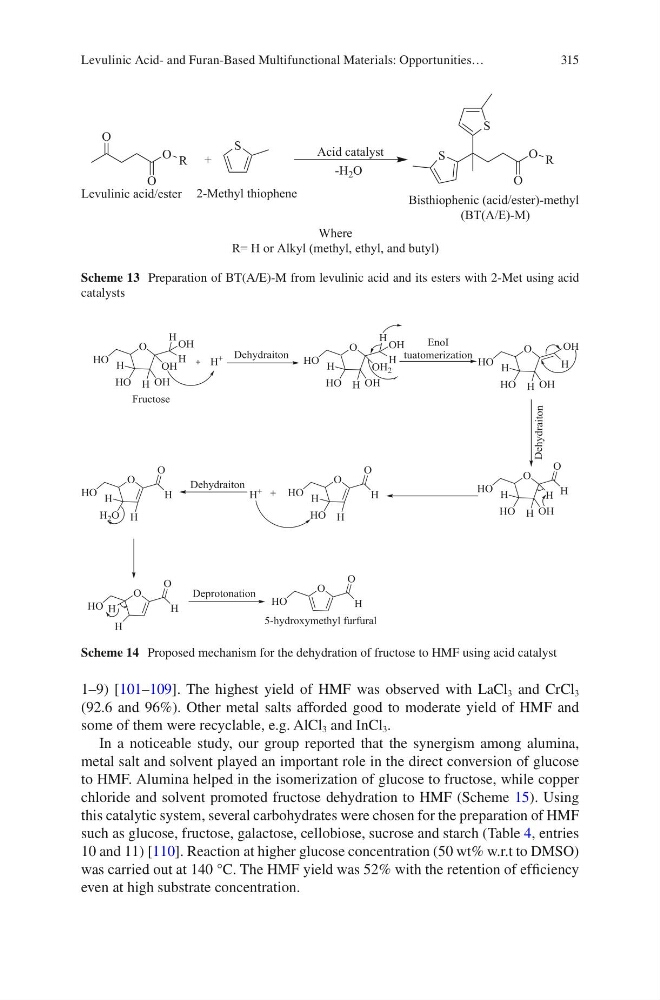
Scheme 13 Preparation of BT(A/E)-M from levulinic acid and its esters with 2-Met using acid
catalysts
Scheme 14 Proposed mechanism for the dehydration of fructose to HMF using acid catalyst
Levulinic Acid- and Furan-Based Multifunctional Materials: Opportunities…
1–9) [101–109]. The highest yield of HMF was observed with LaCl 3 and CrCl 3
(92.6 and 96%). Other metal salts afforded good to moderate yield of HMF and
some of them were recyclable, e.g. AlCl 3 and InCl 3 .
In a noticeable study, our group reported that the synergism among alumina,
metal salt and solvent played an important role in the direct conversion of glucose
to HMF. Alumina helped in the isomerization of glucose to fructose, while copper
chloride and solvent promoted fructose dehydration to HMF (Scheme 15). Using
this catalytic system, several carbohydrates were chosen for the preparation of HMF
such as glucose, fructose, galactose, cellobiose, sucrose and starch (Table 4, entries
10 and 11) [110]. Reaction at higher glucose concentration (50 wt% w.r.t to DMSO)
was carried out at 140 °C. The HMF yield was 52% with the retention of efficiency
even at high substrate concentration.
Scheme 13 Preparation of BT(A/E)-M from levulinic acid and its esters with 2-Met using acid
catalysts
Scheme 14 Proposed mechanism for the dehydration of fructose to HMF using acid catalyst
Levulinic Acid- and Furan-Based Multifunctional Materials: Opportunities…