

313
This poor conversion may be due to the bigger size of butyl levulinate, which is
sterically precluded from interacting with the acidic active sites of the catalyst.
The applications of BTA-M and BTAE-M were explored in various domains. We
tested BTA-M compound as lubricant, plasticizer and antioxidant and antibacterial
agent. Surprisingly, the molecule showed good applicability in the field of polymers
as plasticizing agent. Moreover, the compound has good antioxidant property.
3 5-Hydroxymethylfurfural
5-Hydroxymethylfurfural (HMF) is an organic compound which was first identified
in 1875 as an intermediate product during the synthesis of LA from sugar under
sulphuric acid treatment. Mainly, HMF is considered as a platform chemical for the
synthesis of bio-based fuel additives and polyester building blocks.
3.1 Preparation of 5-Hydroxymethylfurfural
In principle, HMF preparation Fructose dehydration to HMF conversion mechanism is simple, i.e. removal of three water molecules from hexose using an acid
catalyst. However, practically synthesizing HMF is quite complicated because of
the side reactions under acidic medium, i.e. hydration of HMF to LA with formic
acid as a byproduct and homo-polymerization of HMF into poly- furanics which
result in poor yield of HMF. According to the literature, cellulose or starch can be
converted to HMF in three steps as follows:
1. Acid-catalysed hydrolysis of cellulose or starch into glucose monomeric units.
2. Acid-catalysed isomerization of glucose to fructose.
3. Acid-catalysed dehydration of fructose to HMF.
The key to achieve good yields of HMF is to choose the best catalyst, and the
reaction condition simultaneously should suppress the formation of byproducts.
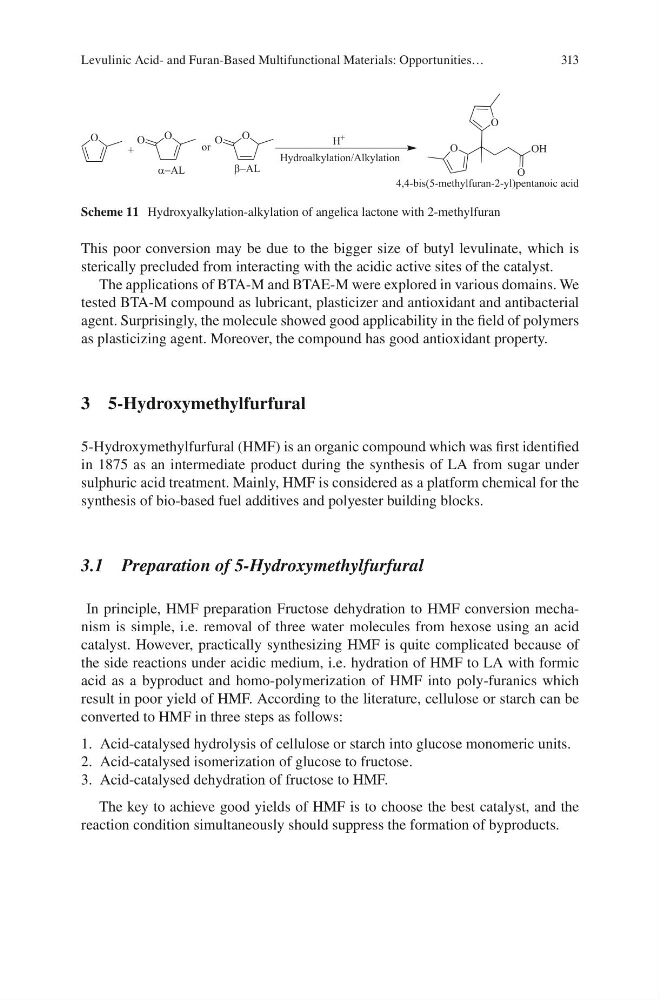
Scheme 11 Hydroxyalkylation-alkylation of angelica lactone with 2-methylfuran
Levulinic Acid- and Furan-Based Multifunctional Materials: Opportunities…
This poor conversion may be due to the bigger size of butyl levulinate, which is
sterically precluded from interacting with the acidic active sites of the catalyst.
The applications of BTA-M and BTAE-M were explored in various domains. We
tested BTA-M compound as lubricant, plasticizer and antioxidant and antibacterial
agent. Surprisingly, the molecule showed good applicability in the field of polymers
as plasticizing agent. Moreover, the compound has good antioxidant property.
3 5-Hydroxymethylfurfural
5-Hydroxymethylfurfural (HMF) is an organic compound which was first identified
in 1875 as an intermediate product during the synthesis of LA from sugar under
sulphuric acid treatment. Mainly, HMF is considered as a platform chemical for the
synthesis of bio-based fuel additives and polyester building blocks.
3.1 Preparation of 5-Hydroxymethylfurfural
In principle, HMF preparation Fructose dehydration to HMF conversion mechanism is simple, i.e. removal of three water molecules from hexose using an acid
catalyst. However, practically synthesizing HMF is quite complicated because of
the side reactions under acidic medium, i.e. hydration of HMF to LA with formic
acid as a byproduct and homo-polymerization of HMF into poly- furanics which
result in poor yield of HMF. According to the literature, cellulose or starch can be
converted to HMF in three steps as follows:
1. Acid-catalysed hydrolysis of cellulose or starch into glucose monomeric units.
2. Acid-catalysed isomerization of glucose to fructose.
3. Acid-catalysed dehydration of fructose to HMF.
The key to achieve good yields of HMF is to choose the best catalyst, and the
reaction condition simultaneously should suppress the formation of byproducts.
Scheme 11 Hydroxyalkylation-alkylation of angelica lactone with 2-methylfuran
Levulinic Acid- and Furan-Based Multifunctional Materials: Opportunities…