

295
esters [36], aromatic hydrocarbons [37], liquid alkanes [38, 39], polymer intermediates, i.e. α-methylene-γ-valerolactone, 1,4-pentanediol and adipic acid [40–42]. In
addition, Gvl itself is a green solvent for organic transformations including the conversion of lignocellulose components (Fig. 1) [43–50].
Generally, the mechanistic pathway for the conversion of LA to Gvl involves two
routes [51]. Path-a culminates in the hydrogenation of LA to γ-hydroxypentanoic
acid prior to an intramolecular esterification to obtain Gvl, and path-b follows the
esterification of the enol form of LA to α-angelica lactone (α-AL) and its
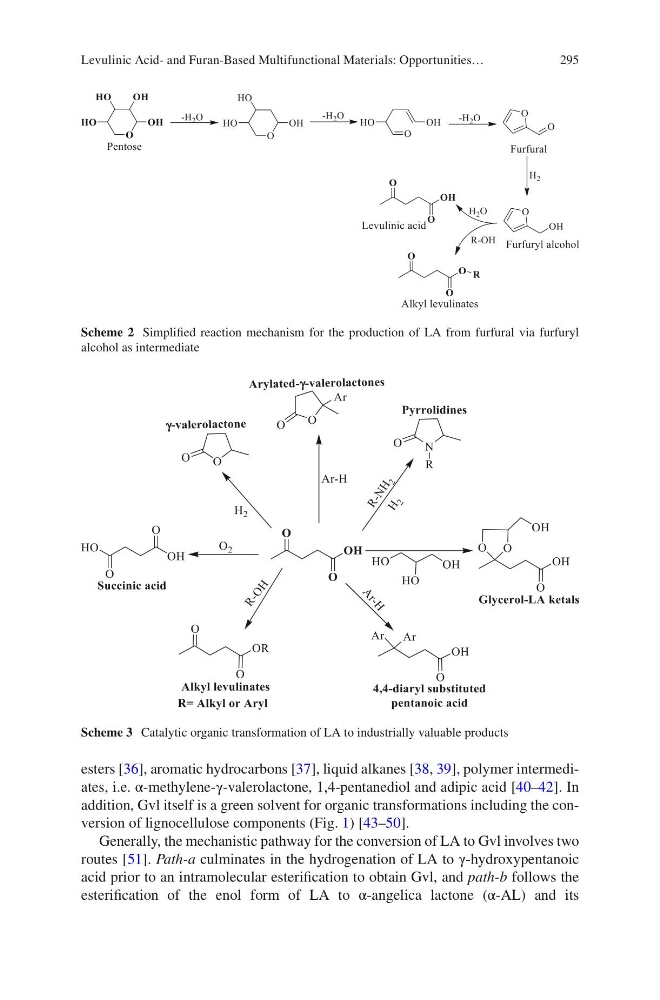
Scheme 2 Simplified reaction mechanism for the production of LA from furfural via furfuryl
alcohol as intermediate
Scheme 3 Catalytic organic transformation of LA to industrially valuable products
Levulinic Acid- and Furan-Based Multifunctional Materials: Opportunities…
esters [36], aromatic hydrocarbons [37], liquid alkanes [38, 39], polymer intermediates, i.e. α-methylene-γ-valerolactone, 1,4-pentanediol and adipic acid [40–42]. In
addition, Gvl itself is a green solvent for organic transformations including the conversion of lignocellulose components (Fig. 1) [43–50].
Generally, the mechanistic pathway for the conversion of LA to Gvl involves two
routes [51]. Path-a culminates in the hydrogenation of LA to γ-hydroxypentanoic
acid prior to an intramolecular esterification to obtain Gvl, and path-b follows the
esterification of the enol form of LA to α-angelica lactone (α-AL) and its
Scheme 2 Simplified reaction mechanism for the production of LA from furfural via furfuryl
alcohol as intermediate
Scheme 3 Catalytic organic transformation of LA to industrially valuable products
Levulinic Acid- and Furan-Based Multifunctional Materials: Opportunities…