

294
slurry, sorghum grain, corn starch, water hyacinth, bagasse and rice husk) to LA
using homogeneous acid catalysts [6, 8–13]. Reports of LA preparation are also
available from cellulose, glucose and HMF individually, and these conversions
mainly used homogeneous catalysts including mineral acids, super acids, metal
halides and acidic ionic liquids. In the course of the past few years, researchers have
also developed many solid acid catalysts [14–25].
The hemicellulose-based xylose is also a precursor for the preparation of LA and
its esters through furfural and furfuryl alcohol as intermediates (Scheme 2). Furfural
undergoes selective hydrogenation using metal-supported catalysts with furfuryl
alcohol as the product. Furfuryl alcohol in the presence of water results in LA and
LA esters (alkyl levulinates) in alcoholic medium. Furfuryl alcohol conversion to
LA involves acid catalysts including homogeneous acid catalysts (mineral acids),
acidic ionic liquids and solid acid catalysts [26–30].
2.2 Applications of Levulinic Acid
Multiple functionalities of LA including carboxyl, carbonyl and so on facilitate its
participation in various organic transformations including oxidation, hydrogenation, hydrocyclization, reductive amination, condensation, etc. (Scheme 3) [31]. We
are extensively working on the preparation of γ-valerolactone, arylated-γ-lactones
and 4,4-disubstituted pentanoic acid/esters. A detailed discussion pertaining to
these chemical transformations has been covered in the following sections.
2.2.1 Hydrocyclization of Levulinic Acid to γ-Valerolactone
LA under H 2 environment primarily results in useful products such as γ-valerolactone
(Gvl), 1,4-pentanediol (1,4-PDO), 2-methyltetrahydrofuran (2-MTHF) and pentanoic acid, depending on the catalytic system and reaction parameters [32–35]. All
these LA derivatives are industrially relevant; for example, Gvl is an attractive platform chemical and has various applications in the production of biofuels, i.e. valeric
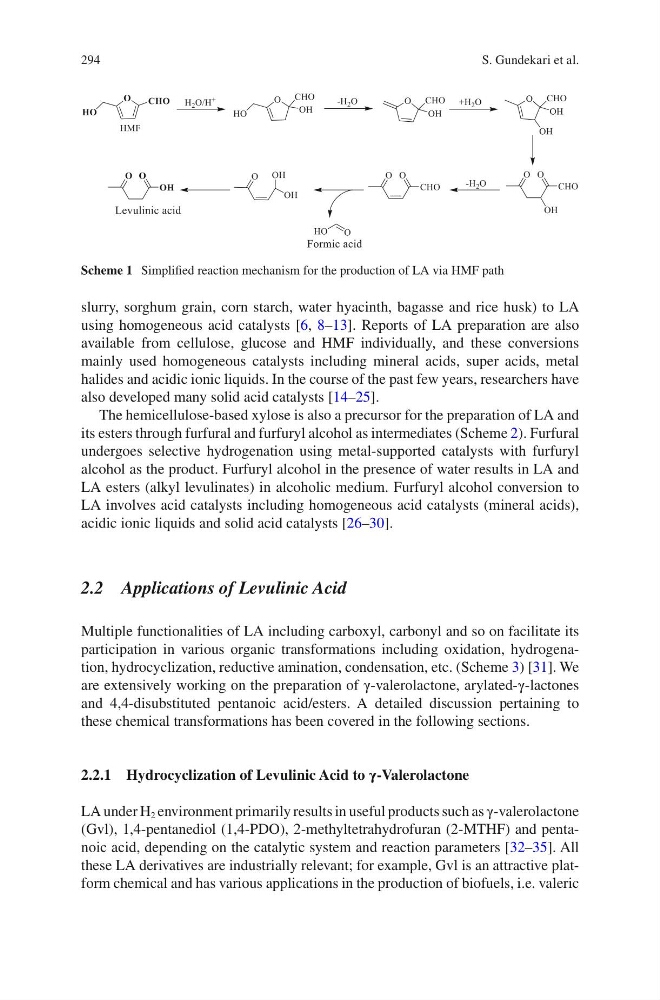
Scheme 1 Simplified reaction mechanism for the production of LA via HMF path
S. Gundekari et al.
slurry, sorghum grain, corn starch, water hyacinth, bagasse and rice husk) to LA
using homogeneous acid catalysts [6, 8–13]. Reports of LA preparation are also
available from cellulose, glucose and HMF individually, and these conversions
mainly used homogeneous catalysts including mineral acids, super acids, metal
halides and acidic ionic liquids. In the course of the past few years, researchers have
also developed many solid acid catalysts [14–25].
The hemicellulose-based xylose is also a precursor for the preparation of LA and
its esters through furfural and furfuryl alcohol as intermediates (Scheme 2). Furfural
undergoes selective hydrogenation using metal-supported catalysts with furfuryl
alcohol as the product. Furfuryl alcohol in the presence of water results in LA and
LA esters (alkyl levulinates) in alcoholic medium. Furfuryl alcohol conversion to
LA involves acid catalysts including homogeneous acid catalysts (mineral acids),
acidic ionic liquids and solid acid catalysts [26–30].
2.2 Applications of Levulinic Acid
Multiple functionalities of LA including carboxyl, carbonyl and so on facilitate its
participation in various organic transformations including oxidation, hydrogenation, hydrocyclization, reductive amination, condensation, etc. (Scheme 3) [31]. We
are extensively working on the preparation of γ-valerolactone, arylated-γ-lactones
and 4,4-disubstituted pentanoic acid/esters. A detailed discussion pertaining to
these chemical transformations has been covered in the following sections.
2.2.1 Hydrocyclization of Levulinic Acid to γ-Valerolactone
LA under H 2 environment primarily results in useful products such as γ-valerolactone
(Gvl), 1,4-pentanediol (1,4-PDO), 2-methyltetrahydrofuran (2-MTHF) and pentanoic acid, depending on the catalytic system and reaction parameters [32–35]. All
these LA derivatives are industrially relevant; for example, Gvl is an attractive platform chemical and has various applications in the production of biofuels, i.e. valeric
Scheme 1 Simplified reaction mechanism for the production of LA via HMF path
S. Gundekari et al.