

226
β-keto acid in the presence of alkali. In the presence of water, this keto acid subjected to a retroaldol fission to produce methyl hexyl ketone and decanoic acid
aldehyde. From the first step of dehydrogenation the methyl hexyl ketone takes
hydrogen to form 2-octanol. On the other hand, the decanoic acid may have two
potential reactions. One of these reactions is a reversible hydrogenation reaction
(hydrogen supplied from the first dehydrogenation stage) to form 10-hydroxy decanoic acid, while the other reaction is the oxidation of decanoic acid aldehyde to
produce sebacic acid in the presence of alkaline. In this reaction, many high boiling
points (>300 °C) chemically inert thinners are white mineral oil, therminol,
m- cresol, paratherm NF, glycol oil, and petroleum oil to enhance the yield and
purity of the product and also minimize frothing and solidify reaction mixture [18,
100, 101]. Sebacic acid and its compounds are used in producing the dioctyl sebacate (DOS), which is used in jet lubrication and lubricant in air-cooled combustion
engines and used as plasticizers for production of vinyl resins, coatings, perfumes,
cosmetics, and candles (Fig. 11).
In Additional as hexamethylenediamine is used in nylon 6–10 synthesis with
sebacic acid [6, 18, 102, 103]. 2-Octanol finds uses in the coal industry as a floating
agent and as a processing solvent for plasticizing, dehydrating, and anti-bubbling
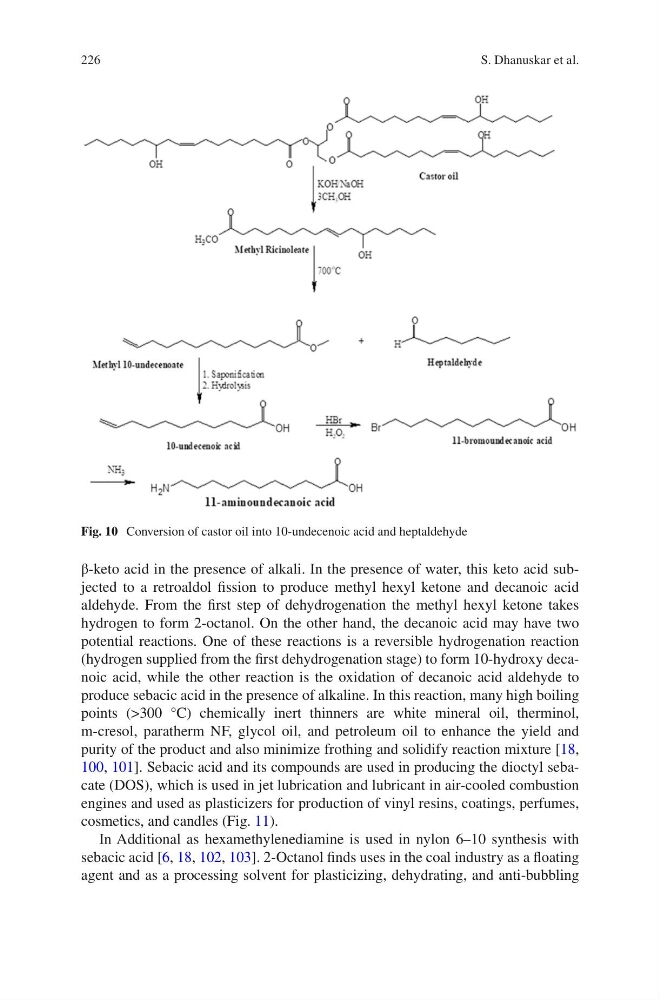
Fig. 10 Conversion of castor oil into 10-undecenoic acid and heptaldehyde
S. Dhanuskar et al.
β-keto acid in the presence of alkali. In the presence of water, this keto acid subjected to a retroaldol fission to produce methyl hexyl ketone and decanoic acid
aldehyde. From the first step of dehydrogenation the methyl hexyl ketone takes
hydrogen to form 2-octanol. On the other hand, the decanoic acid may have two
potential reactions. One of these reactions is a reversible hydrogenation reaction
(hydrogen supplied from the first dehydrogenation stage) to form 10-hydroxy decanoic acid, while the other reaction is the oxidation of decanoic acid aldehyde to
produce sebacic acid in the presence of alkaline. In this reaction, many high boiling
points (>300 °C) chemically inert thinners are white mineral oil, therminol,
m- cresol, paratherm NF, glycol oil, and petroleum oil to enhance the yield and
purity of the product and also minimize frothing and solidify reaction mixture [18,
100, 101]. Sebacic acid and its compounds are used in producing the dioctyl sebacate (DOS), which is used in jet lubrication and lubricant in air-cooled combustion
engines and used as plasticizers for production of vinyl resins, coatings, perfumes,
cosmetics, and candles (Fig. 11).
In Additional as hexamethylenediamine is used in nylon 6–10 synthesis with
sebacic acid [6, 18, 102, 103]. 2-Octanol finds uses in the coal industry as a floating
agent and as a processing solvent for plasticizing, dehydrating, and anti-bubbling
Fig. 10 Conversion of castor oil into 10-undecenoic acid and heptaldehyde
S. Dhanuskar et al.