

131
design, uncontrolled hydrolysis of monosaccharides, and regeneration of acid and
also from the perspective of ecological safety.
Sonication It was evident that the use of chemicals and optimized requirements of
enzymatic reactions are too tricky for the study of carbohydrates. In contrast, ultrasonic treatment is an efficient alternative with ease of use and adaptability. It
involves the use of sound waves with frequencies above the human hearing limit,
i.e., 20 kHz. The process entails acoustic cavitation in the solution as a result of the
generation of rapidly expanding and contracting water bubbles. This mainly causes
increased temperature and pressure environment for ultimate degradation. The
molecular weight, viscosity, and the solvent used are some of the factors governing
the output of sonolysis apart from the ultrasonic intensity and frequency. The breakdown is initiated from the weakest point in the macromolecular structure, and longer chains are broken into smaller fragments within a short duration of time without
altering the native structure. The best part is that it is a green technology, economically feasible with no clean-up requirements.
7 Conclusion
In conclusion, a polymer needs to get adapted to the ecosystem or the biological life
cycle because all carbon-based material is part of the ecosystem. Thus, polymers
should follow the rules of nature of degradability without harming the ecosystem.
A significant imbalance in the conversion rate (consumption and renewal) of
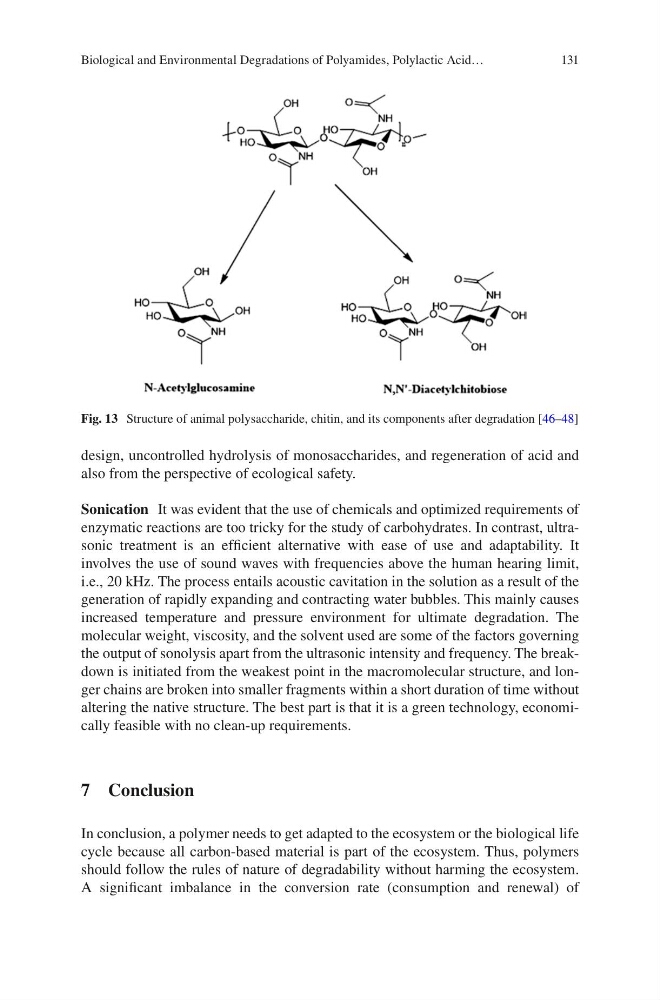
Fig. 13 Structure of animal polysaccharide, chitin, and its components after degradation [46–48]
Biological and Environmental Degradations of Polyamides, Polylactic Acid…
design, uncontrolled hydrolysis of monosaccharides, and regeneration of acid and
also from the perspective of ecological safety.
Sonication It was evident that the use of chemicals and optimized requirements of
enzymatic reactions are too tricky for the study of carbohydrates. In contrast, ultrasonic treatment is an efficient alternative with ease of use and adaptability. It
involves the use of sound waves with frequencies above the human hearing limit,
i.e., 20 kHz. The process entails acoustic cavitation in the solution as a result of the
generation of rapidly expanding and contracting water bubbles. This mainly causes
increased temperature and pressure environment for ultimate degradation. The
molecular weight, viscosity, and the solvent used are some of the factors governing
the output of sonolysis apart from the ultrasonic intensity and frequency. The breakdown is initiated from the weakest point in the macromolecular structure, and longer chains are broken into smaller fragments within a short duration of time without
altering the native structure. The best part is that it is a green technology, economically feasible with no clean-up requirements.
7 Conclusion
In conclusion, a polymer needs to get adapted to the ecosystem or the biological life
cycle because all carbon-based material is part of the ecosystem. Thus, polymers
should follow the rules of nature of degradability without harming the ecosystem.
A significant imbalance in the conversion rate (consumption and renewal) of
Fig. 13 Structure of animal polysaccharide, chitin, and its components after degradation [46–48]
Biological and Environmental Degradations of Polyamides, Polylactic Acid…