

74
3 In-Tether Chiral Center Induced Helical Peptide Modulators …
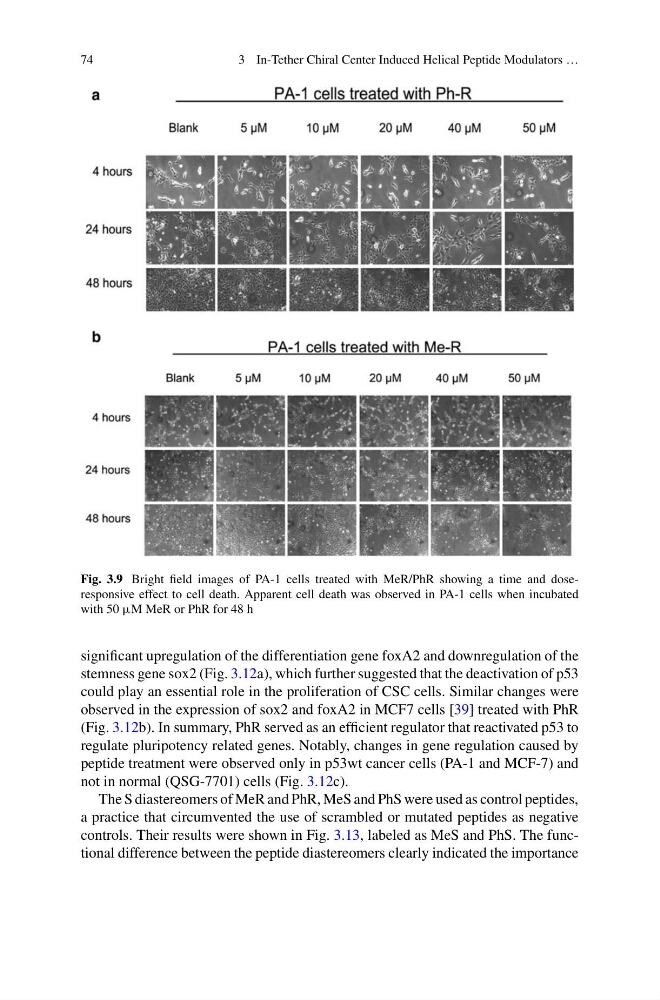
Fig. 3.9 Bright field images of PA-1 cells treated with MeR/PhR showing a time and doseresponsive effect to cell death. Apparent cell death was observed in PA-1 cells when incubated
with 50 μM MeR or PhR for 48 h
significant upregulation of the differentiation gene foxA2 and downregulation of the
stemness gene sox2 (Fig. 3.12a), which further suggested that the deactivation of p53
could play an essential role in the proliferation of CSC cells. Similar changes were
observed in the expression of sox2 and foxA2 in MCF7 cells [39] treated with PhR
(Fig. 3.12b). In summary, PhR served as an efficient regulator that reactivated p53 to
regulate pluripotency related genes. Notably, changes in gene regulation caused by
peptide treatment were observed only in p53wt cancer cells (PA-1 and MCF-7) and
not in normal (QSG-7701) cells (Fig. 3.12c).
The S diastereomers of MeR and PhR, MeS and PhS were used as control peptides,
a practice that circumvented the use of scrambled or mutated peptides as negative
controls. Their results were shown in Fig. 3.13, labeled as MeS and PhS. The functional difference between the peptide diastereomers clearly indicated the importance
3 In-Tether Chiral Center Induced Helical Peptide Modulators …
Fig. 3.9 Bright field images of PA-1 cells treated with MeR/PhR showing a time and doseresponsive effect to cell death. Apparent cell death was observed in PA-1 cells when incubated
with 50 μM MeR or PhR for 48 h
significant upregulation of the differentiation gene foxA2 and downregulation of the
stemness gene sox2 (Fig. 3.12a), which further suggested that the deactivation of p53
could play an essential role in the proliferation of CSC cells. Similar changes were
observed in the expression of sox2 and foxA2 in MCF7 cells [39] treated with PhR
(Fig. 3.12b). In summary, PhR served as an efficient regulator that reactivated p53 to
regulate pluripotency related genes. Notably, changes in gene regulation caused by
peptide treatment were observed only in p53wt cancer cells (PA-1 and MCF-7) and
not in normal (QSG-7701) cells (Fig. 3.12c).
The S diastereomers of MeR and PhR, MeS and PhS were used as control peptides,
a practice that circumvented the use of scrambled or mutated peptides as negative
controls. Their results were shown in Fig. 3.13, labeled as MeS and PhS. The functional difference between the peptide diastereomers clearly indicated the importance