

16
1 Introduction
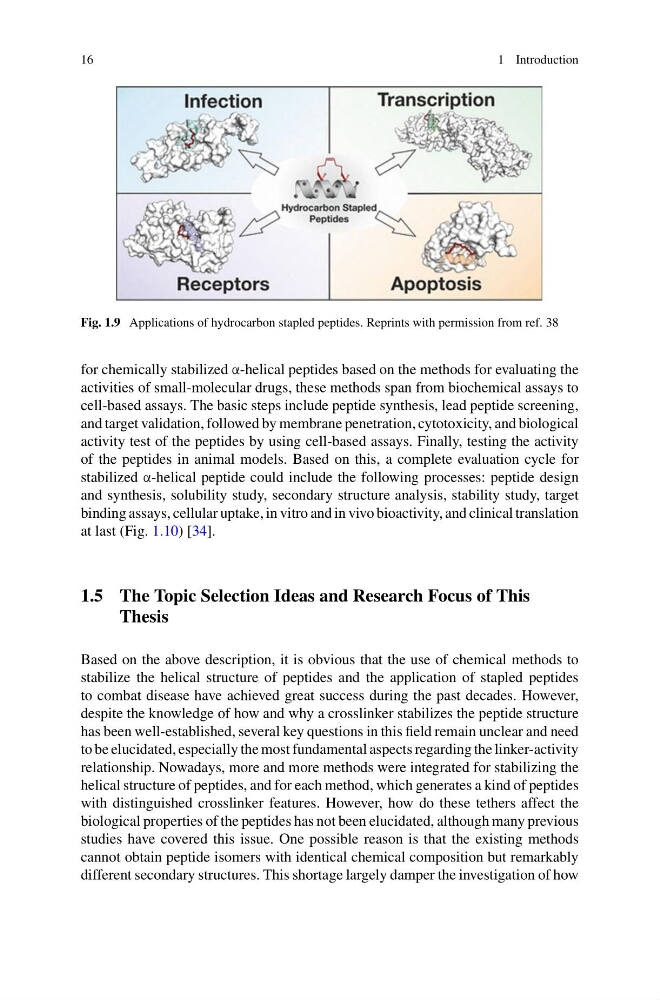
Fig. 1.9 Applications of hydrocarbon stapled peptides. Reprints with permission from ref. 38
for chemically stabilized α-helical peptides based on the methods for evaluating the
activities of small-molecular drugs, these methods span from biochemical assays to
cell-based assays. The basic steps include peptide synthesis, lead peptide screening,
and target validation, followed by membrane penetration, cytotoxicity, and biological
activity test of the peptides by using cell-based assays. Finally, testing the activity
of the peptides in animal models. Based on this, a complete evaluation cycle for
stabilized α-helical peptide could include the following processes: peptide design
and synthesis, solubility study, secondary structure analysis, stability study, target
binding assays, cellular uptake, in vitro and in vivo bioactivity, and clinical translation
at last (Fig. 1.10) [34].
1.5 The Topic Selection Ideas and Research Focus of This
Thesis
Based on the above description, it is obvious that the use of chemical methods to
stabilize the helical structure of peptides and the application of stapled peptides
to combat disease have achieved great success during the past decades. However,
despite the knowledge of how and why a crosslinker stabilizes the peptide structure
has been well-established, several key questions in this field remain unclear and need
to be elucidated, especially the most fundamental aspects regarding the linker-activity
relationship. Nowadays, more and more methods were integrated for stabilizing the
helical structure of peptides, and for each method, which generates a kind of peptides
with distinguished crosslinker features. However, how do these tethers affect the
biological properties of the peptides has not been elucidated, although many previous
studies have covered this issue. One possible reason is that the existing methods
cannot obtain peptide isomers with identical chemical composition but remarkably
different secondary structures. This shortage largely damper the investigation of how
1 Introduction
Fig. 1.9 Applications of hydrocarbon stapled peptides. Reprints with permission from ref. 38
for chemically stabilized α-helical peptides based on the methods for evaluating the
activities of small-molecular drugs, these methods span from biochemical assays to
cell-based assays. The basic steps include peptide synthesis, lead peptide screening,
and target validation, followed by membrane penetration, cytotoxicity, and biological
activity test of the peptides by using cell-based assays. Finally, testing the activity
of the peptides in animal models. Based on this, a complete evaluation cycle for
stabilized α-helical peptide could include the following processes: peptide design
and synthesis, solubility study, secondary structure analysis, stability study, target
binding assays, cellular uptake, in vitro and in vivo bioactivity, and clinical translation
at last (Fig. 1.10) [34].
1.5 The Topic Selection Ideas and Research Focus of This
Thesis
Based on the above description, it is obvious that the use of chemical methods to
stabilize the helical structure of peptides and the application of stapled peptides
to combat disease have achieved great success during the past decades. However,
despite the knowledge of how and why a crosslinker stabilizes the peptide structure
has been well-established, several key questions in this field remain unclear and need
to be elucidated, especially the most fundamental aspects regarding the linker-activity
relationship. Nowadays, more and more methods were integrated for stabilizing the
helical structure of peptides, and for each method, which generates a kind of peptides
with distinguished crosslinker features. However, how do these tethers affect the
biological properties of the peptides has not been elucidated, although many previous
studies have covered this issue. One possible reason is that the existing methods
cannot obtain peptide isomers with identical chemical composition but remarkably
different secondary structures. This shortage largely damper the investigation of how