

4
1 Introduction
X
n
X
n
side chain to side chain cross-link
N-terminal cap
Foldamers
structural mimetics
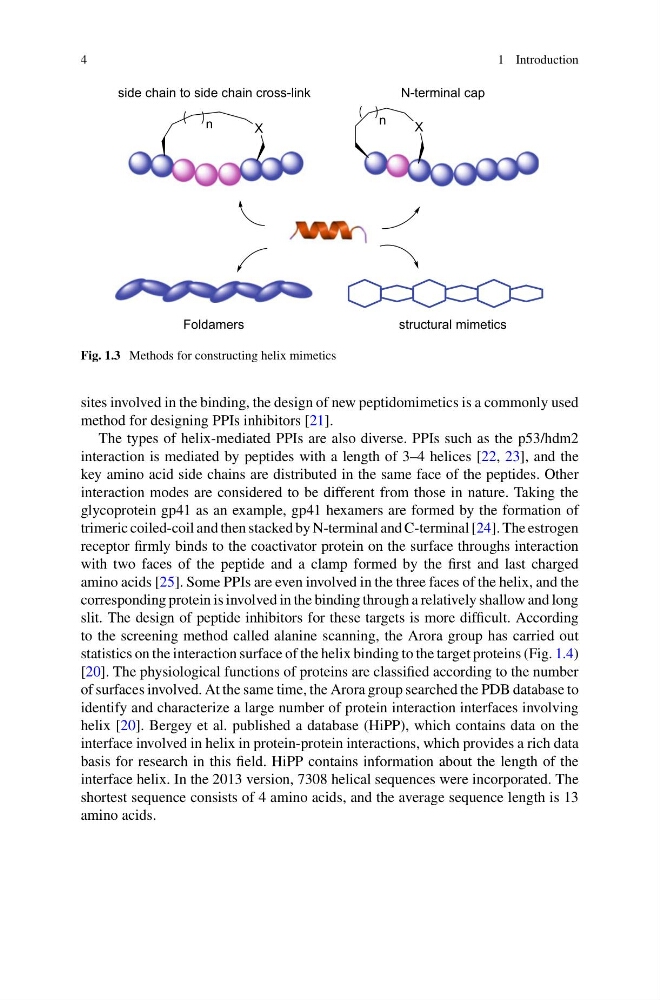
Fig. 1.3 Methods for constructing helix mimetics
sites involved in the binding, the design of new peptidomimetics is a commonly used
method for designing PPIs inhibitors [21].
The types of helix-mediated PPIs are also diverse. PPIs such as the p53/hdm2
interaction is mediated by peptides with a length of 3–4 helices [22, 23], and the
key amino acid side chains are distributed in the same face of the peptides. Other
interaction modes are considered to be different from those in nature. Taking the
glycoprotein gp41 as an example, gp41 hexamers are formed by the formation of
trimeric coiled-coil and then stacked by N-terminal and C-terminal [24]. The estrogen
receptor firmly binds to the coactivator protein on the surface throughs interaction
with two faces of the peptide and a clamp formed by the first and last charged
amino acids [25]. Some PPIs are even involved in the three faces of the helix, and the
corresponding protein is involved in the binding through a relatively shallow and long
slit. The design of peptide inhibitors for these targets is more difficult. According
to the screening method called alanine scanning, the Arora group has carried out
statistics on the interaction surface of the helix binding to the target proteins (Fig. 1.4)
[20]. The physiological functions of proteins are classified according to the number
of surfaces involved. At the same time, the Arora group searched the PDB database to
identify and characterize a large number of protein interaction interfaces involving
helix [20]. Bergey et al. published a database (HiPP), which contains data on the
interface involved in helix in protein-protein interactions, which provides a rich data
basis for research in this field. HiPP contains information about the length of the
interface helix. In the 2013 version, 7308 helical sequences were incorporated. The
shortest sequence consists of 4 amino acids, and the average sequence length is 13
amino acids.
1 Introduction
X
n
X
n
side chain to side chain cross-link
N-terminal cap
Foldamers
structural mimetics
Fig. 1.3 Methods for constructing helix mimetics
sites involved in the binding, the design of new peptidomimetics is a commonly used
method for designing PPIs inhibitors [21].
The types of helix-mediated PPIs are also diverse. PPIs such as the p53/hdm2
interaction is mediated by peptides with a length of 3–4 helices [22, 23], and the
key amino acid side chains are distributed in the same face of the peptides. Other
interaction modes are considered to be different from those in nature. Taking the
glycoprotein gp41 as an example, gp41 hexamers are formed by the formation of
trimeric coiled-coil and then stacked by N-terminal and C-terminal [24]. The estrogen
receptor firmly binds to the coactivator protein on the surface throughs interaction
with two faces of the peptide and a clamp formed by the first and last charged
amino acids [25]. Some PPIs are even involved in the three faces of the helix, and the
corresponding protein is involved in the binding through a relatively shallow and long
slit. The design of peptide inhibitors for these targets is more difficult. According
to the screening method called alanine scanning, the Arora group has carried out
statistics on the interaction surface of the helix binding to the target proteins (Fig. 1.4)
[20]. The physiological functions of proteins are classified according to the number
of surfaces involved. At the same time, the Arora group searched the PDB database to
identify and characterize a large number of protein interaction interfaces involving
helix [20]. Bergey et al. published a database (HiPP), which contains data on the
interface involved in helix in protein-protein interactions, which provides a rich data
basis for research in this field. HiPP contains information about the length of the
interface helix. In the 2013 version, 7308 helical sequences were incorporated. The
shortest sequence consists of 4 amino acids, and the average sequence length is 13
amino acids.