

1.2 History and Current Status of Peptide Drugs
5
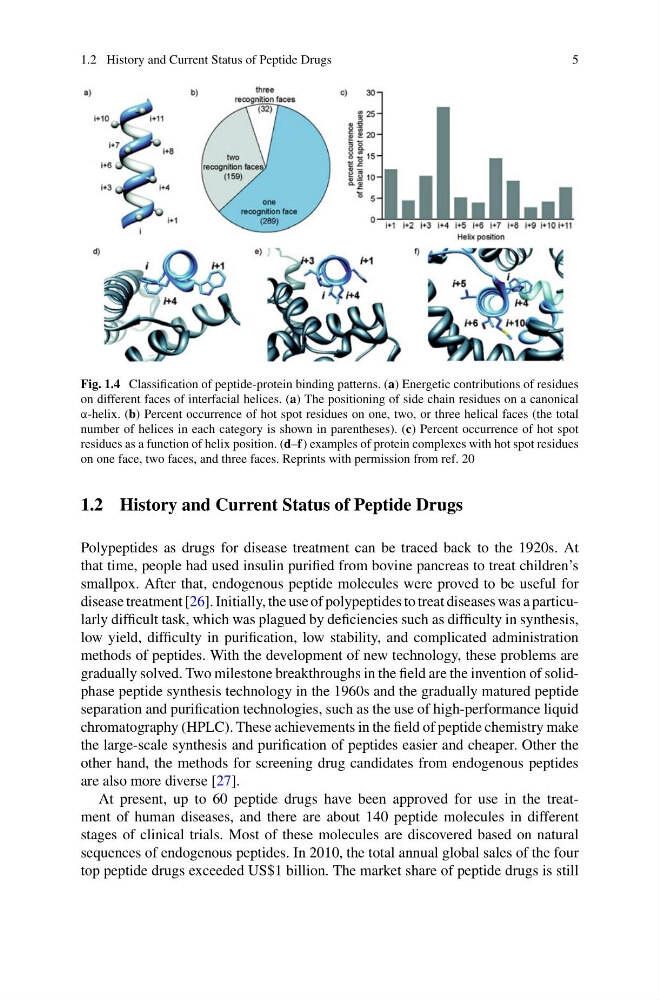
Fig. 1.4 Classification of peptide-protein binding patterns. (a) Energetic contributions of residues
on different faces of interfacial helices. (a) The positioning of side chain residues on a canonical
α-helix. (b) Percent occurrence of hot spot residues on one, two, or three helical faces (the total
number of helices in each category is shown in parentheses). (c) Percent occurrence of hot spot
residues as a function of helix position. (d–f) examples of protein complexes with hot spot residues
on one face, two faces, and three faces. Reprints with permission from ref. 20
1.2 History and Current Status of Peptide Drugs
Polypeptides as drugs for disease treatment can be traced back to the 1920s. At
that time, people had used insulin purified from bovine pancreas to treat children’s
smallpox. After that, endogenous peptide molecules were proved to be useful for
disease treatment [26]. Initially, the use of polypeptides to treat diseases was a particularly difficult task, which was plagued by deficiencies such as difficulty in synthesis,
low yield, difficulty in purification, low stability, and complicated administration
methods of peptides. With the development of new technology, these problems are
gradually solved. Two milestone breakthroughs in the field are the invention of solidphase peptide synthesis technology in the 1960s and the gradually matured peptide
separation and purification technologies, such as the use of high-performance liquid
chromatography (HPLC). These achievements in the field of peptide chemistry make
the large-scale synthesis and purification of peptides easier and cheaper. Other the
other hand, the methods for screening drug candidates from endogenous peptides
are also more diverse [27].
At present, up to 60 peptide drugs have been approved for use in the treatment of human diseases, and there are about 140 peptide molecules in different
stages of clinical trials. Most of these molecules are discovered based on natural
sequences of endogenous peptides. In 2010, the total annual global sales of the four
top peptide drugs exceeded US$1 billion. The market share of peptide drugs is still
5
Fig. 1.4 Classification of peptide-protein binding patterns. (a) Energetic contributions of residues
on different faces of interfacial helices. (a) The positioning of side chain residues on a canonical
α-helix. (b) Percent occurrence of hot spot residues on one, two, or three helical faces (the total
number of helices in each category is shown in parentheses). (c) Percent occurrence of hot spot
residues as a function of helix position. (d–f) examples of protein complexes with hot spot residues
on one face, two faces, and three faces. Reprints with permission from ref. 20
1.2 History and Current Status of Peptide Drugs
Polypeptides as drugs for disease treatment can be traced back to the 1920s. At
that time, people had used insulin purified from bovine pancreas to treat children’s
smallpox. After that, endogenous peptide molecules were proved to be useful for
disease treatment [26]. Initially, the use of polypeptides to treat diseases was a particularly difficult task, which was plagued by deficiencies such as difficulty in synthesis,
low yield, difficulty in purification, low stability, and complicated administration
methods of peptides. With the development of new technology, these problems are
gradually solved. Two milestone breakthroughs in the field are the invention of solidphase peptide synthesis technology in the 1960s and the gradually matured peptide
separation and purification technologies, such as the use of high-performance liquid
chromatography (HPLC). These achievements in the field of peptide chemistry make
the large-scale synthesis and purification of peptides easier and cheaper. Other the
other hand, the methods for screening drug candidates from endogenous peptides
are also more diverse [27].
At present, up to 60 peptide drugs have been approved for use in the treatment of human diseases, and there are about 140 peptide molecules in different
stages of clinical trials. Most of these molecules are discovered based on natural
sequences of endogenous peptides. In 2010, the total annual global sales of the four
top peptide drugs exceeded US$1 billion. The market share of peptide drugs is still