

evaporation. Over the oceans, the amount of water available
for evaporation is not limited, while on the continents it
depends on the amount of water available in the soil, and
thus, on the amount of precipitation. Due to latent heat
exchanges, evaporation cools the surface and this cooling
effect is larger over the oceans than over continental areas.
For example, with the IPSL model, evaporative cooling is
found to reduce the surface radiative balance by 9.8 W/m
2
over the ocean against only 0.2 W/m
2 over the continents.
Other processes, such as changing cloud cover or changing
atmospheric circulation, also play a role in the
ocean-continent warming differential.
In the mid and high latitude regions, the smaller increase
in ocean surface temperature is partly due to its thermal
inertia. This is particularly true in the southern hemisphere,
where very strong winds cause great mixing of the ocean,
and where the ocean temperature remains homogeneous to a
considerable depth. In order for the temperature of the ocean
surface to increase, a large amount of water must be heated
up.
The larger increase in temperature in the high latitudes of
the northern hemisphere is partly due to the surface albedo
feedback. The increase in temperature is accompanied by a
decrease in snow cover and sea ice extent in spring and
summer. This reduces the reflection of solar radiation at the
surface, increases the amount of radiation absorbed and
tends to amplify the initial increase in temperature. In
regions where the sea ice thins, or even disappears, air
temperature rises sharply as the temperature of the ocean
surface is higher than that of sea ice. Finally, a change in
atmospheric circulation (and in particular the increase in
water vapor transported to the high latitudes) is another
reason for the strong increase in temperature in these
regions. In the south and east of Greenland, it is noted that
the temperature of the air near the surface increases only
slightly. This trend is more or less marked depending on the
model, with some even simulating a slight local cooling. The
reason for this is a change in the ocean circulation, and
especially in the thermohaline circulation. In these areas, the
density of sea water decreases at the surface because of
increasing temperatures and/or precipitation. Surface waters
are no longer dense enough to sink, reducing oceanic convection and the associated North Atlantic drift. The effect of
this density reduction on temperature depends on the model,
both in terms of amplitude and geographical extension. It
modulates global warming locally and influences global
warming slightly, but nevertheless this warming remains
significant on all continents of the northern hemisphere,
especially in Europe.
Fig. 31.12 Multi-model time series of air surface temperature
anomaly (°C) (compared to the 1986–2005 average), for the twentieth
and twenty-first centuries under two different scenarios with very
contrasting emission scenarios: RCP2.6 (blue) and RCP8.5 (red). The
mean and associated uncertainties averaged over 2081–2100 are given
for all RCP scenarios as colored vertical bars. The line represents the
average of the models and the light-colored regions, the spread
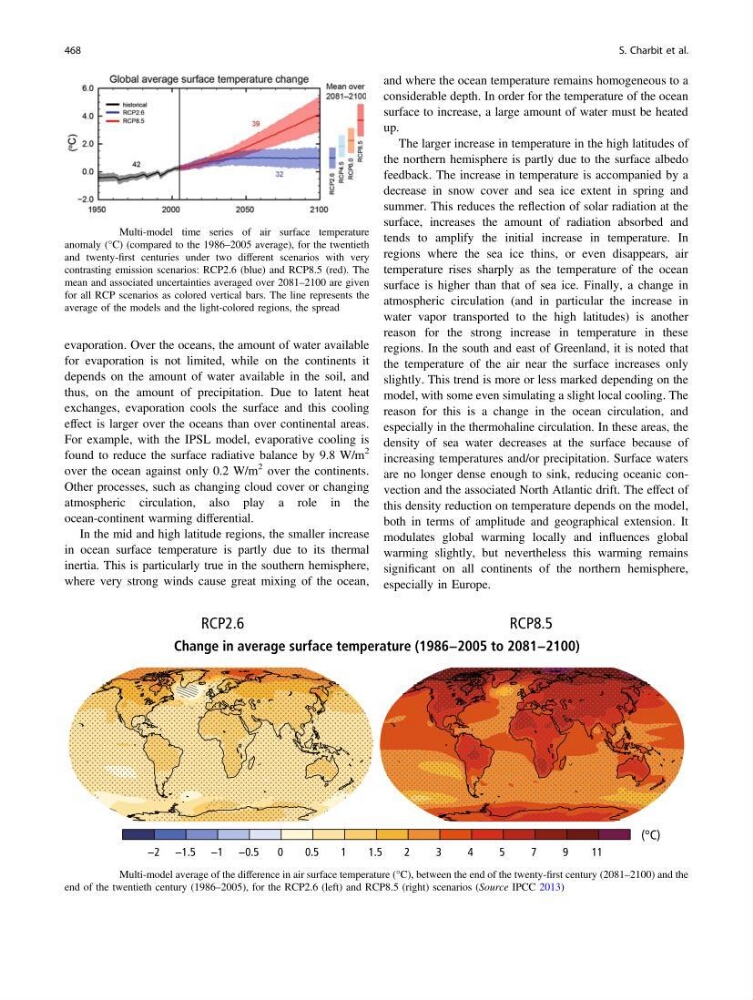
Fig. 31.13 Multi-model average of the difference in air surface temperature (°C), between the end of the twenty-first century (2081–2100) and the
end of the twentieth century (1986–2005), for the RCP2.6 (left) and RCP8.5 (right) scenarios (Source IPCC 2013)
468
S. Charbit et al.
for evaporation is not limited, while on the continents it
depends on the amount of water available in the soil, and
thus, on the amount of precipitation. Due to latent heat
exchanges, evaporation cools the surface and this cooling
effect is larger over the oceans than over continental areas.
For example, with the IPSL model, evaporative cooling is
found to reduce the surface radiative balance by 9.8 W/m
2
over the ocean against only 0.2 W/m
2 over the continents.
Other processes, such as changing cloud cover or changing
atmospheric circulation, also play a role in the
ocean-continent warming differential.
In the mid and high latitude regions, the smaller increase
in ocean surface temperature is partly due to its thermal
inertia. This is particularly true in the southern hemisphere,
where very strong winds cause great mixing of the ocean,
and where the ocean temperature remains homogeneous to a
considerable depth. In order for the temperature of the ocean
surface to increase, a large amount of water must be heated
up.
The larger increase in temperature in the high latitudes of
the northern hemisphere is partly due to the surface albedo
feedback. The increase in temperature is accompanied by a
decrease in snow cover and sea ice extent in spring and
summer. This reduces the reflection of solar radiation at the
surface, increases the amount of radiation absorbed and
tends to amplify the initial increase in temperature. In
regions where the sea ice thins, or even disappears, air
temperature rises sharply as the temperature of the ocean
surface is higher than that of sea ice. Finally, a change in
atmospheric circulation (and in particular the increase in
water vapor transported to the high latitudes) is another
reason for the strong increase in temperature in these
regions. In the south and east of Greenland, it is noted that
the temperature of the air near the surface increases only
slightly. This trend is more or less marked depending on the
model, with some even simulating a slight local cooling. The
reason for this is a change in the ocean circulation, and
especially in the thermohaline circulation. In these areas, the
density of sea water decreases at the surface because of
increasing temperatures and/or precipitation. Surface waters
are no longer dense enough to sink, reducing oceanic convection and the associated North Atlantic drift. The effect of
this density reduction on temperature depends on the model,
both in terms of amplitude and geographical extension. It
modulates global warming locally and influences global
warming slightly, but nevertheless this warming remains
significant on all continents of the northern hemisphere,
especially in Europe.
Fig. 31.12 Multi-model time series of air surface temperature
anomaly (°C) (compared to the 1986–2005 average), for the twentieth
and twenty-first centuries under two different scenarios with very
contrasting emission scenarios: RCP2.6 (blue) and RCP8.5 (red). The
mean and associated uncertainties averaged over 2081–2100 are given
for all RCP scenarios as colored vertical bars. The line represents the
average of the models and the light-colored regions, the spread
Fig. 31.13 Multi-model average of the difference in air surface temperature (°C), between the end of the twenty-first century (2081–2100) and the
end of the twentieth century (1986–2005), for the RCP2.6 (left) and RCP8.5 (right) scenarios (Source IPCC 2013)
468
S. Charbit et al.