

through the glacial-interglacial alternations, it is normal to
expect possibly more subtle types of changes in climate
when the Earth was less ice-covered or even not at all.
Climate variations of astronomical origin may well involve
other components of the Earth system besides the ice caps,
such as monsoons, biological productivity, or other aspects
of our planet. These astronomical cycles are also often
incorrectly called ‘Milankovitch cycles’, although, for the
most part, they have nothing to do with changes in the
expansion of the ice caps, which were, more often than not,
non-existent throughout the history of the Earth. Milankovitch’s theory is a theory of the evolution of the ice caps. It is
not a climate theory and therefore does not apply to all of the
changes in climate due to astronomical causes. Theoretically, there is no reason to select summer insolation in the
northern hemisphere as a dominant forcing parameter for
components of the system other than the ice caps in the
northern hemisphere. According to measured indicators
(sedimentology, isotopes of oxygen or carbon, color, etc.),
depending on the sites and the geological periods under
consideration, the cycles line up with different astronomical
periodicities corresponding to variations in precession,
obliquity or eccentricity. These alternating sedimentary
layers may be from very different origins, and they are
sometimes rather poorly understood. There are examples of
this in more or less all the epochs of the history of the Earth.
A prime example concerns deposits of organic matter in
the Mediterranean Sea, which occur regularly in the form of
clearly identifiable layers of black silt called sapropeles.
These layers rich in organic matter are explained either by an
increase in biological production at the surface or by a
change in the circulation of the deep waters of the
Mediterranean, which would have been poorly oxygenated
during these events, just as the Black Sea is today. In fact,
these sapropel events correspond to rainfall episodes in
Saharan Africa, or even over the Mediterranean basin as a
whole, which brought significantly large supplies of freshwater via the Nile and the rains and disrupted the formation
of deep waters and therefore the oxygenation levels of the
Mediterranean. Whatever the mechanism, these sedimentary
levels appear, with a few exceptions, to be governed by
precessional variations since the Miocene, about 14 million
years ago, until the last event designated S1, at the beginning
of our interglacial period, about 7000 years ago. As shown
in Fig. 28.10, this cyclicity is sufficiently well-marked to be
used not only as a dating method but also to calibrate the
0
500
1000
1500
2000
2500
3000
3500
4000
4500
5000
0
500
1000
1500
2000
2500
3000
3500
4000
4500
5000
Age (kyrBP)
Age (kyrBP)
LR04 data
Model : ice volume
Model: atmospheric CO 2
LR04 spectrum
model spectrum
100 ka
41 ka
23 ka
19 ka
100 ka
41 ka
23 ka
19 ka
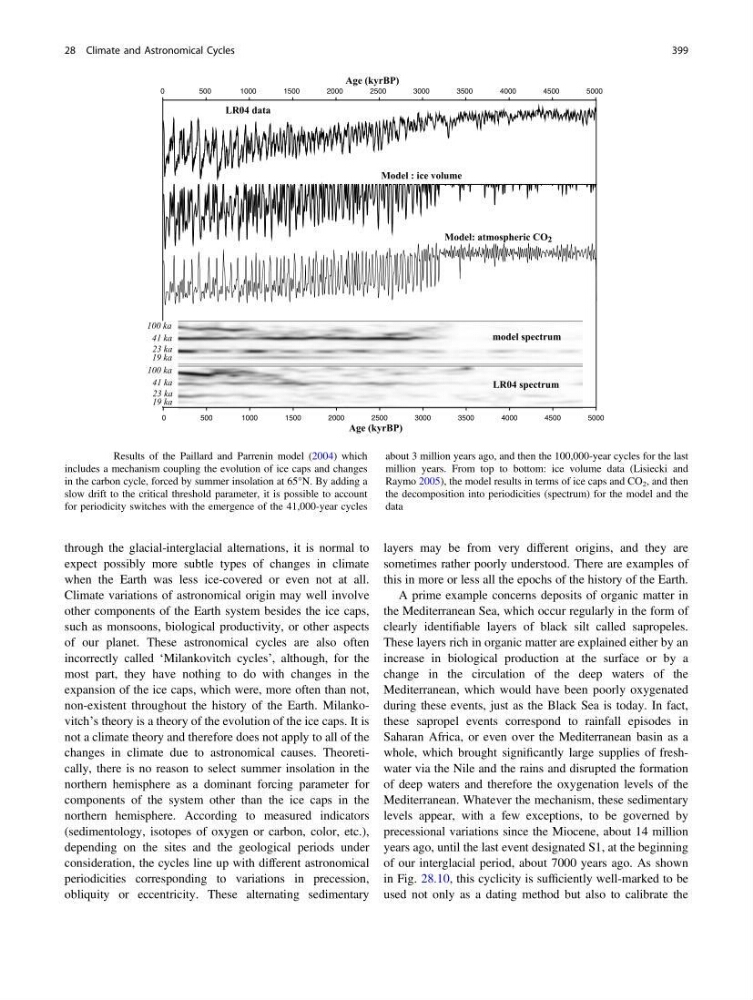
Fig. 28.9 Results of the Paillard and Parrenin model (2004) which
includes a mechanism coupling the evolution of ice caps and changes
in the carbon cycle, forced by summer insolation at 65°N. By adding a
slow drift to the critical threshold parameter, it is possible to account
for periodicity switches with the emergence of the 41,000-year cycles
about 3 million years ago, and then the 100,000-year cycles for the last
million years. From top to bottom: ice volume data (Lisiecki and
Raymo 2005), the model results in terms of ice caps and CO 2 , and then
the decomposition into periodicities (spectrum) for the model and the
data
28 Climate and Astronomical Cycles
399
expect possibly more subtle types of changes in climate
when the Earth was less ice-covered or even not at all.
Climate variations of astronomical origin may well involve
other components of the Earth system besides the ice caps,
such as monsoons, biological productivity, or other aspects
of our planet. These astronomical cycles are also often
incorrectly called ‘Milankovitch cycles’, although, for the
most part, they have nothing to do with changes in the
expansion of the ice caps, which were, more often than not,
non-existent throughout the history of the Earth. Milankovitch’s theory is a theory of the evolution of the ice caps. It is
not a climate theory and therefore does not apply to all of the
changes in climate due to astronomical causes. Theoretically, there is no reason to select summer insolation in the
northern hemisphere as a dominant forcing parameter for
components of the system other than the ice caps in the
northern hemisphere. According to measured indicators
(sedimentology, isotopes of oxygen or carbon, color, etc.),
depending on the sites and the geological periods under
consideration, the cycles line up with different astronomical
periodicities corresponding to variations in precession,
obliquity or eccentricity. These alternating sedimentary
layers may be from very different origins, and they are
sometimes rather poorly understood. There are examples of
this in more or less all the epochs of the history of the Earth.
A prime example concerns deposits of organic matter in
the Mediterranean Sea, which occur regularly in the form of
clearly identifiable layers of black silt called sapropeles.
These layers rich in organic matter are explained either by an
increase in biological production at the surface or by a
change in the circulation of the deep waters of the
Mediterranean, which would have been poorly oxygenated
during these events, just as the Black Sea is today. In fact,
these sapropel events correspond to rainfall episodes in
Saharan Africa, or even over the Mediterranean basin as a
whole, which brought significantly large supplies of freshwater via the Nile and the rains and disrupted the formation
of deep waters and therefore the oxygenation levels of the
Mediterranean. Whatever the mechanism, these sedimentary
levels appear, with a few exceptions, to be governed by
precessional variations since the Miocene, about 14 million
years ago, until the last event designated S1, at the beginning
of our interglacial period, about 7000 years ago. As shown
in Fig. 28.10, this cyclicity is sufficiently well-marked to be
used not only as a dating method but also to calibrate the
0
500
1000
1500
2000
2500
3000
3500
4000
4500
5000
0
500
1000
1500
2000
2500
3000
3500
4000
4500
5000
Age (kyrBP)
Age (kyrBP)
LR04 data
Model : ice volume
Model: atmospheric CO 2
LR04 spectrum
model spectrum
100 ka
41 ka
23 ka
19 ka
100 ka
41 ka
23 ka
19 ka
Fig. 28.9 Results of the Paillard and Parrenin model (2004) which
includes a mechanism coupling the evolution of ice caps and changes
in the carbon cycle, forced by summer insolation at 65°N. By adding a
slow drift to the critical threshold parameter, it is possible to account
for periodicity switches with the emergence of the 41,000-year cycles
about 3 million years ago, and then the 100,000-year cycles for the last
million years. From top to bottom: ice volume data (Lisiecki and
Raymo 2005), the model results in terms of ice caps and CO 2 , and then
the decomposition into periodicities (spectrum) for the model and the
data
28 Climate and Astronomical Cycles
399