

an increase of the evaporation from the lakes’ surfaces (E) of
100% or a reduction of the relative humidity from 0.74 to
0.5. Most probably, we need to distribute the overall effect to
more moderate changes of all three parameters, which, in a
natural world, are closely connected and often correlated.
A reduction in I of 12%, together with an increase in E of
12%, and a relative humidity of 0.64, would, as would an
infinitive number of other combinations, explain the increase
in the lake offset of 0.8‰. However, all changes of these
parameters had an effect not only on the difference of d
18 O L
jn the lakes but also on the evaporative enrichment and
d
18 O L –d
18 O P of the Ammersee, which we considered as
constant for the d
18 O P reconstruction. The resulting correction of the d
18 O P estimate for the Early Holocene would be
−0.6‰ in the case of highly improbable isolated changes of
either E or I, against only −0.25‰ for our example of
combined h, I, and E changes. Besides important paleohydrological information, the lake-to-lake comparison also
allows us to exclude errors in the d
18 O P reconstruction
arising from water balance changes for last 7000 years. For
the early Holocene, the d
18 O P -record from Ammersee is
probably up to 0.25‰ too high. A correction can be proposed using all available data points from the Starnberger
See, which would then largely reduce the hydrologicalinduced uncertainties of the Ammersee d
18 O P -record. In
future, a condensation of the Starnberger See record should
be considered to increase confidence in the quantitative
reconstruction of d
18 O P from its neighbour.
Conclusions
Oxygen isotope records from deep-lake ostracods can provide
high-resolution quantitative records of d
18 O P , if those lakes
that are selected have (1) a small relative contribution from
evaporation to the lake water balance, (2) a well-defined
drainage basin without evidence of major re-organisation of its
associated fluvial system, (3) a theoretical residence time
between 2 and 10 years, (4) a water depth in excess of 50 m,
(5) an annual complete overturn, and (6) proven preservation
of in situ ostracod fauna among its profundal sediments. The
temporal resolution of d
18 O P from benthic deep-lake ostracods
is limited to roughly ten years, the e-folding time of lakes with
a buffering volume large enough to suppress eventual bias
from the seasonal variability of d
18 O of precipitation and river
water. It was shown, using the example from Ammersee that a
maximal theoretical resolution can be practically obtained.
Detailed hydrological, limnological, and isotopic investigations can provide the basis for a realistic quality control of the
d
18 O P reconstruction. For the d
18
O P record of the last
15,500 years, the maximal error from water temperature
effects is ±0.2‰, to which must be added uncertainty from
possible hydrological changes of –0.3‰ to +0.6‰. Correction
of the record using the quantification of the hydrological
effects through comparison with the more strongly affected
Starnberger See further reduces the overall error to a maximum
of ±0.4‰ for the driest period in the Holocene.
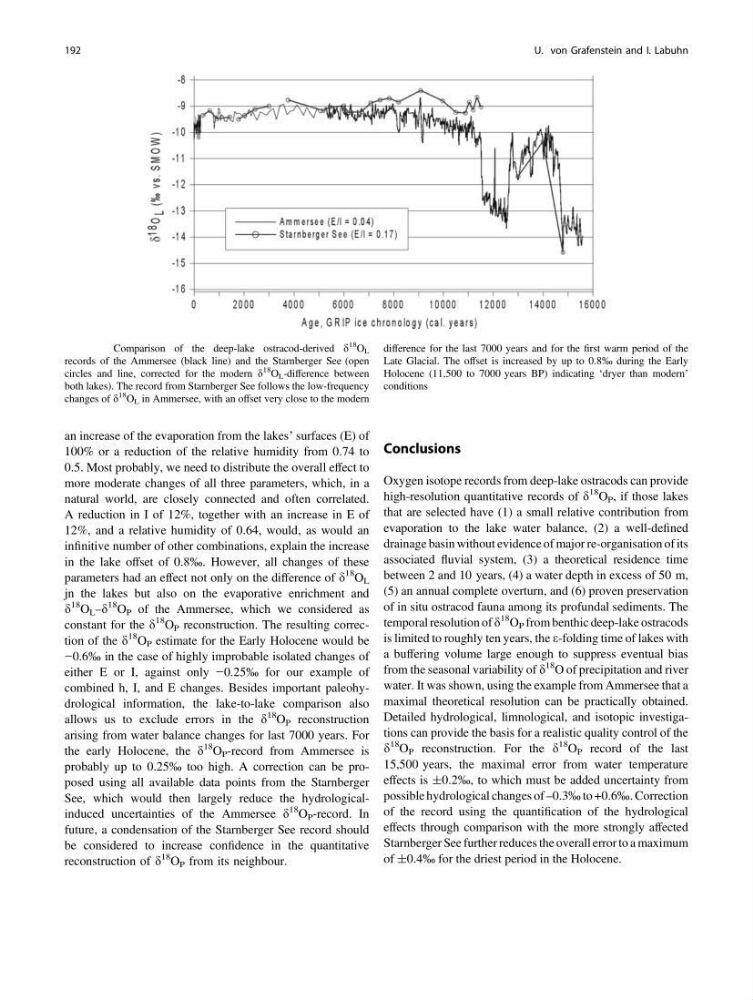
Fig. 15.7 Comparison of the deep-lake ostracod-derived d
18
O L
records of the Ammersee (black line) and the Starnberger See (open
circles and line, corrected for the modern d
18
O L -difference between
both lakes). The record from Starnberger See follows the low-frequency
changes of d
18
O L in Ammersee, with an offset very close to the modern
difference for the last 7000 years and for the first warm period of the
Late Glacial. The offset is increased by up to 0.8‰ during the Early
Holocene (11,500 to 7000 years BP) indicating ‘dryer than modern’
conditions
192
U. von Grafenstein and I. Labuhn
100% or a reduction of the relative humidity from 0.74 to
0.5. Most probably, we need to distribute the overall effect to
more moderate changes of all three parameters, which, in a
natural world, are closely connected and often correlated.
A reduction in I of 12%, together with an increase in E of
12%, and a relative humidity of 0.64, would, as would an
infinitive number of other combinations, explain the increase
in the lake offset of 0.8‰. However, all changes of these
parameters had an effect not only on the difference of d
18 O L
jn the lakes but also on the evaporative enrichment and
d
18 O L –d
18 O P of the Ammersee, which we considered as
constant for the d
18 O P reconstruction. The resulting correction of the d
18 O P estimate for the Early Holocene would be
−0.6‰ in the case of highly improbable isolated changes of
either E or I, against only −0.25‰ for our example of
combined h, I, and E changes. Besides important paleohydrological information, the lake-to-lake comparison also
allows us to exclude errors in the d
18 O P reconstruction
arising from water balance changes for last 7000 years. For
the early Holocene, the d
18 O P -record from Ammersee is
probably up to 0.25‰ too high. A correction can be proposed using all available data points from the Starnberger
See, which would then largely reduce the hydrologicalinduced uncertainties of the Ammersee d
18 O P -record. In
future, a condensation of the Starnberger See record should
be considered to increase confidence in the quantitative
reconstruction of d
18 O P from its neighbour.
Conclusions
Oxygen isotope records from deep-lake ostracods can provide
high-resolution quantitative records of d
18 O P , if those lakes
that are selected have (1) a small relative contribution from
evaporation to the lake water balance, (2) a well-defined
drainage basin without evidence of major re-organisation of its
associated fluvial system, (3) a theoretical residence time
between 2 and 10 years, (4) a water depth in excess of 50 m,
(5) an annual complete overturn, and (6) proven preservation
of in situ ostracod fauna among its profundal sediments. The
temporal resolution of d
18 O P from benthic deep-lake ostracods
is limited to roughly ten years, the e-folding time of lakes with
a buffering volume large enough to suppress eventual bias
from the seasonal variability of d
18 O of precipitation and river
water. It was shown, using the example from Ammersee that a
maximal theoretical resolution can be practically obtained.
Detailed hydrological, limnological, and isotopic investigations can provide the basis for a realistic quality control of the
d
18 O P reconstruction. For the d
18
O P record of the last
15,500 years, the maximal error from water temperature
effects is ±0.2‰, to which must be added uncertainty from
possible hydrological changes of –0.3‰ to +0.6‰. Correction
of the record using the quantification of the hydrological
effects through comparison with the more strongly affected
Starnberger See further reduces the overall error to a maximum
of ±0.4‰ for the driest period in the Holocene.
Fig. 15.7 Comparison of the deep-lake ostracod-derived d
18
O L
records of the Ammersee (black line) and the Starnberger See (open
circles and line, corrected for the modern d
18
O L -difference between
both lakes). The record from Starnberger See follows the low-frequency
changes of d
18
O L in Ammersee, with an offset very close to the modern
difference for the last 7000 years and for the first warm period of the
Late Glacial. The offset is increased by up to 0.8‰ during the Early
Holocene (11,500 to 7000 years BP) indicating ‘dryer than modern’
conditions
192
U. von Grafenstein and I. Labuhn