

almost absent in typical calcareous loess, associated with
Greenland and Heinrich stadials (Prud’homme et al. (2015)).
Geophysical Indicators
This is mainly the magnetic sensitivity in low fields which
allows, firstly, the different lithological units present in the
same sequence to be characterized, and secondly, to identify
the source of the matter through the magnetic particle size
(Lagroix and Banerjee (2002)). In general, typical loess units
have relatively low field magnetic susceptibility, unlike
paleosols, which are characterized by significantly higher
values. Widely used for the Chinese sequences,
low-frequency magnetic sensitivity was interpreted by Kukla
et al. (1990) as corresponding to a relatively constant supply
of fine matter through the ages. According to this theory, the
formation of soil in the various Chinese interglacial
paleosols caused the magnetic grains to become concentrated. This led Kukla to propose a chronological model,
independent of any astronomical calibration, while assuming
continuous and complete sequences. However, the discovery
in the paleosols of bacteria secreting magnetic grains called
this debatable assumption into question (Zhou et al. (1990)).
On the other hand, research on modern Chinese soils along
gradients, reflecting the impact of the summer monsoon, has
enabled the calibration of the sensitivity signal and the
establishment of a transfer function for the region to
reconstruct annual paleoprecipitation associated with the
variations in the East Asian monsoon (Maher and Thompson
(1995)). A new method of characterizing the origin of loess
is to work directly taking a quartz grain and to study both the
crystallinity index and the intensity of the spin resonance
signal. This new technique makes it possible to differentiate
between the origins of the grains and thus to follow the
variations in the source of the transported material. Applied
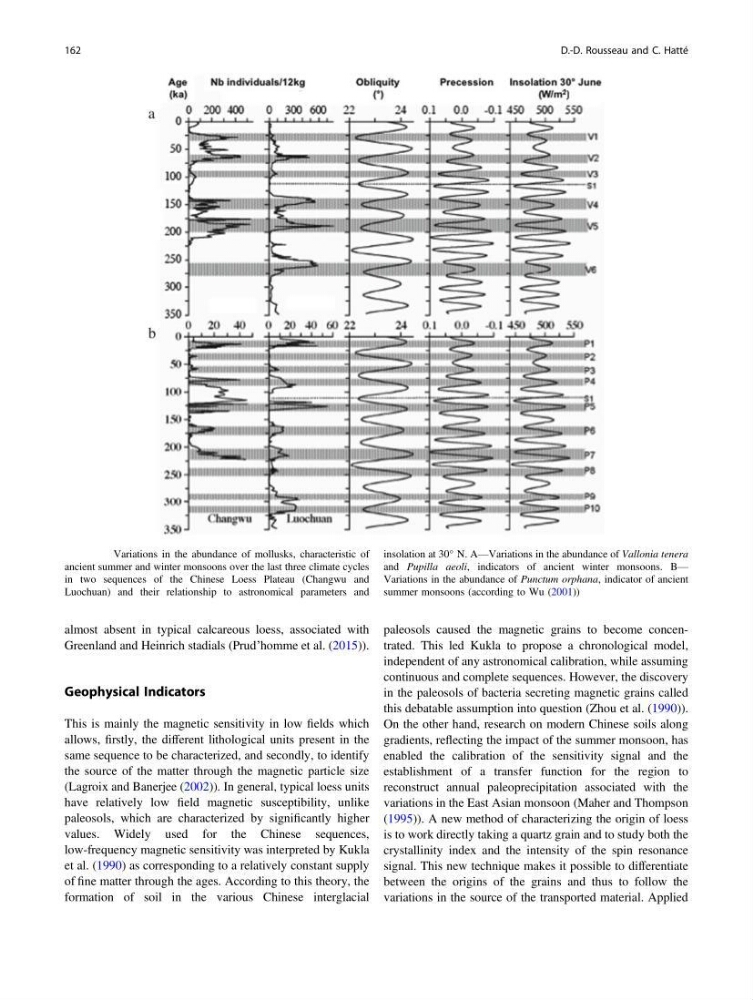
Fig. 13.5 Variations in the abundance of mollusks, characteristic of
ancient summer and winter monsoons over the last three climate cycles
in two sequences of the Chinese Loess Plateau (Changwu and
Luochuan) and their relationship to astronomical parameters and
insolation at 30° N. A—Variations in the abundance of Vallonia tenera
and Pupilla aeoli, indicators of ancient winter monsoons. B—
Variations in the abundance of Punctum orphana, indicator of ancient
summer monsoons (according to Wu (2001))
162
D.-D. Rousseau and C. Hatté
Greenland and Heinrich stadials (Prud’homme et al. (2015)).
Geophysical Indicators
This is mainly the magnetic sensitivity in low fields which
allows, firstly, the different lithological units present in the
same sequence to be characterized, and secondly, to identify
the source of the matter through the magnetic particle size
(Lagroix and Banerjee (2002)). In general, typical loess units
have relatively low field magnetic susceptibility, unlike
paleosols, which are characterized by significantly higher
values. Widely used for the Chinese sequences,
low-frequency magnetic sensitivity was interpreted by Kukla
et al. (1990) as corresponding to a relatively constant supply
of fine matter through the ages. According to this theory, the
formation of soil in the various Chinese interglacial
paleosols caused the magnetic grains to become concentrated. This led Kukla to propose a chronological model,
independent of any astronomical calibration, while assuming
continuous and complete sequences. However, the discovery
in the paleosols of bacteria secreting magnetic grains called
this debatable assumption into question (Zhou et al. (1990)).
On the other hand, research on modern Chinese soils along
gradients, reflecting the impact of the summer monsoon, has
enabled the calibration of the sensitivity signal and the
establishment of a transfer function for the region to
reconstruct annual paleoprecipitation associated with the
variations in the East Asian monsoon (Maher and Thompson
(1995)). A new method of characterizing the origin of loess
is to work directly taking a quartz grain and to study both the
crystallinity index and the intensity of the spin resonance
signal. This new technique makes it possible to differentiate
between the origins of the grains and thus to follow the
variations in the source of the transported material. Applied
Fig. 13.5 Variations in the abundance of mollusks, characteristic of
ancient summer and winter monsoons over the last three climate cycles
in two sequences of the Chinese Loess Plateau (Changwu and
Luochuan) and their relationship to astronomical parameters and
insolation at 30° N. A—Variations in the abundance of Vallonia tenera
and Pupilla aeoli, indicators of ancient winter monsoons. B—
Variations in the abundance of Punctum orphana, indicator of ancient
summer monsoons (according to Wu (2001))
162
D.-D. Rousseau and C. Hatté