

functions from terrestrial mollusks and using the principle of
modern analogs, were developed to reconstruct the seasonal
temperatures from the European loess sequences over three
climate cycles (Rousseau (1991); Moine et al. (2002)).
The short-term variability
The high-resolution study (1 sample every 10 cm) of
malacological assemblages from the Nussloch loess
sequence allows vegetation change to be described along the
70 to 34 kyr cal BP period, recorded in 6 meters of sediment
(Moine et al. (2005)). The mollusk changes reflect three
short phases of vegetation development and climatic
improvement related to soils of the interstadials. A steppe to
herb/shrub tundra shift characterizes the Lower-Middle
Pleniglacial transition and is followed by a decline in vegetation and humidity increase ending with a new increase in
temperature and vegetation cover (Moine et al. (2005)).
Many other methods have been developed using
micro-mammals or beetles, with the current distribution of
species and the average ranges of associated climate acting
as a reference (Liu et al. (1985)). Terrestrial mollusks have
also been studied from their signature left in amino acids.
This approach helps to distinguish important differences
between one climate cycle and another (Oches and McCoy
(1995)).
Another paleoclimate index also studied in loess sediments are phytoliths, siliceous concretions present in
superficial plant tissue. In some cases, they are well preserved and identified, particularly in the Chinese loess
sequences, where they helped in the reconstruction of the
temperature and precipitation of the last climatic cycle (Lu
et al. (2007)). Pollen, in contrast, are poorly preserved in
loess sequences and are the subject of very few studies
(Gerasimenko and Rousseau (2008); Rousseau et al.
(2001)).
Recently, earthworm granules have been established as a
new biological proxy (Prud’homme et al. (2015)). This
proxy is not based on species recognition but is based on
abundance. Counts of earthworm granules reveal a link
between their abundance and the nature of the stratigraphic
units and their associated climate conditions. They are in
very high abundances in tundra gley and boreal brown soil
horizons, i.e. during Greenland interstadial intervals and are
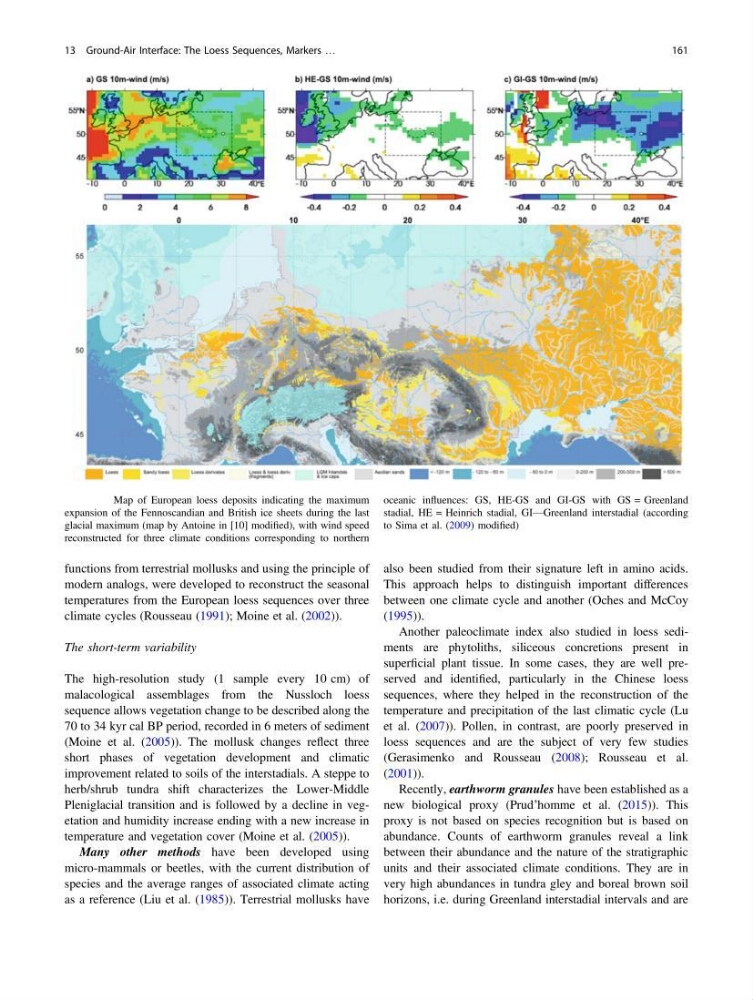
Fig. 13.4 Map of European loess deposits indicating the maximum
expansion of the Fennoscandian and British ice sheets during the last
glacial maximum (map by Antoine in [10] modified), with wind speed
reconstructed for three climate conditions corresponding to northern
oceanic influences: GS, HE-GS and GI-GS with GS = Greenland
stadial, HE = Heinrich stadial, GI—Greenland interstadial (according
to Sima et al. (2009) modified)
13 Ground-Air Interface: The Loess Sequences, Markers …
161
modern analogs, were developed to reconstruct the seasonal
temperatures from the European loess sequences over three
climate cycles (Rousseau (1991); Moine et al. (2002)).
The short-term variability
The high-resolution study (1 sample every 10 cm) of
malacological assemblages from the Nussloch loess
sequence allows vegetation change to be described along the
70 to 34 kyr cal BP period, recorded in 6 meters of sediment
(Moine et al. (2005)). The mollusk changes reflect three
short phases of vegetation development and climatic
improvement related to soils of the interstadials. A steppe to
herb/shrub tundra shift characterizes the Lower-Middle
Pleniglacial transition and is followed by a decline in vegetation and humidity increase ending with a new increase in
temperature and vegetation cover (Moine et al. (2005)).
Many other methods have been developed using
micro-mammals or beetles, with the current distribution of
species and the average ranges of associated climate acting
as a reference (Liu et al. (1985)). Terrestrial mollusks have
also been studied from their signature left in amino acids.
This approach helps to distinguish important differences
between one climate cycle and another (Oches and McCoy
(1995)).
Another paleoclimate index also studied in loess sediments are phytoliths, siliceous concretions present in
superficial plant tissue. In some cases, they are well preserved and identified, particularly in the Chinese loess
sequences, where they helped in the reconstruction of the
temperature and precipitation of the last climatic cycle (Lu
et al. (2007)). Pollen, in contrast, are poorly preserved in
loess sequences and are the subject of very few studies
(Gerasimenko and Rousseau (2008); Rousseau et al.
(2001)).
Recently, earthworm granules have been established as a
new biological proxy (Prud’homme et al. (2015)). This
proxy is not based on species recognition but is based on
abundance. Counts of earthworm granules reveal a link
between their abundance and the nature of the stratigraphic
units and their associated climate conditions. They are in
very high abundances in tundra gley and boreal brown soil
horizons, i.e. during Greenland interstadial intervals and are
Fig. 13.4 Map of European loess deposits indicating the maximum
expansion of the Fennoscandian and British ice sheets during the last
glacial maximum (map by Antoine in [10] modified), with wind speed
reconstructed for three climate conditions corresponding to northern
oceanic influences: GS, HE-GS and GI-GS with GS = Greenland
stadial, HE = Heinrich stadial, GI—Greenland interstadial (according
to Sima et al. (2009) modified)
13 Ground-Air Interface: The Loess Sequences, Markers …
161