

The loess deposit thickness
The thickness of the units is another characteristic which
also allows the link with wind dynamics to be established.
Indeed, monitoring a particular unit in a given territory
allows the characterization of gradients which will be oriented according to the prevailing winds, the thickest part
being upwind (Rousseau et al. (2007a)) (Figure 13.4).
Furthermore, the cyclic variation of the sedimentation
rate has been shown to be a potential response to the
North-Atlantic rapid climate changes, i.e. the Greenland
stadial/interstadial cycles and the Heinrich events. This
hypothesis has been tested by modeling the impact of
North-Atlantic climate variations on dust emissions. This
study clearly highlighted that, besides wind, precipitation,
soil moisture and snow cover showing some differences in
the dust emission intensity, vegetation cover is the main
impacting parameter (Sima et al. (2009)). Dust fluxes for the
cold climate states (Greenland stadial and Heinrich event)
generally become more than twice as high as those for the
relatively warmer Greenland interstadial, in agreement with
the observed loess data (Sima et al. (2009)) (Fig. 13.4).
The mineralogy
The mineralogy, in particular its composition of heavy
minerals, also helps to trace the origin of certain deposits and
to deduce the prevailing winds responsible for their transport
(Lautridou (1985)).
Biological Indicators
These are relatively diverse. Although the remains of
micro-mammals: bones, teeth or skulls, or of larger mammals are identified quite sporadically, other fossils are more
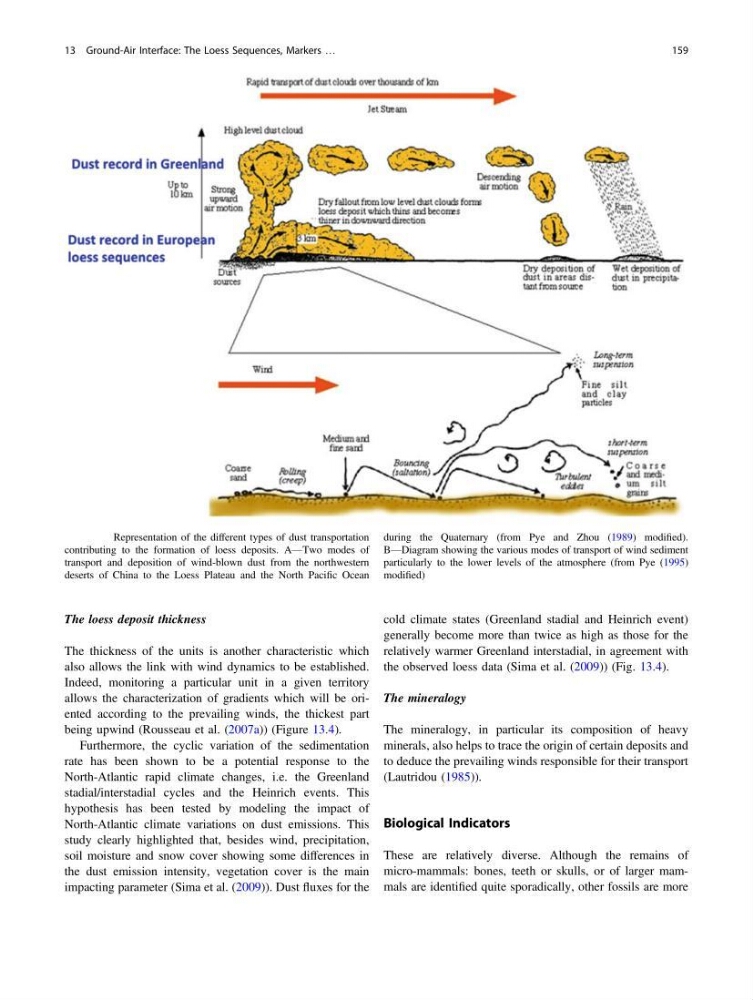
Fig. 13.2 Representation of the different types of dust transportation
contributing to the formation of loess deposits. A—Two modes of
transport and deposition of wind-blown dust from the northwestern
deserts of China to the Loess Plateau and the North Pacific Ocean
during the Quaternary (from Pye and Zhou (1989) modified).
B—Diagram showing the various modes of transport of wind sediment
particularly to the lower levels of the atmosphere (from Pye (1995)
modified)
13 Ground-Air Interface: The Loess Sequences, Markers …
159
The thickness of the units is another characteristic which
also allows the link with wind dynamics to be established.
Indeed, monitoring a particular unit in a given territory
allows the characterization of gradients which will be oriented according to the prevailing winds, the thickest part
being upwind (Rousseau et al. (2007a)) (Figure 13.4).
Furthermore, the cyclic variation of the sedimentation
rate has been shown to be a potential response to the
North-Atlantic rapid climate changes, i.e. the Greenland
stadial/interstadial cycles and the Heinrich events. This
hypothesis has been tested by modeling the impact of
North-Atlantic climate variations on dust emissions. This
study clearly highlighted that, besides wind, precipitation,
soil moisture and snow cover showing some differences in
the dust emission intensity, vegetation cover is the main
impacting parameter (Sima et al. (2009)). Dust fluxes for the
cold climate states (Greenland stadial and Heinrich event)
generally become more than twice as high as those for the
relatively warmer Greenland interstadial, in agreement with
the observed loess data (Sima et al. (2009)) (Fig. 13.4).
The mineralogy
The mineralogy, in particular its composition of heavy
minerals, also helps to trace the origin of certain deposits and
to deduce the prevailing winds responsible for their transport
(Lautridou (1985)).
Biological Indicators
These are relatively diverse. Although the remains of
micro-mammals: bones, teeth or skulls, or of larger mammals are identified quite sporadically, other fossils are more
Fig. 13.2 Representation of the different types of dust transportation
contributing to the formation of loess deposits. A—Two modes of
transport and deposition of wind-blown dust from the northwestern
deserts of China to the Loess Plateau and the North Pacific Ocean
during the Quaternary (from Pye and Zhou (1989) modified).
B—Diagram showing the various modes of transport of wind sediment
particularly to the lower levels of the atmosphere (from Pye (1995)
modified)
13 Ground-Air Interface: The Loess Sequences, Markers …
159