

Orbital Tuning and Indicators of Local
Insolation
The evolution of orbital parameters of the Earth over the last
million years is known with great precision (Laskar et al.
2004), and these variations leave a signature in most climate
records. Therefore, the use of variations in insolation to date
polar cores is a natural choice. Uncertainty in this dating is
due, in part, to the assumption that there is a constant phase
difference between orbital and climatic variations, and,
secondly, to the evaluation of this phase difference. The
advantage of this dating is that it has an almost constant
uncertainty of a few thousand years along the length of the
core, especially for the deeper parts, as long as we are able to
recognize the orbital cycles.
Several parameters recorded in the ice cores show strong
variations in the orbital frequencies. These were then used
to align the ice cores with orbital cycles: these are the D/H
ratio in the ice, an indicator of local temperature (for
example, Parrenin et al. 2004) and the
18 O/
16 O (d
18 O atm )
ratio in the air bubbles (for example, Dreyfus et al. 2007).
The variations in d
18 O atm are a reflection of two aspects of
the environment (Landais et al. 2010). The first one is that
the variations in the d
18 O of the ocean, directly related to
the volume of land ice, impact fully on the d
18 O of the
atmospheric oxygen through the process of photosynthesis
by seaweed. The second one is that a portion of the variations in d
18 O atm is determined by the behavior of the
terrestrial biosphere. This is the Dole effect which depends
in a complex way on the reactions of photosynthesis and
respiration. The d
18 O atm signal shows variations mainly
related to the precession, so it is very easy to use it to
‘count’ these cycles, at least for the periods during which
they are sufficiently important variations in the insolation
signal. However, there is no reason to assume that the
phase difference between d
18 O atm and insolation remained
constant over time.
To avoid this limitation in the ‘traditional’ methods of
orbital alignment, more direct indicators of local insolation
have recently been proposed. Local insolation in summer
alters the structure of the snow at the surface, and this signature remains present down to the close-off zone, regardless
of the densification process. These structural parameters
have an impact on the volume of the pores at close-off (and
thus the air content), and also on the molecular fractionation
processes between O 2 and N 2 when the pores close.
Bender (2002), was the first to suggest that the O 2 /N 2
ratio in the air bubbles analyzed in the Vostok core was
dependent on the local insolation at the summer solstice
(Fig. 9.9). Recently, this link has been confirmed in the first
core drilled at Dome Fuji (Kawamura et al. 2007) (Fig. 9.9)
and recent measurements in the second core, with an
improved analytical process, show an almost perfect
correlation.
Raynaud et al. (2007) also studied in more detail the air
content in the EDC core and suggested that it depended on
local insolation averaged over a period centered on the
Age (yr)
H1
H4
H5
H6
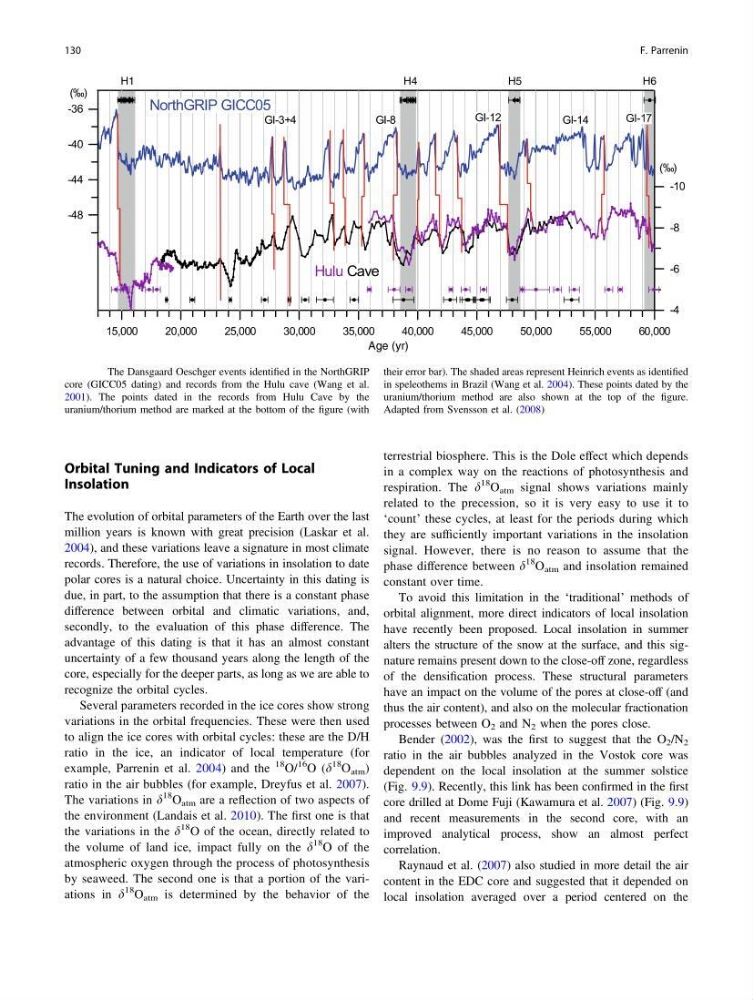
Fig. 9.8 The Dansgaard Oeschger events identified in the NorthGRIP
core (GICC05 dating) and records from the Hulu cave (Wang et al.
2001). The points dated in the records from Hulu Cave by the
uranium/thorium method are marked at the bottom of the figure (with
their error bar). The shaded areas represent Heinrich events as identified
in speleothems in Brazil (Wang et al. 2004). These points dated by the
uranium/thorium method are also shown at the top of the figure.
Adapted from Svensson et al. (2008)
130
F. Parrenin
Insolation
The evolution of orbital parameters of the Earth over the last
million years is known with great precision (Laskar et al.
2004), and these variations leave a signature in most climate
records. Therefore, the use of variations in insolation to date
polar cores is a natural choice. Uncertainty in this dating is
due, in part, to the assumption that there is a constant phase
difference between orbital and climatic variations, and,
secondly, to the evaluation of this phase difference. The
advantage of this dating is that it has an almost constant
uncertainty of a few thousand years along the length of the
core, especially for the deeper parts, as long as we are able to
recognize the orbital cycles.
Several parameters recorded in the ice cores show strong
variations in the orbital frequencies. These were then used
to align the ice cores with orbital cycles: these are the D/H
ratio in the ice, an indicator of local temperature (for
example, Parrenin et al. 2004) and the
18 O/
16 O (d
18 O atm )
ratio in the air bubbles (for example, Dreyfus et al. 2007).
The variations in d
18 O atm are a reflection of two aspects of
the environment (Landais et al. 2010). The first one is that
the variations in the d
18 O of the ocean, directly related to
the volume of land ice, impact fully on the d
18 O of the
atmospheric oxygen through the process of photosynthesis
by seaweed. The second one is that a portion of the variations in d
18 O atm is determined by the behavior of the
terrestrial biosphere. This is the Dole effect which depends
in a complex way on the reactions of photosynthesis and
respiration. The d
18 O atm signal shows variations mainly
related to the precession, so it is very easy to use it to
‘count’ these cycles, at least for the periods during which
they are sufficiently important variations in the insolation
signal. However, there is no reason to assume that the
phase difference between d
18 O atm and insolation remained
constant over time.
To avoid this limitation in the ‘traditional’ methods of
orbital alignment, more direct indicators of local insolation
have recently been proposed. Local insolation in summer
alters the structure of the snow at the surface, and this signature remains present down to the close-off zone, regardless
of the densification process. These structural parameters
have an impact on the volume of the pores at close-off (and
thus the air content), and also on the molecular fractionation
processes between O 2 and N 2 when the pores close.
Bender (2002), was the first to suggest that the O 2 /N 2
ratio in the air bubbles analyzed in the Vostok core was
dependent on the local insolation at the summer solstice
(Fig. 9.9). Recently, this link has been confirmed in the first
core drilled at Dome Fuji (Kawamura et al. 2007) (Fig. 9.9)
and recent measurements in the second core, with an
improved analytical process, show an almost perfect
correlation.
Raynaud et al. (2007) also studied in more detail the air
content in the EDC core and suggested that it depended on
local insolation averaged over a period centered on the
Age (yr)
H1
H4
H5
H6
Fig. 9.8 The Dansgaard Oeschger events identified in the NorthGRIP
core (GICC05 dating) and records from the Hulu cave (Wang et al.
2001). The points dated in the records from Hulu Cave by the
uranium/thorium method are marked at the bottom of the figure (with
their error bar). The shaded areas represent Heinrich events as identified
in speleothems in Brazil (Wang et al. 2004). These points dated by the
uranium/thorium method are also shown at the top of the figure.
Adapted from Svensson et al. (2008)
130
F. Parrenin