

6 Magnetoelectricity of Chiral Micromagnetic Structures
139
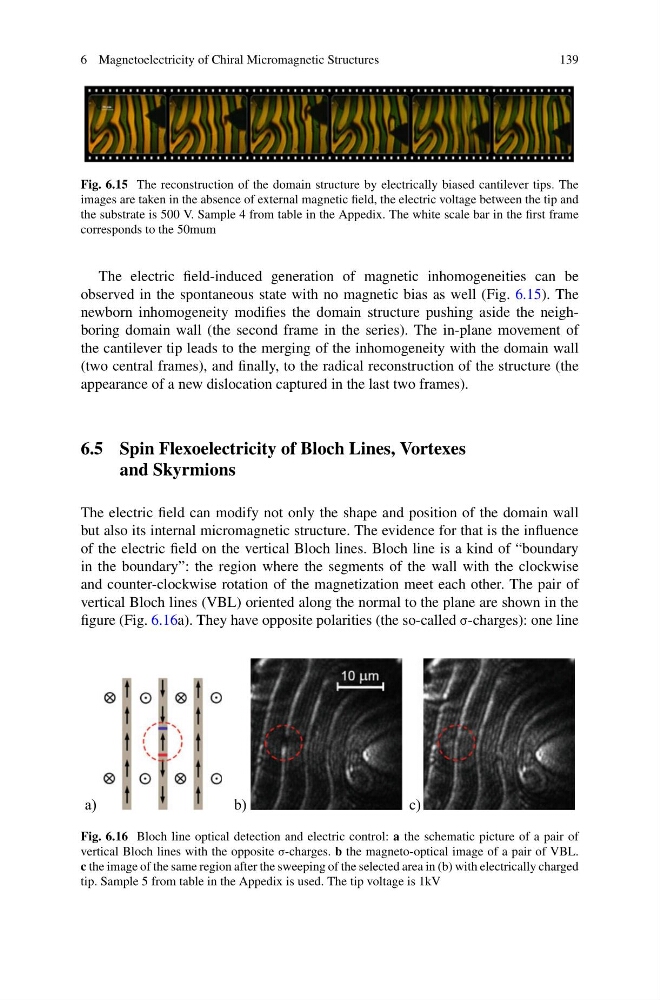
Fig. 6.15 The reconstruction of the domain structure by electrically biased cantilever tips. The
images are taken in the absence of external magnetic field, the electric voltage between the tip and
the substrate is 500 V. Sample 4 from table in the Appedix. The white scale bar in the first frame
corresponds to the 50mum
The electric field-induced generation of magnetic inhomogeneities can be
observed in the spontaneous state with no magnetic bias as well (Fig. 6.15). The
newborn inhomogeneity modifies the domain structure pushing aside the neighboring domain wall (the second frame in the series). The in-plane movement of
the cantilever tip leads to the merging of the inhomogeneity with the domain wall
(two central frames), and finally, to the radical reconstruction of the structure (the
appearance of a new dislocation captured in the last two frames).
6.5 Spin Flexoelectricity of Bloch Lines, Vortexes
and Skyrmions
The electric field can modify not only the shape and position of the domain wall
but also its internal micromagnetic structure. The evidence for that is the influence
of the electric field on the vertical Bloch lines. Bloch line is a kind of “boundary
in the boundary”: the region where the segments of the wall with the clockwise
and counter-clockwise rotation of the magnetization meet each other. The pair of
vertical Bloch lines (VBL) oriented along the normal to the plane are shown in the
figure (Fig. 6.16a). They have opposite polarities (the so-called σ-charges): one line
a)
b)
c)
Fig. 6.16 Bloch line optical detection and electric control: a the schematic picture of a pair of
vertical Bloch lines with the opposite σ-charges. b the magneto-optical image of a pair of VBL.
c the image of the same region after the sweeping of the selected area in (b) with electrically charged
tip. Sample 5 from table in the Appedix is used. The tip voltage is 1kV
139
Fig. 6.15 The reconstruction of the domain structure by electrically biased cantilever tips. The
images are taken in the absence of external magnetic field, the electric voltage between the tip and
the substrate is 500 V. Sample 4 from table in the Appedix. The white scale bar in the first frame
corresponds to the 50mum
The electric field-induced generation of magnetic inhomogeneities can be
observed in the spontaneous state with no magnetic bias as well (Fig. 6.15). The
newborn inhomogeneity modifies the domain structure pushing aside the neighboring domain wall (the second frame in the series). The in-plane movement of
the cantilever tip leads to the merging of the inhomogeneity with the domain wall
(two central frames), and finally, to the radical reconstruction of the structure (the
appearance of a new dislocation captured in the last two frames).
6.5 Spin Flexoelectricity of Bloch Lines, Vortexes
and Skyrmions
The electric field can modify not only the shape and position of the domain wall
but also its internal micromagnetic structure. The evidence for that is the influence
of the electric field on the vertical Bloch lines. Bloch line is a kind of “boundary
in the boundary”: the region where the segments of the wall with the clockwise
and counter-clockwise rotation of the magnetization meet each other. The pair of
vertical Bloch lines (VBL) oriented along the normal to the plane are shown in the
figure (Fig. 6.16a). They have opposite polarities (the so-called σ-charges): one line
a)
b)
c)
Fig. 6.16 Bloch line optical detection and electric control: a the schematic picture of a pair of
vertical Bloch lines with the opposite σ-charges. b the magneto-optical image of a pair of VBL.
c the image of the same region after the sweeping of the selected area in (b) with electrically charged
tip. Sample 5 from table in the Appedix is used. The tip voltage is 1kV